Iran’s invisible 'First Lady': Who Was Khamenei’s wife?

For decades, the wife of Iran’s former Supreme Leader Ali Khamenei lived almost entirely outside public view. Even her death was reported reluctantly, as though she had never been there at all.
Iran International

For decades, the wife of Iran’s former Supreme Leader Ali Khamenei lived almost entirely outside public view. Even her death was reported reluctantly, as though she had never been there at all.
Mansoureh Khojasteh Bagherzadeh died one day after her husband. She spent her final day in a coma at a hospital near their residence on Pasteur Avenue in central Tehran, a compound long guarded by the Revolutionary Guards but now destroyed.
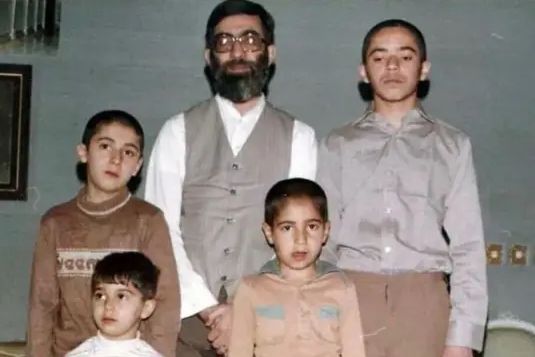
Born into a religious family in Mashhad, she married Khamenei in 1964 in a traditional family-arranged ceremony. T
he couple had six children: four sons born before the 1979 Revolution and two daughters born afterward. One daughter, Hoda, was killed in the same attack that targeted Khamenei’s home and office.
A Life Lived in the Shadows
Throughout her life, Mansoureh remained one of the most private figures in Iran’s ruling elite. Her public presence was far more limited than that of Fakhr Iran Saghafi, the wife of Ruhollah Khomeini, or Effat Marashi, the wife of the late Akbar Hashemi Rafsanjani.
So little was publicly known about her that when news of her death spread, Iranian media initially struggled to locate a reliable photograph. Some outlets mistakenly published a picture of Ategheh Rajai, the outspoken wife of another late president, Mohammad-Ali Rajai.
Her public voice survives almost entirely through two interviews: one with Mahjoubah magazine in the early 1990s and another with Jomhouri Eslami in 1983, shortly after Khamenei survived an assassination attempt. Most quotations attributed to her in later years originate from these two sources.
“It was not a romantic thing,” she said of their union. “His grandmother came to our house to propose.”
She portrayed her main role as maintaining a stable home life while her husband pursued political and religious work, stressing that she considered full hijab the appropriate attire outside the home, while dress inside could be more flexible but still follow Islamic principles.
Why she remained invisible
Her absence from public life reflected not only personal preference but also the political culture surrounding Iran’s leadership.
Khamenei largely kept his family out of public view for a mixture of religious, cultural, and security reasons. A deeply traditional cleric, he rarely allowed his wife or daughters to appear publicly, and even his sons were long shielded from public scrutiny.
Although she was never formally described as Iran’s “First Lady,” the symbolic status of the Supreme Leader’s spouse occasionally surfaced in public debate.
When Jamileh Alamolhoda, the wife of the late president Ebrahim Raisi, briefly used the title in a television interview, Iranian media reported that the description was later clarified after criticism from conservative circles that the title belonged to the Supreme Leader’s household.
She will be buried beside her husband at the Imam Reza Shrine in Mashhad, according to state media reports.

As anti-war protesters in Western capitals chant “no war with Iran,” some Iranians inside and outside the country are cheering the US-Israeli strikes and publicly thanking President Donald Trump.
That contrast, several Iran experts told Iran International, exposes a widening divide between Western progressive activism and the lived experience of many Iranians.
Analysts say the reaction among many Iranians is not about ideological loyalty but about seeing any weakening of the Islamic Republic as a rare opportunity to escape decades of repression.
“War is violent, it's terrible and it has started. The people of Iran didn't choose this war — the Islamic government, the Islamic Republic government, chose this war,” said Siavash Rokni, an Iran pop culture expert.
“Iranians will use any opportunity to bypass the Islamic Republic to assure the fall of the Islamic Republic and the institution of a democracy,” Rokni said.
Anti-war protests taking shape in Western capitals have often featured placards supporting the very regime responsible for killing scores of Iranians, with demonstrators holding images of the now-former Supreme Leader, Ali Khamenei — the man ultimately responsible for the killings.
Rokni said one cannot claim to oppose war while supporting the regime responsible for such violence.
This week, clips of Iranians dancing to the Village People’s “Y.M.C.A.” in the exaggerated arm-pumping style popularized by Trump went viral following the confirmed death of Supreme Leader Ali Khamenei.
The cultural irony is striking. “Y.M.C.A.” was released in late 1978 and was charting in early 1979 — the same period Iran’s Islamic Revolution culminated in the fall of the Shah and the rise of the Islamic Republic.
Now, decades later, the disco anthem has resurfaced as a soundtrack for some celebrating what they see as the potential unraveling of that same regime.
Celebrations were reported not only inside Iran but also in diaspora hubs including Los Angeles and London, underscoring that the reaction extended beyond Iran’s borders but largely among Iranians themselves.
Iran International has reviewed footage received directly from inside Iran in the hours following the strikes.
In one clip, explosions can be seen in the background with plumes of smoke rising over Tehran as an Iranian man says: “Thank you Mr. President, thank President Trump, we love you.”
In another video, a woman shouts “Trump!” followed by cheers, clapping and the sound of what appears to be a vuvuzela-style horn as a group of Iranians celebrate.
In a separate clip filmed inside Iran, a woman says in Farsi: “Bibi, we are happy, Netanyahu, Israel, Trump...death to Terrorist, thank you for helping us Hooray.”
Another video, recorded after the bombing of Supreme Leader Ali Khamenei’s headquarters, shows a group of young people flashing peace signs as they welcome the joint US-Israel military strikes.
Khorso Isfahani, an Iran analyst with NUFDI, framed the reaction not as celebration of war itself but as the culmination of decades of struggle.
“Iranians have been on the front line of fighting against Islamist fascist occupation of Iran for the past five decades. We have sacrificed so many lives, but it has always been an uphill battle. Finally the moment has arrived and we are celebrating it.”
David Patrikarakos, a British journalist of part-Iranian origin, said many Western activists fail to grasp that context.
“A lot of people, generally not Iranian — generally unable to find Iran on the map — feel fit to pronounce upon this,” he said, describing much of the protest movement as “signaling your virtue” while “paying no attention to the suffering and the thoughts of people inside Iran.”
He added that for many Iranians, support for Trump or Netanyahu is not ideological devotion but circumstantial.
For those celebrating, analysts say, the moment is not about endorsing war itself but about the possibility that it may mark an inflection point in a decades-long fight for political change.
Iran’s clerical body, the Assembly of Experts, has elected Mojtaba Khamenei, the son of the late Ali Khamenei, as the Islamic Republic’s new Supreme Leader, according to his informed sources who spoke to Iran International on condition of anonymity.
The decision marks one of the most consequential moments in the history of the Islamic Republic, effectively transferring power within the same family for the first time since the 1979 revolution.
But who exactly is Mojtaba Khamenei?
Iran’s clerical body, the Assembly of Experts, has elected Mojtaba Khamenei, the son of the late Ali Khamenei, as the Islamic Republic’s new Supreme Leader, according to his informed sources who spoke to Iran International on condition of anonymity.
The decision marks one of the most consequential moments in the history of the Islamic Republic, effectively transferring power within the same family for the first time since the 1979 revolution.
But who exactly is Mojtaba Khamenei?
A powerful figure behind the scenes
Mojtaba Khamenei, 55, has long been considered one of the most influential figures inside Iran’s ruling system despite rarely appearing in public or holding formal political office.
For years he operated from within the Office of the Supreme Leader, serving as a gatekeeper and power broker around his father. His position has often been compared to the role played by Ahmad Khomeini, the son of Islamic Republic’s founder Ruhollah Khomeini, who served as a key aide and confidant during the early years of the revolutionary state.
Analysts say Mojtaba gradually built influence across the regime’s political, security and clerical institutions.
Dr. Eric Mandel, director of the Middle East Political and Information Network (MEPIN), told Iran International that Mojtaba has long been a central but opaque figure in Tehran’s power structure.
“Mojtaba Khamenei, the son of former Supreme Leader Ali Khamenei, has long operated behind the scenes in Tehran, building deep ties with the Islamic Revolutionary Guard Corps and consolidating influence within the regime’s power structure. He is widely viewed as one of the architects of the regime’s repression," Mandel said.
Author and Iran analyst Arash Azizi told Iran International Mojtaba is viewed with deep suspicion. "This is why he has been a bete noire of democratic movements at least since 2009 when he was rumored to have helped orchestrate the repression. He is also known to be a favorite of some sections of the establishment such as those close to Mohammad-Bagher Ghalibaf who has ambitions of becoming Iran’s strongman."
Ties to Iran’s security establishment
A key source of Mojtaba’s influence lies in his close connections to the Islamic Revolutionary Guard Corps (IRGC).
During the Iran-Iraq War in the 1980s, Mojtaba served in the Habib Battalion, a unit made up largely of volunteers connected to the Islamic Republic’s emerging revolutionary networks. The battalion operated under forces linked to the IRGC and took part in several major battles of the war.
Service in the Habib Battalion proved significant for Mojtaba. Many of the men who fought alongside him later rose to senior positions in Iran’s security and intelligence apparatus, including figures who would go on to lead parts of the IRGC’s intelligence organization and security commands responsible for protecting the regime.
Those wartime relationships are widely believed to have helped Mojtaba build lasting connections inside Iran’s powerful security establishment.
Over the years, opposition figures and political rivals have accused Mojtaba of playing a role in shaping election outcomes and coordinating crackdowns on dissent.
Questions over religious credentials
Iran’s constitution requires the Supreme Leader to possess deep knowledge of Islamic jurisprudence and be recognized as a senior religious authority.
Mojtaba, however, is not widely considered to be among the highest-ranking clerics in Iran. He studied in the seminaries of Qom under several prominent conservative scholars but does not hold the rank of ayatollah.
Despite that, Iran’s political system has historically shown flexibility when elite consensus forms around a candidate.
A controversial succession
Mojtaba’s elevation is likely to intensify criticism that the Islamic Republic founded as a revolutionary Islamic system is evolving toward dynastic rule.
For years speculation about his succession drew comparisons to hereditary monarchies.
For a man who has spent decades operating largely in the shadows of Iran’s power structure, Mojtaba Khamenei now finds himself at the center of one of the most consequential periods in the country’s modern history.
With Iran at war and its supreme leader dead, Tehran faces a delicate question: whether to appoint a successor quickly to project continuity, or delay the decision to avoid presenting a new leadership target to its enemies.
Iran’s constitution allows for both. It requires the Assembly of Experts to choose a new supreme leader “at the earliest possible opportunity,” with no specific deadline.
In practice, the leadership may balance urgency against security risks. Naming a successor swiftly could reassure the political establishment and signal stability at a moment of national crisis. But during an active conflict, concentrating authority in a single new figure could also create a fresh focal point for external pressure.
Whatever timing Tehran ultimately chooses, the succession process itself is well defined.
In the Islamic Republic, the supreme leader is both the highest political and religious authority. His powers are sweeping. He serves as commander-in-chief of the armed forces, appoints the head of the judiciary and sets the state’s core strategies and red lines.
The constitution requires the leader to be chosen by the Assembly of Experts and to possess distinguished religious scholarship, deep knowledge of Islamic jurisprudence and politics, and strong managerial ability.
The interim leadership council
If the leader dies, resigns or becomes incapacitated, the constitution mandates that a successor be selected without delay. Until that happens, a temporary three-member council assumes his powers.
The interim council was formed immediately after Khamenei’s death: President Masoud Pezeshkian, Judiciary Chief Gholam-Hossein Mohseni-Ejei and senior conservative cleric Alireza Arafi, a member of the Guardian Council and head of Iran’s seminaries.
The council oversees the armed forces, manages national security and supervises key institutions. Its authority, however, is strictly temporary and ends once a new leader is appointed.
How the leader is selected
The Assembly of Experts is composed of 88 clerics elected every eight years in nationwide polls. All candidates must first be vetted by the Guardian Council for religious and political qualifications.
Formally, the Assembly not only selects the leader but also monitors his performance and has the authority to dismiss him if he is deemed unfit. In practice, it has consistently endorsed Khamenei’s leadership without public dissent.
To choose a successor, the Assembly convenes in closed session. Members review potential candidates, assess their qualifications and vote. A majority is sufficient. If no candidate fully meets the constitutional criteria, members may select a figure based on overall leadership capacity.
Deliberations are confidential, and the result is announced only after a decision is finalized.
Power behind the scenes
While the constitution assigns the process to the Assembly, informal power centers may prove decisive.
Senior commanders of the Islamic Revolutionary Guard Corps (IRGC) are widely believed to play a decisive role in shaping elite consensus. Intelligence and judicial institutions can also shape outcomes through internal assessments of potential candidates.
Senior clerics in Qom, particularly grand ayatollahs with independent religious authority, may indirectly influence opinion within the Assembly. Although they hold no formal role in the vote, their views can carry weight in determining religious legitimacy.
Given the current climate of unrest and regional conflict, the interplay among these actors could prove pivotal. For many within the system, the overriding priority is likely to be continuity and institutional survival.
Potential successors
Khamenei’s will has not been made public, and he did not officially designate a successor. Nonetheless, several names have circulated for years.
Mojtaba Khamenei, 55, the late leader’s second son, is a mid-ranking cleric believed to wield influence behind the scenes. Though he has never held senior elected office, he is thought to have close ties to parts of the security establishment.
Alireza Arafi, 65, a member of the interim council, is considered a conservative with strong institutional ties. His leadership of the seminaries and role in the Guardian Council position him as a potential consensus candidate within the establishment.
Hassan Khomeini, 53, grandson of the Islamic Republic’s founder Ruhollah Khomeini, teaches in Qom and oversees his grandfather’s shrine. He is associated with reformist and centrist political circles and was disqualified from running for the Assembly of Experts in 2016. His religious credentials and symbolic lineage could strengthen his standing, particularly if broader legitimacy is seen as valuable.
Mohammad-Mehdi Mirbagheri, 63, a hardline cleric and member of the Assembly of Experts, is known for his staunch ideological positions and close alignment with conservative currents.
Mohsen Araki, 69, a former Guardian Council member with experience in international religious outreach, has also been mentioned as a possible contender.
Ultimately, the succession will hinge less on public debate than on negotiations within the clerical and security elite.
Tehran will want to project normal constitutional continuity, but in the middle of a war it is entirely possible that internal power dynamics and external pressures—not just the formal procedures—will shape both the leadership outcome and Iran’s future.
The death of Iran’s Supreme Leader Ali Khamenei has thrust a rather obscure figure into the center of the country’s uncertain political future.
Hardline cleric Alireza Arafi is now one of the three members of the interim leadership council tasked with filling the power vacuum after Khamenei’s demise. Within clerical circles he is widely viewed as a potential contender for the country’s highest office. Outside them, most Iranians have barely heard his name.
Many Iranian journalists and political activists abroad assume Arafi will eventually emerge as Khamenei’s successor. Yet Iran’s opaque succession process offers no guarantees.
To become Supreme Leader, Arafi would first have to be nominated by a committee within the Assembly of Experts, the body responsible for choosing the next leader, in a session attended by at least two-thirds of its 88 members. He would then need the support of two-thirds of those present — roughly 40 elderly clerics. None of this is assured.
There is also no certainty that the Islamic Republic will survive long enough to appoint a new Supreme Leader, nor that Arafi, or other potential contenders such as Hassan Khomeini, will emerge unscathed from the current turmoil.
On Sunday night, online rumors even claimed that Arafi had been targeted and killed.
A Khamenei Protégé
Over the past two decades, Arafi has been one of Khamenei’s favored clerics. The Supreme Leader elevated him to senior religious positions, granted him access to substantial financial resources and helped him climb the institutional ladder that led to political influence.
Yet within the interim leadership council he has the least political experience.
President Massoud Pezeshkian, despite his limited political background, has greater public visibility. Chief Justice Gholamhossein Mohseni-Ejei, a former intelligence minister, is the only seasoned political figure in the trio, though he rarely speaks publicly about politics.
Arafi’s only clear advantage is that, unlike the other two, he has not been publicly associated with the violent crackdown ordered by Khamenei during the January protests.
Arafi’s influence stems largely from his leadership of Al-Mustafa International University, his position as dean of the Qom seminary and his membership in the Assembly of Experts — all roles granted or supported by Khamenei.
The Supreme Leader praised him for his ideas on expanding Shiite influence abroad.
Despite lacking political experience, Arafi is known for unwavering loyalty to Khamenei and his ideological outlook. He is considered more hardline than the late leader on cultural issues such as compulsory hijab and has advocated the full implementation of Shiite jurisprudence in governance.
Arafi’s Background
Born in 1959 into a clerical family in Maybod near Yazd in central Iran, Arafi’s ascent began in 2002 when Khamenei approved his proposal for an international university to train Shiite clerics worldwide.
He was soon appointed dean of the institution and granted a substantial budget, a recurring point of criticism among economists and journalists during annual budget debates.
Al-Mustafa now operates more than 80 branches abroad and teaches more than 14,000 students online and in person, placing Arafi at the center of a global clerical network.
Under Khamenei, Arafi also served on the Supreme Council of the Cultural Revolution, as one of the 12 jurists of the Guardian Council and as a key member of the Assembly of Experts — the very body tasked with choosing the next Supreme Leader, if the Islamic Republic endures.
The country is passing through one of the most volatile periods in its modern history, raising doubts not only about who might succeed Khamenei but about whether the Islamic Republic will survive long enough for that question to be answered.
Even for figures now described as potential successors, the title “future leader” may prove more fragile than it appears.