Iran’s constitution allows for both. It requires the Assembly of Experts to choose a new supreme leader “at the earliest possible opportunity,” with no specific deadline.
In practice, the leadership may balance urgency against security risks. Naming a successor swiftly could reassure the political establishment and signal stability at a moment of national crisis. But during an active conflict, concentrating authority in a single new figure could also create a fresh focal point for external pressure.
Whatever timing Tehran ultimately chooses, the succession process itself is well defined.
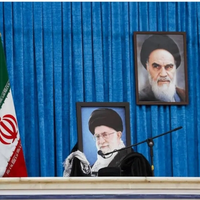
In the Islamic Republic, the supreme leader is both the highest political and religious authority. His powers are sweeping. He serves as commander-in-chief of the armed forces, appoints the head of the judiciary and sets the state’s core strategies and red lines.
The constitution requires the leader to be chosen by the Assembly of Experts and to possess distinguished religious scholarship, deep knowledge of Islamic jurisprudence and politics, and strong managerial ability.
The interim leadership council
If the leader dies, resigns or becomes incapacitated, the constitution mandates that a successor be selected without delay. Until that happens, a temporary three-member council assumes his powers.
The interim council was formed immediately after Khamenei’s death: President Masoud Pezeshkian, Judiciary Chief Gholam-Hossein Mohseni-Ejei and senior conservative cleric Alireza Arafi, a member of the Guardian Council and head of Iran’s seminaries.
The council oversees the armed forces, manages national security and supervises key institutions. Its authority, however, is strictly temporary and ends once a new leader is appointed.
How the leader is selected
The Assembly of Experts is composed of 88 clerics elected every eight years in nationwide polls. All candidates must first be vetted by the Guardian Council for religious and political qualifications.
Formally, the Assembly not only selects the leader but also monitors his performance and has the authority to dismiss him if he is deemed unfit. In practice, it has consistently endorsed Khamenei’s leadership without public dissent.
To choose a successor, the Assembly convenes in closed session. Members review potential candidates, assess their qualifications and vote. A majority is sufficient. If no candidate fully meets the constitutional criteria, members may select a figure based on overall leadership capacity.
Deliberations are confidential, and the result is announced only after a decision is finalized.
Power behind the scenes
While the constitution assigns the process to the Assembly, informal power centers may prove decisive.
Senior commanders of the Islamic Revolutionary Guard Corps (IRGC) are widely believed to play a decisive role in shaping elite consensus. Intelligence and judicial institutions can also shape outcomes through internal assessments of potential candidates.
Senior clerics in Qom, particularly grand ayatollahs with independent religious authority, may indirectly influence opinion within the Assembly. Although they hold no formal role in the vote, their views can carry weight in determining religious legitimacy.
Given the current climate of unrest and regional conflict, the interplay among these actors could prove pivotal. For many within the system, the overriding priority is likely to be continuity and institutional survival.
Potential successors
Khamenei’s will has not been made public, and he did not officially designate a successor. Nonetheless, several names have circulated for years.
Mojtaba Khamenei, 55, the late leader’s second son, is a mid-ranking cleric believed to wield influence behind the scenes. Though he has never held senior elected office, he is thought to have close ties to parts of the security establishment.
Alireza Arafi, 65, a member of the interim council, is considered a conservative with strong institutional ties. His leadership of the seminaries and role in the Guardian Council position him as a potential consensus candidate within the establishment.
Hassan Khomeini, 53, grandson of the Islamic Republic’s founder Ruhollah Khomeini, teaches in Qom and oversees his grandfather’s shrine. He is associated with reformist and centrist political circles and was disqualified from running for the Assembly of Experts in 2016. His religious credentials and symbolic lineage could strengthen his standing, particularly if broader legitimacy is seen as valuable.
Mohammad-Mehdi Mirbagheri, 63, a hardline cleric and member of the Assembly of Experts, is known for his staunch ideological positions and close alignment with conservative currents.
Mohsen Araki, 69, a former Guardian Council member with experience in international religious outreach, has also been mentioned as a possible contender.
Ultimately, the succession will hinge less on public debate than on negotiations within the clerical and security elite.
Tehran will want to project normal constitutional continuity, but in the middle of a war it is entirely possible that internal power dynamics and external pressures—not just the formal procedures—will shape both the leadership outcome and Iran’s future.