• العربية
  • فارسی
Brand
  • Iran Insight
  • Politics
  • Economy
  • Analysis
  • Special Report
  • Opinion
  • Podcast
  • Iran Insight
  • Politics
  • Economy
  • Analysis
  • Special Report
  • Opinion
  • Podcast
  • Theme
  • Language
    • العربية
    • فارسی
  • Iran Insight
  • Politics
  • Economy
  • Analysis
  • Special Report
  • Opinion
  • Podcast
All rights reserved for Volant Media UK Limited
volant media logo

US envoy hopes Iran 'comes to its senses' to avoid war - Ynet

Dec 19, 2025, 09:26 GMT+0Updated: 11:23 GMT+0
US Ambassador to Israel Mike Huckabee.

US Ambassador to Israel Mike Huckabee said he hopes there will be no war with Iran and urged Tehran to reconsider its nuclear ambitions, Israeli media outlet Ynet reported early Friday.

“I hope there won’t be a war,” Huckabee said in an interview with Israeli media outlet Ynet. “I hope that Iran will come to its senses.”

He said recent US and Israeli actions were meant to send a clear message to Tehran and urged Iranian leaders to draw conclusions from past confrontations.

“There is no education in the second kick of a mule,” Huckabee said.

Huckabee’s comments come as Israeli and Western officials warn that any move by Iran to restore high-level uranium enrichment could prompt a response.

European diplomats told Al-Monitor earlier this month that Israel may strike Iran within the next year if it concludes Tehran is moving to resume enrichment. One Western diplomat said any new campaign would likely be short and intense, with Iran expected to retaliate with missile fire.

Analysts say enrichment remains the main trigger for escalation. Raz Zimmt of Israel’s Institute for National Security Studies said a return to enrichment, weapons-related work or efforts to recover uranium believed lost in June attacks would almost certainly draw an Israeli response.

“The more time passes without the United States and Iran reaching a nuclear agreement, the more likely a new round of conflict becomes,” Zimmt said.

Signs of activity at Natanz

Satellite images show new activity at Iran’s Natanz nuclear site damaged during the June conflict, a US-based think tank said on Thursday, while the UN nuclear watchdog remains unable to access several of Iran’s most sensitive facilities.

The Institute for Science and International Security said satellite images taken last weekend show Iran placing panels over a destroyed enrichment facility at Natanz, possibly to shield work aimed at accessing rubble that may contain highly enriched uranium.

“This indicates Iran wants to explore the rubble out of sight of prying eyes,” the group said, adding that the site likely held several kilograms of highly enriched uranium.

The UN nuclear watchdog has said it still lacks access to some of Iran’s most sensitive nuclear facilities, including Natanz and Fordow, limiting its ability to assess the status of nuclear material.

Iran says its nuclear program is peaceful, while Western governments and Israel say its enrichment activities could bring it closer to the ability to produce nuclear weapons.

Most Viewed

Iran negotiators ordered to return after internal rift over Islamabad talks
1
EXCLUSIVE

Iran negotiators ordered to return after internal rift over Islamabad talks

2
INSIGHT

Iran's digital economy battered by prolonged blackout

3
ANALYSIS

US blockade enters murky phase as tankers spoof signals and buyers hesitate

4
ANALYSIS

Why the $100 billion Hormuz toll revenue is a myth

5

US tightens financial squeeze on Iran, warns banks over oil money flows

Banner
Banner

Spotlight

  • Hardliners push Hormuz ‘red line’ as US blockade tests Iran’s leverage
    INSIGHT

    Hardliners push Hormuz ‘red line’ as US blockade tests Iran’s leverage

  • Ideology may be fading in Iran, but not in Kashmir's ‘Mini Iran'
    INSIGHT

    Ideology may be fading in Iran, but not in Kashmir's ‘Mini Iran'

  • War damage amounts to $3,000 per Iranian, with blockade set to add to losses
    INSIGHT

    War damage amounts to $3,000 per Iranian, with blockade set to add to losses

  • Why the $100 billion Hormuz toll revenue is a myth
    ANALYSIS

    Why the $100 billion Hormuz toll revenue is a myth

  • US blockade targets Iran oil boom amid regional disruption
    ANALYSIS

    US blockade targets Iran oil boom amid regional disruption

  • Iran's digital economy battered by prolonged blackout
    INSIGHT

    Iran's digital economy battered by prolonged blackout

•
•
•

More Stories

Israel arrests Russian citizen on suspicion of spying for Iran

Dec 19, 2025, 08:33 GMT+0

Israeli authorities arrested a Russian citizen working in Israel on suspicion of carrying out espionage tasks for Iranian intelligence, including photographing ships and infrastructure at Israeli ports, Israeli media reported on Friday.

The Shin Bet internal security service and the Defense Ministry’s security directorate detained the suspect, Vitaly Zvyagintsev, 30, in early December following an undercover investigation, according to a joint statement cited by Ynet.

Zvyagintsev, a foreign worker living in Israel, was in contact with an Iranian intelligence handler who presented himself as a Russian named Roman and directed him to carry out surveillance missions across the country from October, Ynet reported.

He allegedly sent photographs of sensitive infrastructure and vessels at several Israeli ports and received payment in cryptocurrency, the report said.

Israeli security officials said Zvyagintsev understood the requests were linked to efforts to harm Israel but continued for financial reasons.

“This is a serious case that reflects the continued efforts by Iranian intelligence bodies to recruit Israeli citizens and foreign nationals for espionage and terror-related missions,” the security agencies said in the statement cited by Ynet.

Prosecutors filed an indictment on Friday at the Central District Court, charging Zvyagintsev with serious national security offenses, Israeli officials said.

The arrest comes amid a series of recent cases in which Israeli authorities have accused individuals of passing information to Iran, often in exchange for digital payments, Israeli media said.

Israeli security agencies say Iran has stepped up recruitment efforts through social media, targeting both Israeli citizens and foreign residents, as tensions between the two longtime adversaries remain high.

Iran steps up pressure on women prisoners after June war, source says

Dec 18, 2025, 21:16 GMT+0

Rights abuses against women political prisoners in Tehran’s notorious Evin Prison have intensified since a 12-day war with Israel, an informed source told Iran International, with an inmate's suicide attempt highlighting mounting pressure in the ward.

Around 20 political prisoners in Evin’s women ward have repeatedly gathered in the head warden’s office over the past week, demanding an end to what they describe as deliberate obstruction by prison officials, a halt to guards’ violence and proper access to medical treatment, the source said on Thursday.

The prisoners have also called for improvements in food and hygiene inside the ward, saying basic standards have sharply deteriorated since the new security team from Qarchak prison took over.

The source, herself a political prisoner, said inmates have since been sent to solitary confinement on various pretexts, while family visits and phone calls are frequently cut off as punishment.

Suicide attempt

The source said one political prisoner in the women’s ward recently attempted suicide after officials repeatedly blocked the implementation of her release order.

Cellmates intervened and saved her before asking the duty officer for help, but the guard refused to assist despite the emergency, the source said.

The prisoner, whose name Iran International is withholding for security reasons, is said to be in a deeply fragile psychological state.

According to her fellow inmates, prison authorities keep finding pretexts to prevent her release despite repeated protests over the refusal to carry out a lawful decision.

Denial of care

In the absence of proper medical care, the prayer room of the women’s ward has effectively been turned into a makeshift space to hold sick prisoners, the source told Iran International.

The source accused prison officials of obstructing the implementation of laws on medical furloughs and conditional release on bail for inmates with serious illnesses, despite clear legal provisions allowing such measures.

According to the source, political prisoner Aida Najafloo, who underwent surgery for a fractured vertebra, was returned to prison before completing treatment and is now suffering from a severe infection and critical physical condition.

Najaflou is among five Christians handed combined prison terms totaling more than 50 years.

The source also cited the case of Masoumeh Sadr Eshkevari, who suffers from lung, respiratory, heart and mobility problems and breathes with the help of an oxygen device.

Despite doctors’ emphasis on the need for treatment outside prison, she has been denied medical furlough as well as her legal right to release her on bail, with fellow inmates left to push her wheelchair and help her use the bathroom and shower.

New charges

The source said that the release orders for two political prisoners, Baha’i community leader Fariba Kamalabadi and labor activist Narges Mansouri, have not been implemented since October because of obstruction by prison authorities.

Narges Mansouri, 46, is a member of the Syndicate of Workers of the Tehran and Suburbs Bus Company and the mother of a 13‑year‑old child.

Instead, they and five other women now face new charges after they protested officials’ role in the death of political prisoner Somayeh Rashidi, who passed away in Qarchak following alleged medical neglect.

Somayeh Rashidi died after several days in hospital following her transfer from Qarchak prison in September.

All seven have been charged with “insulting the Supreme Leader” and “disturbing prison order,” with courts setting bail of 80 million tomans for each, the source said. Some of the women have also faced weeks‑long bans on visits and phone calls as additional pressure.

According to Amnesty International, Iranian authorities have executed more than 1,000 people so far this year, the highest annual figure recorded by the group in at least 15 years.

Satellite images show activity at damaged Iranian nuclear site – think tank

Dec 18, 2025, 18:23 GMT+0

Satellite imagery shows new activity at an Iranian uranium enrichment facility damaged during a brief June war, a US-based think tank said on Thursday, raising the possibility that Iran is seeking to recover stocks of its highly enriched uranium.

The Institute for Science and International Security (ISIS) reported that satellite images taken last weekend show activity at the Pilot Fuel Enrichment Plant (PFEP), a key facility at Natanz that was previously destroyed.

“Satellite imagery from December 13, 2025, shows that Iran placed panels on top of the remaining anti-drone structure, providing cover for the destroyed facility,” the think tank said.

Although the structure appears partially sealed, ISIS said that “a large hole remains in the middle where the drone cage was penetrated and damaged.”

The think tank said the new covering suggests Iran may be attempting to access the remains of the facility while shielding the activity from external observation.

“This indicates Iran wants to explore the rubble out of sight of prying eyes."

The PFEP is a sensitive site within the Natanz complex, historically used for advanced enrichment research and development.

According to ISIS, the facility “likely held several kilograms of highly enriched uranium,” a quantity that is small compared with Iran’s overall stockpile of nearly 400 kg but still significant.

The group said the material would be “not negligible” in the broader context of Iran’s nuclear capabilities.

Despite the apparent activity at PFEP, ISIS said it has not observed similar signs elsewhere at Iran’s main nuclear sites including the underground Fordow facility bombed by the United States in June.

Iran has long insisted that its nuclear program is for peaceful purposes, while Western governments and Israel say Tehran’s enrichment activities bring it closer to the capability to produce nuclear weapons.

The UN nuclear watchdog remains unable to access several of Iran's most sensitive nuclear sites following June strikes, International Atomic Energy Agency (IAEA) Director General Rafael Grossi said on Monday.

Grossi told Russia’s RIA Novosti that inspectors had returned to some facilities but were restricted to sites that were not damaged in the attacks.

“We are only allowed to access sites that were not hit,” he said, calling the resumption important but insufficient.

“These other three sites – Natanz, Isfahan and Fordow – are even more significant, since they still contain substantial amounts of nuclear material and equipment, and we need to return there.”

'Fearing the people': a Jewish outsider recalls encounters with Iran’s rulers

Dec 18, 2025, 15:35 GMT+0

A Jewish woman who says she spent years engaging with senior figures linked to Iran’s ruling establishment has shared what she describes as insider accounts from those interactions in a sit-down interview with Iran International.

Catherine Perez-Shakdam, a French-born Jewish woman, offers a portrait of a political system she says is driven less by confidence than by a fear of collapse.

She says she gained rare access to Iran’s political and ideological circles after presenting herself as a sympathetic Western voice critical of the United States and Israel.

Over time, she says, that posture opened doors to senior officials in Tehran, including the late president Ebrahim Raisi, senior commanders of the Revolutionary Guards and Supreme Leader Ali Khamenei.

Perez-Shakdam said her access was neither incidental nor accidental, but carefully cultivated.

“(I wanted) to make myself into somebody that the regime would want to invite, someone that they would see as useful and an asset for them.”

‘Nobody stopped me’

Much of that access, she said, flowed through the late filmmaker and propagandist Nader Talebzadeh, a central figure in Tehran’s state-aligned media and conference circuit.

According to Perez-Shakdam, Talebzadeh’s patronage effectively removed institutional barriers.

“So Nader gave me, you know, the absolute pass in that I had been vetted by him and therefore nobody could touch me,” she said. “Nobody could stop me at the airport. I could do whatever. I mean, whatever.”

That freedom, she said, allowed her to move through Iran in ways rarely permitted to Westerners, even those with journalistic credentials, and offered a window into Tehran’s power politics.

The structure of the Islamic Republic, Perez-Shakdam argues, reflects deep insecurity within the leadership, particularly since repeated waves of mass protest have challenged its legitimacy.

‘They fear the people’

She said that fear was most visible in what she was told about the 2009 Green Movement, when millions of Iranians took to the streets to protest the disputed re-election of Mahmoud Ahmadinejad.

Perez-Shakdam said an insider described to her a moment during that unrest when Supreme Leader Ali Khamenei appeared visibly emotional in public, pointing to footage from the period as the state faced what he described as an existential crisis.

“He told me that it was the day that the regime almost fell,” she said. “That they were so close and that the people did not realize just how close (Khamenei) was from losing everything.”

She said the episode left a lasting psychological imprint on Iran’s leadership.

“They are terrified of the people, which is why you see the repression that you see in the streets,” Perez-Shakdam said.

‘A god among men’

Perez-Shakdam also recalled being brought into the presence of Supreme Leader Ali Khamenei, describing the encounter as carefully staged to project dominance rather than invite dialogue.

She said Khamenei did most of the talking and appeared intent on asserting intellectual and moral authority.

“I think he just wanted to impress upon me that, you know, he was a god among men.”

One exchange, she said, left a particularly lasting impression.

“The first thing he asked me was whether or not I thought that God was genocidal,” she said. “I looked at him and I was like, no, obviously not.”

She said Khamenei then compared deaths ordered by the state to a natural cycle of life, suggesting that killing in service of the Islamic Republic should not be considered genocide—a comparison she described as deeply disturbing.

Looking at Iran today, Perez-Shakdam argued that fear of popular revolt remains the leadership’s defining trait, particularly when it comes to women. Iranian women, she said, pose the greatest challenge to the system’s ability to control future generations.

Pezeshkian says Israel held missile advantage in 12-day war

Dec 18, 2025, 13:11 GMT+0

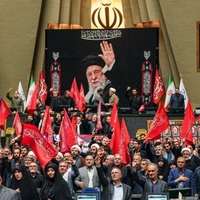
Iranian President Masoud Pezeshkian has acknowledged that Israel held a missile advantage during the June conflict between the two foes, while reaffirming Tehran’s commitment to maintaining and expanding its missile program.

Speaking on Thursday during a visit to South Khorasan province, Pezeshkian said that although Iran had launched missiles during the fighting, Israel’s arsenal proved superior in both quantity and capability.

“It is true that we had missiles, but their missiles were more numerous, more powerful, more precise and easier to deploy,” Pezeshkian said.

He added that it was the people who ultimately frustrated Israel, without elaborating.

Pezeshkian rejected calls for Iran to curb its missile program, framing it as essential to national defense.

“They tell us not to have missiles, while they arm Israel to the teeth so it can come here whenever it wants, raze everything and leave,” he said. “I will not accept that.”

  • Iran's buoyant missile arsenal vexes Israel, analysts say

    Iran's buoyant missile arsenal vexes Israel, analysts say

US officials have said any talks with Tehran would hinge on sweeping conditions that include Iran ending uranium enrichment and dismantling key parts of its nuclear program, curbing or accepting limits on its missile program, and rolling back support for regional proxy forces.

The missile issue is politically charged in Tehran after the June conflict, in which Israel relied heavily on layered air and missile defenses – alongside US support – to blunt waves of Iranian ballistic missiles and drones, while still suffering some strikes that penetrated defenses.