US judge finds Iran liable for Iraq attacks, orders $841 million in damages
US Department of Justice
A US federal judge has found Iran liable and awarded $841 million in damages to 36 plaintiffs whose family members had been wounded or killed in attacks by militant groups in Iraq’s Anbar province, their co-counsel said on Monday.
Iran provided significant material support for “terrorists” who carried out attacks in Iraq between 2003 and 2017, District Judge Randolph Moss of the District of Columbia said in a 12-page memorandum opinion.
The United States invaded Iraq in 2003 and promptly faced a deadly insurgency.
Moss awarded about $420.7 million in compensatory damages and $420.7 million in punitive damages to the plaintiffs.
Plaintiffs generally rely on the US Victims of State Sponsored Terrorism Fund for compensation as it is “very difficult” to collect judgments from Iran, their co-counsel Nicholas Reddick said.
“Pretty much all of Iran’s assets have already been seized by the government or prior litigants, so there isn’t just money sitting around in a bank account that we can go seize.”
Foreign governments are generally considered beyond the jurisdiction of US courts, but the terrorism exception to the Foreign Sovereign Immunities Act (FSIA) allows the courts to hold these countries accountable, where immunity is not absolute.
In 2016, Iran filed a lawsuit against the United States before the International Court of Justice (ICJ), also known as the World Court, for allegedly breaching a 1955 friendship treaty by allowing US courts to freeze assets of Iranian companies. The money was to be given in compensation to victims of terrorist attacks.
In 2023, the ICJ judges ruled Washington had illegally allowed courts to freeze assets of some Iranian companies and ordered the United States to pay compensation but left the amount to be determined later.
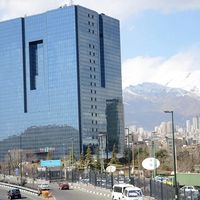
However, in a blow for Tehran, the world court said it did not have jurisdiction over $1.75 billion in frozen assets from Iran's central bank.
Iran's Wrestling chief Alireza Dabir with a picture of slain IRGC Quds Force commander Qassem Soleimani
The United States has revoked the permanent residency of Alireza Dabir, the president of Iran’s Wrestling Federation and a staunch loyalist of Iran's Supreme Leader, a US government official told Iran International.
It was not immediately clear when the revocation took effect.
Dabir told Iran International in a telephone interview in October that he had “given back” his green card but declined to respond to requests for comment.
Wrestling is an ancient and widely celebrated sport in Iran.
The male-dominated theocracy has backed wrestling programs with generous state funding in support that has helped Iranian athletes secure numerous international titles and championships.
A gold medalist in freestyle wrestling at the 2000 Sydney Olympics and a former Tehran city council member, he has been a vocal supporter of Iran’s ruling establishment and its anti-Western rhetoric.
“We always chant ‘Death to America,’ but the important thing is showing it in action,” Dabir said in a 2022 interview with Iran’s state media. “Some people talk a lot but don’t do much. We need to prove it with action.”
Following the comments, the Biden administration denied entry to Dabir and several Iranian wrestlers who were due to compete in Texas.
'Enforcing gender apartheid'
Iran’s state-run Press TV quoted Dabir in January 2022 as saying he obtained the Green Card during the Sydney Olympics, “just like many other athletes,” believing he might study in the United States, but “never used it.”
Iranian-American activists have long opposed Dabir’s entry into the United States, citing his political loyalties and role in enforcing restrictions on women’s participation in sport.
“(Dabir) is not only enforcing gender apartheid in sport, banning women from most wrestling disciplines and forcing mandatory hijab in the few allowed formats like Alysh, but also stands accused of deep corruption and political cronyism,” said Lawdan Bazargan, director of advocacy group the Alliance Against Islamic Regime of Iran Apologists (AAIRIA).
Iran bans women from competing in wrestling, even as neighboring Muslim countries such as Turkey permit female participation.
Sardar Pashaei, a former Greco-Roman world champion and once head coach of Iran’s youth national team, wrote to the USA Wrestling’s executive director in 2022 urging US sports bodies to shun Iranian government-sponsored athletes.
“Refrain from inviting officials and athletes who are government propaganda tools that are anti-women and anti-American,” he wrote.
Mohammad Javad Zarif, Iran’s former vice president for strategic affairs and foreign minister
Former Iranian foreign minister Javad Zarif said on Monday that the United States failed to humiliate Iran in a June war and that only earnest negotiations could resolve the impasse between the two adversaries.
Speaking at a conference in Hiroshima in Japan on Monday, Zarif said Iran’s resilience in the face of military and economic pressure had shown that “the era of hit and run is over.”
“A superpower that spends over $800 billion a year on its military could not humiliate Iran, which allocates less than $10 billion to defense,” Zarif said.
“In fact, that superpower was compelled to evacuate all personnel from its military bases surrounding Iran before daring to launch reckless bombings against Iran’s safeguarded facilities.”
US talks with Tehran over its disputed nuclear program began earlier this year with a 60-day ultimatum. On the 61st day, June 13, Israel launched a surprise military campaign which was capped with US strikes on June 22 targeting key nuclear sites in Esfahan, Natanz and Fordow.
Iran denies seeking nuclear weapons and has called the attacks illegal.
Zarif said decades of sanctions, cyberattacks, and assassinations had failed to force Iran to capitulate, arguing that the country’s nuclear program was rooted in “dignity, not deterrence.”
He said Supreme Leader Ali Khamenei’s insistence on continuing the program stemmed from “resistance to submission."
“For him (Khamenei), it has always been about something far more profound and enduring: dignity,” Zarif said.
Iran's 86-year-old ruler appeared to double down on his hard line against a rapprochement with Washington on Monday, saying the United States must quit military bases in the region and sever ties with Israel to mend fences with Iran.
The former Iranian chief negotiator urged the United States to “set aside the illusion of demanding Iran’s unconditional surrender” and instead engage in “genuine negotiations” to ensure the program remains peaceful.
Zarif called for reviving diplomacy through initiatives he said he had proposed to promote peaceful nuclear cooperation and rebuild trust with the West.
“One practical step that I proposed in a recent Foreign Policy essay could be a US–Iran non-aggression pact,” Zarif said. “Another initiative that a colleague and I proposed in The Guardian a couple of months ago is the Middle East Network for Atomic Research and Advancement, or MENARA — a collaborative regional network dedicated to non-proliferation while harnessing peaceful nuclear cooperation.”
The United States has demanded Iran renounce domestic uranium enrichment while Tehran maintains its nuclear program is an international right.
Zarif said the network would include “an enrichment consortium bringing together existing capabilities into a collective peaceful and transparent effort,” adding that it would be open to all Middle Eastern countries willing to renounce nuclear weapons and accept strict safeguards.
Iranian students climbing up US embassy gates in Tehran in 1979
Ali Khomeini, the grandson of the founder of the Islamic Republic, said on Monday that the 1979 seizure of the US embassy in Tehran was pivotal to shaping Iran’s current political and defense standing, arguing that without it “the Islamic Republic might not exist."
Speaking at a ceremony marking the anniversary of the embassy takeover, Khomeini said the Iranian people supported the move, which came nine months after the 1979 revolution.
“The nation stood behind the decision to seize the US embassy,” he said, adding that the action proved in practice that America was not the ultimate decision-maker.
Khomeini drew a parallel between that event and what he described as Iran’s current military and technological advances. “As long as our missiles did not strike our enemies, no one understood their value,” he said, referring to Iran’s missile capabilities.
He also contrasted Iran’s position with that of regional states, saying many of them remain closely aligned with US policies.
The takeover of the US embassy on November 4, 1979, led to the hostage-taking of 52 American diplomats for 444 days and the eventual severing of US-Iran diplomatic ties. The event remains one of the most defining moments in the history of the Islamic Republic and continues to influence Tehran’s foreign policy rhetoric.
Iran's Supreme Leader Ali Khamenei during his meeting with a group of students on November 3, 2025.
The United States would have to end its support for Israel and withdraw its military presence from the region before any request for cooperation with Tehran could even be considered in the distant future, Iran’s Supreme Leader Ali Khamenei said on Monday.
“Only if the United States completely cuts its backing for the Zionist regime, removes its military bases from the region, and ceases interfering in its affairs, their request for cooperation with Iran -- not in the near future but much later -- could be examined,” Khamenei said in a meeting with students in Tehran.
Marking the anniversary of November 4 US embassy takeover, known as Student Day in Iran, Khamenei described it as “a day of pride and victory” and said it should remain alive in the nation’s collective memory.
He said the 1979 takeover of the US embassy in Tehran had “exposed the true identity of the American government,” calling the embassy “a headquarters of plotting against the Revolution.”
On November 4, 1979, a group of students stormed the US Embassy in Tehran, taking Americans hostage for 444 days. This act ignited the new Islamic government’s anti-US stance and set Iran on a path of prolonged conflict with Washington.
The Leader rejected the notion that the embassy seizure began Iran’s dispute with Washington. “The differences between the Islamic Republic and America are not tactical but essential,” he said. “Some distort history and imagine that the slogan ‘Death to America’ caused this conflict – this is naïve.”
The United States’ nature was “imperialist and intolerant of independence,” Khamenei added.
“Every American president has demanded Iran’s surrender, even if they did not say it aloud,” he said. “The current president said it openly -- he revealed the true face of America. What does the surrender of a nation like Iran even mean?”
The United States held five rounds of negotiations with Tehran over its disputed nuclear program under a 60-day deadline set by President Donald Trump.
When no agreement was reached by the 61st day, on June 13, Israel launched a surprise military offensive, followed by US strikes on June 22 targeting key nuclear facilities in Isfahan, Natanz, and Fordow.
Firefighters with an aerial truck approaching a building destroyed in Israeli airstrikes on Tehran in June 2025.
The spokesman for Iran’s Revolutionary Guards said the country’s adversaries are not in a position to launch another war, arguing that their initial objectives of regime change and territorial disintegration have already failed.
“I believe the enemy today neither has the power nor the conditions to begin a war,” Ali-Mohammad Naeini said in an interview with the podcast Story of the War on Sunday.
“They entered with maximal goals from the start. Now the question is, with what new motive or objective could they act again? When we speak of war, we mean the full-scale conflict that aimed to overthrow and divide the country.”
The problem for Iran’s adversaries, Naeini said, was not just weapons shortages but technological weakness. “Their real problem is the lack of advanced technology, inadequate air-defense systems, and limited technical knowledge,” he added.
“Even with what technology they possessed, they could not mount an effective defense, and there is still no sign of new strategic readiness that could improve deterrence or serve fresh objectives.”
Iran’s military readiness, he said, remains constant. “Preparations go on around the clock,” Naeini added. “From the youth of the Aerospace Force to ground units, the Basij, and senior commanders, everyone is in the field studying threats and developments.”
Response to Haniyeh assassination
Security officials, Naeini said, acted within hours of the killing of Ismail Haniyeh, Hamas’s political chief, in a July 2024 Israeli strike on his residence in Tehran. “The National Security Council met immediately,” he said. “The conclusion was clear: a response was necessary.”
He said an investigation confirmed the strike was not internal sabotage. “A shoulder-launched missile entered through the window and struck while he was on a phone call,” Naeini said. “The attackers used his phone signal to locate and hit him.”
The follow-up operation, codenamed True Promise 2, he added, served both as retaliation and deterrence.
“That strike was not only a response to the assassination but also a boost to the regional deterrence posture and to the morale of our allies.”
Operations and missile strikes
The Guards, according to Naeini, conducted 22 waves of operations during the 12-day war. “We designed the campaign so the Israelis would continually experience going to their shelters,” he said.
“From the fifth to the eighth day, the battlefield superiority was absolute for us, and on the final day we enjoyed complete victory.”
Iranian forces downed at least 80 advanced drones and recorded 334 wrecks, he said. “These drones employed some of the world’s most advanced technologies,” Naeini added.
Rescuers and security personnel work at the impacted site after a missile attack from Iran, amid the Iran-Israel conflict in Tel Aviv, Israel June 22, 2025.
“Through cyber measures and short-range systems we neutralized those threats and restored relative air security.”
On June 23, 2025, the IRGC launched missiles at Al Udeid Air Base in Qatar in retaliation for US strikes on Iran’s nuclear sites.
“Fourteen missiles were launched; six hit the target,” Naeini said, adding that “about $111 million was spent by the US to counter them.”
Iran’s aim was deterrence, not escalation, Naeini maintained. “When we can force the enemy to its knees with our operational units, there is no need to widen the war.”
The 12-day conflict ended June 24 under a US-brokered ceasefire, but concern deepened as 400 kilograms of Iran’s highly enriched uranium remained unaccounted for.
Iran’s missile and drone power across all branches of the Guards “remains fully ready,” though “not all capabilities have been engaged, nor was there any need,” Naeini said.