Iran appoints official accused of Argentina bombing as deputy military chief
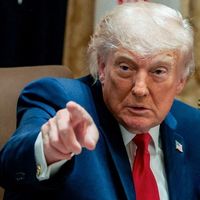
Ahmad Vahidi, Iran's former interior minister in military uniform. FILE PHOTO
A former commander in Iran's Revolutionary Guards accused by Argentine prosecutors of involvement in a deadly 1994 bombing of a Jewish center was appointed the deputy chief of Iran's armed forces general staff, Iranian media reported on Thursday.
The 1994 attack on the Jewish community center Argentine Israelite Mutual Association (AMIA) killed 85 people. Prosecutors in 2006 accused Iran of orchestrating the attack and its Lebanese affiliate Hezbollah of carrying it out.
At the time, Vahidi was the head of the Quds Force, the external operations branch of Iran's sprawling paramilitary organization the Islamic Revolutionary Guard Corps.
Following an international arrest warrant issued by Argentine judicial authorities in 2006, Interpol placed him on its wanted list the following year.
Although no official decree has been published, several state-linked outlets, including Tasnim News and Defa Press, referred to him by the new title.
The move, first flagged by the Telegram channel Sabrin News, reflects another quiet reshuffle within Iran’s top ranks after a Israeli military campaign assassinated hundreds of military personnel in June, along with hundreds of civilians.
Vahidi succeeds Mohammad Reza Gharaei Ashtiani, the former defense minister, and returns to a prominent military position less than three months after leaving the Interior Ministry.
He had served as defense minister from 2009 to 2013 and as interior minister from 2021 to 2024, overseeing a deadly crackdown on the Woman, Life, Freedom protest movement in 2022. The US Treasury sanctioned him in October 2022 for human rights abuses and restricting internet access during the demonstrations.
Vahidi’s appointment signals the continued rise of hardline Revolutionary Guards veterans within Iran’s top command and a preference for loyal security figures close to Supreme Leader Ali Khamenei.
Hezbollah supporters gather in Beirut’s southern suburbs to honor fighters killed in clashes with Israel, November 3, 2023.
Iran-backed Hezbollah is rebuilding its weapons and ranks, defying a cease-fire deal and risking renewed conflict with Israel, the Wall Street Journal reported on Friday, citing people familiar with Israeli and Arab intelligence.
The intelligence shows Hezbollah is restocking rockets, antitank missiles and artillery through seaports and smuggling routes that still operate in parts of Syria, the people said. Some of the new weapons are made in Lebanon by Hezbollah itself, one of the people said.
The rearmament defies the terms of the cease-fire agreement that required Lebanon to begin disarming Hezbollah south of the Litani River. Instead, Hezbollah has resisted, saying its weapons are essential to defend Lebanon’s sovereignty.
Israel, which has provided intelligence to help Lebanese forces disarm Hezbollah and carried out more than 1,000 strikes against the group since last November, is growing impatient, the people said. One person familiar with the matter said the Israeli government was angered to learn the issue had shifted from disarmament to rearmament only months after the truce began.
US Ambassador to Turkey Tom Barrack said in October that Israel could act unilaterally if Beirut delays further, warning of grave consequences. Lebanese leaders have appealed for patience through American and Arab intermediaries and signaled willingness to expand coordination with Israel despite the two states remaining technically at war.
Hezbollah leader Naim Qassem said in a recent television interview that attempts to disarm the group should be resisted but that it seeks to avoid another war. He said Hezbollah has not retaliated to Israeli strikes since the truce began.
The cease-fire followed a two-month Israeli campaign last year, triggered when Hezbollah fired rockets into Israel after Hamas’s 2023 attack. Thousands of airstrikes crippled the group’s infrastructure and killed many of its commanders.
Hezbollah deepens ties in Latin America as Iran faces strain
While Hezbollah rebuilds its military power at home, the group is also reinforcing its global funding base.
US experts told senators last week that Hezbollah is expanding its financial and criminal networks in Latin America, particularly in Venezuela, as Iran struggles under economic pressure. Matthew Levitt, a terrorism analyst, said Hezbollah has long relied on diaspora and illicit trade networks to raise money when funding from Tehran slows.
Lawmakers warned that Venezuela has become a hub for Hezbollah’s drug and finance operations. Senator Sheldon Whitehouse said the group is “one of Iran’s tools to destabilize and terrorize,” urging stronger action to cut its financial lifelines. Others called on Latin American governments to follow Argentina, Colombia, and Paraguay in designating Hezbollah as a terrorist group.
The United Kingdom on Thursday imposed sanctions on an Iranian businessman accused of providing financial and material support to the Islamic Revolutionary Guards Corps, the country's formidable transnational military organization.
“Today we are announcing sanctions against corrupt Iranian banker and businessman, Aliakbar Ansari, for his role in financially supporting the activities of the IRGC," minister of state for the Middle East in the UK foreign office Hamish Falconer said in a statement.
"The IRGC is one of the most powerful military organizations in Iran, reporting directly to the Supreme Leader. Its use of repression and targeted threats to carry out hostile acts, including here in the UK, is completely unacceptable," he added.
Ansari, 56, will now be subject to an asset freeze, disqualification from any UK company ownership and a travel ban. He holds multiple passports, including from Iran, St Kitts and Nevis, and Cyprus the foreign office added.
The British government said last month it was determined to frustrate what it called escalating Iranian threats to people on UK soil, citing cyberattacks and the use of criminal proxies to carry out attacks.
The government in March designated the Iranian state in its entirety on the enhanced tier of its new Foreign Influence Registration Scheme (FIRS).
The move means anyone working for or directed by the Iranian state to conduct activities in the UK must declare those activities or face up to five years in prison.
An aerial view of industrial facilities at Iran's Chabahar Port
The United States has reinstated a sanctions waiver allowing India to operate Iran’s Chabahar Port, weeks after Washington revoked the exemption as part of its so-called maximum pressure campaign on Tehran.
“We have been granted an exemption for a six-month period,” Indian foreign ministry spokesperson Randhir Jaiswal told reporters in New Delhi, confirming the decision that enables India to continue running the strategic port on Iran’s southeastern coast along the Gulf of Oman.
Reuters cited an unnamed Indian official as saying the waiver had taken effect on Wednesday.
The decision follows US President Donald Trump’s recent comments that he hoped to reach a new trade deal with India after years of tension over tariffs and energy purchases from Russia.
Relations between India and the United States, the world's two largest democracies, have soured lately over the imports of discounted Russian oil and Trump's insistence that his intercession averted a nuclear war between India and Pakistan this year.
The waiver restores a 2018 exemption under the Iran Freedom and Counter-Proliferation Act (IFCA) that had allowed India to develop and use the port for Afghanistan’s reconstruction and regional trade.
The US state department withdrew that waiver effective September 29, warning that anyone operating Chabahar could face sanctions.
The renewed approval lets India proceed with its 10-year agreement signed last year with Tehran to develop and manage the port, viewed by New Delhi as a vital trade corridor linking India with Afghanistan and Central Asia while bypassing Pakistan.
For Iran, whose economy remains under heavy US sanctions, the waiver offers a rare opening.
Chabahar remains one of the few international projects connecting the country to global trade routes.
Iranian cleric Mehdi Karroubi during a meeting with the family of Mir-Hossein Mousavi in Tehran on October 30, 2025
Iranian reformist cleric Mehdi Karroubi accused Supreme Leader Ali Khamenei of endorsing alleged rigging in the disputed 2009 presidential election and backing the deadly crackdown on the Green Movement protests which followed.
Karroubi made the remarks during a meeting with the family of Mir-Hossein Mousavi, the Green Movement leader who has been under house arrest since 2011. Both men were presidential candidates in the disputed 2009 election, which they contended was marred by fraud and irregularities.
“In the 2009 election, Mr. Khamenei not only did not tolerate the people’s vote, but he supported fraud and violent suppression and accused us of sedition, lack of insight and indecency,” Karroubi said.
The 2009 election, in which authorities swiftly declared Mahmoud Ahmadinejad the winner, triggered one of the biggest street unrests since the 1979 revolution, with mass demonstrations and a crackdown by security forces. Khamenei at the time urged Iranians to accept the result and later warned protesters to end rallies.
"Khamenei claimed insight, but destroyed the economy, culture, security and ethics, and what you see today is the product of that wrong approach,” Karroubi was quoted as saying by Iranian media.
Mir-Hossein Mousavi and his wife Zahra Rahnavard
Karroubi, who is no longer under house arrest, said both he and Mousavi “saw deviation” in 2009 and intervened out of concern for the country, arguing that the growing role of the Revolutionary Guards, Basij militia and security agencies in politics and the economy had “ruined” governance and eroded oversight.
“Oversight bodies lost their effectiveness and unbridled corruption spread throughout the country.”
Karroubi, a former parliament speaker who ran in 2009, also called for the release of Mousavi and his wife, Zahra Rahnavard. “I hope that childish grudges and stubbornness will end, and that we will soon witness the freedom of Mr. Mousavi and his respected wife,” he said.
Mousavi, a former prime minister who also contested the 2009 vote, has remained under house arrest with Rahnavard since 2011, while Karroubi’s detention eased earlier this year.
Karroubi linked political decisions to Iran’s economic deterioration, citing the currency’s collapse since their detention. “The day we went into house arrest, one dollar was 900 tomans and today it is 108,000 tomans, and if this path is not corrected God knows how much it will be in the near future,” he said.
He also criticized what he called excessive alignment with Moscow by some officials and lawmakers. “The deviation from the revolution and the martyrs’ ideals is such that some military men in parliament tear their shirts for [Vladimir] Putin,” he said.
Mousavi, who in July called for a referendum to convene a constitutional assembly, has said Iran’s political structure “does not represent all Iranians.”
Iranian authorities say the 2009 election was fair and that security measures then and since have been necessary to preserve order.
A security personnel walks past a gate of the office of Directorate of Enforcement in New Delhi, India, March 13, 2024.
Indian police have arrested a 59-year-old man accused of running an espionage and fake passport racket and maintaining contact with nuclear scientists overseas, including in Iran and Russia, Indian media reported on Wednesday.
The suspect, identified as Mohammad Adil Hussaini, had travelled to several countries, including Pakistan, and was allegedly involved in sharing sensitive material abroad, India Today reported, citing police sources.
During questioning, Hussaini allegedly said he obtained nuclear-related designs from a Russian scientist and passed them to a contact in Iran, the report said.
Police said Hussaini earned large sums from the exchange, investing part of the money in property in Dubai. Officials are investigating whether any classified information was shared, saying the matter involves foreign contacts and remains under inquiry.
Delhi Police said Hussaini, also known by several aliases, was found with one original and two forged Indian passports. He is suspected of using fake documents to obtain multiple identity cards linked to sensitive installations.
Additional Commissioner of Police (Special Cell) Pramod Singh Kushwah said the racket had been operating for years and was run from the eastern city of Jamshedpur, where forged passports were produced. “Several others are under the scanner,” Kushwah said on Tuesday.
Police said Hussaini’s brother, Akhtar Hussaini, had been arrested in Mumbai for helping secure fake IDs and travelling to Persian Gulf countries to expand the network. A cafe owner linked to the operation has also been detained.
Hussaini has been remanded in seven days of police custody for questioning, Delhi Police said.