US warns Iraq over Iran oil smuggling and Tehran-backed groups - Iraqi media
Officers from the Naval Force Command stand on an unidentified vessel in Iraqi regional waters suspected of smuggling fuel in Umm Qasr, Iraq in this handout picture released on March 18, 2025.
The US has warned Iraq it could face sanctions over what it called Iranian oil smuggling and ties to armed groups, threatening to freeze millions in revenue and target state oil firm SOMO, Iraqi media reported.
“The United States has warned the Iraqi government that ongoing oil smuggling operations involving Iranian crude could trigger severe sanctions, potentially targeting Iraq's State Organization for Marketing of Oil (SOMO) and freezing $350 million in oil revenue unless implicated individuals are held accountable,” Erbil-based Kurdistan24 wrote Saturday.
On July 3, the State Department issued a direct warning to Baghdad, citing what it called the smuggling of Iranian crude through Iraqi networks and naming six sanctioned entities and four tankers involved in the trade.
The Treasury later designated 22 companies across Turkey, the UAE, and Hong Kong for facilitating sales that fund Iran’s Islamic Revolutionary Guard Corps-Qods Force (IRGC-QF).
“We have contacted the federal Minister of Oil to come to parliament so we can question him about this matter, as this smuggling jeopardizes Iraq’s exports,” said committee member Sabah Subhi in remarks to Kurdistan24.
“Ninety-five percent of Iraq’s revenue depends on oil exports,” he added, reflecting the dilemma as Iraq is once again stuck between allegiances with Washington and its neighbor, Tehran.
US pressure builds over armed groups tied to Iran
The US warning comes alongside growing concern over Iranian-backed armed groups operating within Iraq’s Popular Mobilization Forces (PMF).
A US State Department spokesperson told Iraq’s Shafaq News on Saturday, “These groups continue to engage in violent and destabilizing activities in Iraq.
“We remain concerned about Iranian-backed militia groups, which operate within the Popular Mobilization Forces, including individuals and groups affiliated with designated foreign terrorist organizations.”
On Sunday, Prime Minister Mohammed Shia al-Sudani met with US Chargé d’Affaires Steven Fagin in Baghdad amid US calls for Iraq to take direct steps to rein in sanctioned militias and safeguard regional stability.
US officials have consistently flagged groups within or aligned with the Popular Mobilization Forces—including Kataib Hezbollah and Asaib Ahl al-Haq—for their ties to Iran’s Revolutionary Guard-Quds Force and involvement in attacks on US personnel in Iraq.
Legal experts and politicians have warned that a British summer camp run by the Ahlulbayt Islamic Mission (AIM) charity, which is accused of backing Iran, risks exposing children to extremist views, according to a report by The Telegraph.
Legal lobby group UK Lawyers for Israel (UKLFI) warned that the annual summer camp “is being hosted by a group that openly promotes the revolutionary Islamist ideology of Iran’s supreme leader, Ayatollah Khamenei”, and have called for its closure.
Aimed at children aged 8-13, girls must wear hijab and are segregated from the boys, with the camp embedded in what the website calls "Islamic values", helping "foster a deeper connection to faith".
A UKLFI spokesman told The Telegraph: “AIM’s deep ideological alignment with the Iranian regime and its record of extremist propaganda presents an unacceptable risk to children. We hope the local authority and other agencies will act decisively to protect vulnerable young people from exposure to harmful and radicalizing content.”
Lord Walney, the government’s former extremism adviser, also warned against the possible influence of the camps. “We cannot allow propaganda and influence from this theocratic dictatorship to be spread to children in the UK.
"It is deeply alarming that schoolchildren are being taken to these camps. This raises further questions about the influence of Iran here in the UK.”
On Thursday, the British Parliament’s Intelligence and Security Committee warned of rising threat of physical attacks by Iran against the UK, citing Tehran’s targeting of British Jews and Iranian dissidents living in the country.
In social media posts, north-London based AIM has repeatedly praised Iran’s Supreme Leader Ali Khamenei, calling his books “an excellent source of knowledge and a great read”.
While the group denies representing a foreign state, it openly uses material from speeches by Khamenei and his predecessor, Ruhollah Khomeini.
They have also praised Qasem Soleimani, the former Quds Force commander killed in a 2020 US drone strike, calling him a “great hero”.
A building stands damaged in the aftermath of Israeli strikes, in Tehran, Iran, June 13, 2025.
Israel’s 12-day military campaign against Iran caused extensive ecological harm, with huge cleanup costs and heightened public health risks, according to Iran’s Department of Environment.
Missile strikes and bombings in Tehran and other cities released vast quantities of pollutants into the air and water systems and generated massive quantities of hazardous debris, the department said on Sunday.
“The attacks not only caused civilian casualties and infrastructural damage, but also severely compromised the country’s natural resources.”
Tehran alone generated an estimated 150,000 tons of war rubble, according to the report, with cleanup costs exceeding 7,500 billion rials ($8.7 million), as per the report.
Waste disposal from industrial and military sites added another 3,000 billion rials ($3.5 million).
“Oil storage sites in Rey and Kan were also hit, destroying 19.5 million liters of fuel and releasing more than 47,000 tons of greenhouse gases and nearly 579,000 kilograms of airborne toxins into the capital's atmosphere,” read the statement from the department.
“These emissions pushed air quality in several provinces into the hazardous range.”
The department also warned of threats to water tables, soil, and biodiversity due to chemical leakage, sewage overflow, and thermal radiation, adding that assessments were ongoing and that full reports would be submitted to national and international authorities.
According to the UK-based Conflict and Environment Observatory, which monitors the environmental impact of war and military activity, there has been significant environmental damage in Israel too.
Missiles which hit a refinery complex in the country triggered fires and pipeline damage, its report said.
Israel's latest government figures state there were 43 fires in buildings and 65 forest fires and fires in open areas.
"Damage to urban areas, including to commercial and residential buildings, can create inhalational hazards for people from pulverised building materials and combustion products," The Conflict and Environment Observatory added, after the Iranian attacks of 530 ballistic missiles, destroyed large swathes of residential areas in addition to more secretive sites.
A drone is launched during a military exercise in an undisclosed location in Iran, in this handout image obtained on August 25, 2022.
Five drones could strike a European city in the near future, a former senior Iranian official warned on Saturday, saying Western countries should no longer feel secure following Iran’s recent conflict with Israel.
“Europeans can no longer move about comfortably in their own countries,” Mohammad Javad Larijani, a former senior judiciary official who also served as a top adviser to the Supreme Leader, warned in comments broadcast on state television.
“It’s entirely possible that in the near future, five drones could strike a European city.”
The statement comes as the Islamic Republic faces renewed international pressure over its nuclear program. Britain, France and Germany, three signatories to the 2015 nuclear agreement, are considering the option of triggering a snapback of United Nations sanctions if Iran is deemed non-compliant.
Mohammad Javad Larijani,
This month, Iran expelled the International Atomic Energy Agency's inspectors, accusing them of being a political tool and having given intelligence to aid the attacks made by Israel and the US on Iran's nuclear facilities last month.
Last week, the UK Parliament’s Intelligence and Security Committee (ISC) released a report warning that Iran poses one of the most severe state-based threats to British national security, on par with adversaries like Russia and China.
And last year, the European Parliament also issued warnings about the threat posed by Iran. A statement said: "The Iranian regime’s use of criminal networks as terrorist proxies in Europe poses a grave threat to our internal security."
Larijani's warning to Europe comes just days after he suggested US President Donald Trump could be assassinated by a drone strike while vacationing in Florida.
“Trump has done something [in supporting Israel's war on Iran] so that he can no longer sunbathe in Mar-a-Lago,” he said. “As he lies there with his stomach to the sun, a small drone might hit him in the navel. It’s very simple.”
'Israel, US may attack Iran again'
Larijani said that it is possible that Israel and the United States will seek to launch another attack on Iran.
“The United States and Israel know that if they strike again, our response will be heavier and more unexpected. America is calculating carefully."
Speaking of last month's war with Israel, sparked by surprise attacks on Iran on June 13, Larijani said: “The war began with us being surprised. We did not expect such technologies to be used in the attack. They had inserted and stationed many operatives inside Iran," over 700 Iranians arrested in the wake of the war accused of supporting Israel.
“The enemy can no longer rely on its old methods. This time, we will not be surprised," he added.
An advisor to Iran's parliament speaker has shared an image that seems to show a nuclear attack on Israel.
Mehdi Mohammadi, a strategic adviser to Mohammad-Bagher Ghalibaf, posted the image in an Instagram story on Saturday.
The image showed a map of Israel with two mushroom clouds positioned over its territory—an iconography widely recognized as symbolizing atomic blasts.
A few hours later, Mohammadi posted a second Instagram story seeking to clarify his position.
“Hello friends,” he wrote. “That story was posted by the admin of my page and was deleted a few minutes later. I personally do not believe that developing nuclear weapons would enhance Iran’s deterrence. At the very least, it’s an extremely complex issue."
"Just as possessing nuclear weapons hasn’t prevented Israel from receiving heavy blows, or enabled Ukraine to strike Russia decisively, the military utility of nuclear arms is far more limited than most people imagine,” he added.
Iran continues to deny any ambition to acquire nuclear weapons, dismissing international concerns as politically driven.
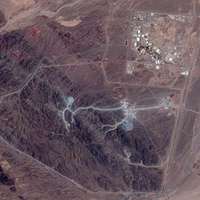
Last month, American airstrikes targeted major Iranian nuclear facilities at Fordow, Natanz, and Isfahan. The attacks came after days of Israeli campaign against Iran where the Jewish State used cruise missiles and deep-penetration bombs to damage infrastructure and affiliated military units.
In October, a group of lawmakers called on Iran's Supreme National Security Council to review the country's defense doctrine and consider adopting nuclear weapons.
A senior Iranian lawmaker on Saturday accused International Atomic Energy Agency (IAEA) inspectors of hiding surveillance microchips in their shoes during visits to Iran’s nuclear sites.
"Why is it that every time these inspectors enter our nuclear facilities, and we conduct body checks, we find microchips in their shoes?" the deputy chairman of the parliament’s National Security and Foreign Policy Committee said.
"It is a fact, not a slogan, that these inspectors are spies," Mahmoud Nabavian said in remarks published by Fars News Agency.
He accused the UN nuclear watchdog of repeatedly passing classified information to foreign governments. "How did Iran’s nuclear installations, such as those in Natanz, become known to the outside world?"
“They know because they are told—by their satellites, their spies, and the agency itself,” he added.
Nabavian said IAEA Director General Rafael Grossi had directly shared Iranian data with Western states. "Even now, they themselves admit all our main statistics and information are given to them by Mr. Grossi.”
Iran’s parliament in late June approved a bill to suspend the country’s cooperation with the IAEA, less than a day into a ceasefire with Israel following 12 days of deadly war.
Parliament members also criticized the IAEA and Grossi, accusing the agency of providing “false reports, politically biased behavior, and facilitating espionage against Iran’s nuclear infrastructure.”
The hardliners and Kayhan newspaper, overseen by Iran's Supreme Leader Ali Khamenei, recently called for the arrest and execution of Grossi if he visited Tehran.