Israeli-Russian hostage in Iraq to be freed in deal involving Iranian prisoners
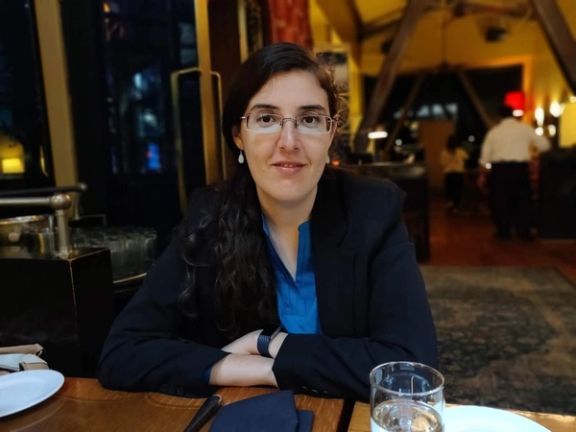
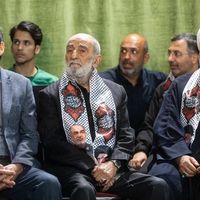
Elizabeth Tsurkov
A prisoner exchange involving Elizabeth Tsurkov, an Israeli-Russian academic kidnapped in Baghdad in 2023, is expected to be finalized within days, multiple Iraqi and regional sources have said, amid quiet negotiations between Washington, Baghdad, and groups aligned with Tehran.
An Iraqi interior ministry security source confirmed to Iran International that Tsurkov’s release will come in exchange for “several Iranian prisoners,” some of whom are convicted in Iraq of security-related offenses, including kidnapping and murder.
Tsurkov, a PhD student at Princeton University and fellow at the New Lines Institute, disappeared in March 2023 while conducting research in Iraq.
Israeli officials believe she is being held by Kata’ib Hezbollah, an Iran-backed Shi’ite militia. While the group has denied involvement, an Iraqi official told Israel’s Channel 11 that she was first detained by Iraq’s intelligence service—or by individuals impersonating officers—before being transferred to the militia.
Earlier on Saturday, Iraq’s Al Rabaa TV, which is aligned with Iranian-backed groups, reported that Tsurkov would be released in a deal involving one Iranian and six other individuals detained over attacks on US interests in Iraq.
Saudi-owned Al Hadath and other regional outlets said the agreement came after a senior Iraqi security official visited Washington, and that Tsurkov may first be sent to a neutral country before returning to Israel.
Who is the Iranian involved?
While no official comment has been made by Tehran, an Iraqi security source told Iran International that among those considered for the exchange is Mohammadreza Nouri, a member of Iran’s Islamic Revolutionary Guard Corps (IRGC) Quds Force.
Nouri was sentenced to life imprisonment in Iraq in September 2023 for orchestrating the murder of American citizen Stephen Troell in Baghdad in November 2022.
Troell, a Tennessee native and English teacher, was shot while driving through Baghdad’s Karrada district. According to US and Iraqi officials, Nouri, along with members of the Iran-aligned Harakat Hezbollah al-Nujaba, attempted to kidnap Troell for ransom.
A militant group called Ashab al-Kahf later claimed responsibility, citing retaliation for the 2020 US drone strike that killed IRGC commander Qassem Soleimani and Popular Mobilization Forces (PMF) leader Abu Mahdi al-Muhandis.
Iran’s judiciary official Kazem Gharibabadi has denied the charges against Nouri, calling him a "defender of the shrine"—a title Iran uses for personnel active in Syria.
Gharibabadi acknowledged that the US had requested Nouri’s extradition, but said Baghdad rejected the request. Although Iraq and Iran have an extradition treaty, Iraq did not transfer Nouri to Iran either.
Israeli officials had confirmed diplomatic efforts to secure Tsurkov’s release, with support from the United States and other allies. “We continue to seek her release through multiple channels,” an Israeli official told Ynet.
Tsurkov’s sister, Emma, said the family had no details about the reported deal but remained hopeful.
Meanwhile, a source close to Iraqi Shi'ite factions told Israel’s Kan public broadcaster that Kata’ib Hezbollah had not yet given final approval for Tsurkov’s release.
If done, this would mean a complex negotiation involving the Iraqi government, Iran-aligned militias, and indirect coordination with Israel and the US.
Saudi Defense Minister Prince Khalid bin Salman visits Tehran on April 17, 2025
President Donald Trump’s high-profile trip to Saudi Arabia has drawn renewed attention to the often fraught relationship between the Middle East’s main heavyweights: Sunni Saudi Arabia and its Shi'ite rival Iran.
While Trump’s trip may not have fundamentally shifted the course of Iran-Saudi relations, it underlines how central their evolving dynamic remains to the region’s future especially as nuclear negotiations between Tehran and Washington continue to unfold.
On Wednesday, Saudi Foreign Minister Faisal bin Farhan underscored the importance of the US-Iran nuclear talks, saying the kingdom fully supports them and hopes for a positive outcome.
Iran's Foreign Minister Abbas Araghchi, in turn, visited Saudi Arabia on Saturday before the fourth round of talks with the US to brief them on the latest developments. He had said last Wednesday that Tehran seeks regional consensus on the talks and any potential deal.
Rivalry and diplomatic tension
The two regional powerhouses have long been vying for influence across the Middle East. Their rivalry has played out in a series of proxy conflicts over the past two decades — from Iraq and Bahrain to Syria and Yemen — where the two sides supported opposing factions.
One of the most acute flashpoints came in 2015, when Riyadh launched a military campaign in Yemen against the Iran-backed Houthi rebels. Although Tehran has always denied direct military involvement, it has been widely accused of supplying weapons and political support.
Relations deteriorated further in 2016 after Saudi Arabia executed prominent Shia cleric Sheikh Nimr al-Nimr. The move sparked violent protests and attacks on Saudi diplomatic missions in Tehran and Mashhad, prompting Riyadh to sever diplomatic ties. This marked one of the lowest points in bilateral relations in decades.
Aramco attack
A September 2019 drone and missile attack on the state-owned Saudi Aramco oil hub that disrupted about five percent of global oil supply marked one of the most significant escalations in the Tehran-Riyadh relations in recent years.
Although the Houthis claimed responsibility and Iran denied any involvement, the sophistication of the weaponry used in the attacks led not only Riyadh and Washington but also European powers to directly blame Iran.
Riyadh appeared to change tack away from years of direct and indirect confrontation with Tehran gradually after the assault on its economic lifeline, paving the way for detente.
Signs of a diplomatic thaw
The recent years have seen a cautious thaw in relations. After the initiation of direct talks in April 2021, a breakthrough came in 2023 with Chinese-brokered talks that led to the restoration of diplomatic relations. Since then, both sides have tentatively explored cooperation and re-engagement, even as deep-seated mistrust remains.
From early 2025 to now, Iranian and Saudi officials have held multiple high-level meetings.
Diplomatic momentum picked up pace in October 2024, when the newly appointed Araghchi visited Riyadh and met with Crown Prince Mohammed bin Salman and foreign minister amid growing the growing Gaza conflict.
The timing — just days before another round of Tehran-Washington nuclear talks — underscored Saudi Arabia’s possible diplomatic involvement.
Araghchi returned to Riyadh on May 10, ahead of the fourth and most recent round of nuclear talks in Doha. Iranian media reported that he delivered a response to the Saudi king’s letter, continuing what appeared to be an unprecedented backchannel of direct communication.
Toward a regional nuclear consortium?
During Trump’s meetings in Riyadh, the possibility of a civil nuclear agreement between the US and Saudi Arabia was reportedly discussed.
The initiative, not officially confirmed by either Tehran or Riyadh so far, may have been pitched as a confidence-building measure designed to reassure the West about Iran’s nuclear intentions while embedding regional powers and the United States in a shared framework.
Saudi Arabia, long intent on developing its own civilian nuclear capabilities, may view such a proposal as an opportunity to gain influence over regional nuclear policy while maintaining checks on Iran’s activities. However, significant technical and political obstacles would need to be overcome.
President Donald Trump speaks at the Persian Gulf Cooperation Council (GCC) in Riyadh, Saudi Arabia, May 14, 2025.
US President Donald Trump told Persian Gulf leaders on Wednesday that Iran must end its support for what he called Tehran's proxy forces and cease its nuclear weapons ambitions if it hopes to reach a deal with Washington.
Speaking at the US-GCC summit in Riyadh, Trump said, “I want to make a deal with Iran. But for that to happen, it must stop sponsoring terror, halt its bloody proxy wars and permanently and verifiably cease its pursuit of nuclear weapons.”
Iran maintains its nuclear program is for peaceful purposes.
Last month, the head of the UN's nuclear watchdog, Rafael Grossi, said: “Iran is not far from having a nuclear problem. They don’t have it, we know it, but the material for it is already there. To make a few warheads.”
Trump accused his predecessor, President Joe Biden, of emboldening Iran and undermining US allies in the Persian Gulf. “Everyone at this table knows where my loyalties are,” he said. “Those days are over.”
The summit in Riyadh took place during the first leg of Trump’s tour of the Persian Gulf as the US seeks to revitalize ties with regional allies and broker new economic and security partnerships. Trump traveled to Doha on Wednesday.
During the visit in Riyadh, Trump also announced a $600-billion investment agreement with Saudi Arabia, covering sectors from energy and defense to mining and technology.
On Tuesday, Trump, speaking before Crown Prince Mohammed bin Salman and other top Saudi and US officials, delivered a wide-ranging speech criticizing Iran while expressing willingness to strike a new nuclear deal.
Framing Tehran as the main obstacle to regional peace, Trump said, “The biggest and most destructive of these forces is the regime in Iran,” blaming it for destabilizing Syria, Lebanon, Gaza, Iraq, and Yemen.
He contrasted Iran’s decline with the Persian Gulf’s growth, noting that while “you have been constructing the world’s tallest skyscrapers,” Iran’s infrastructure is “collapsing into rubble.”
“If Iran’s leadership rejects this olive branch,” he warned, the US would impose massive maximum pressure to stop it from acquiring a nuclear weapon.
Iranian officials swiftly pushed back. Foreign Minister Abbas Araghchi, speaking on the sidelines of a cabinet meeting in Tehran on Wednesday, dismissed Trump’s remarks as provocative and misleading.
“Trump tries to portray Iran as the source of insecurity. But who killed 60,000 people in Gaza? Are we the ones spreading chaos?” Araghchi asked, in comments aired by state television, referring to US support of Israel in its war on Iran-backed Hamas in Gaza.
He rejected Trump’s threat of renewed pressure, saying, “The policy of maximum pressure has already failed.”
Araghchi added that Iran remains committed to dialogue and is awaiting further coordination by Oman, which has been mediating backchannel talks between Tehran and Washington.
Iran's Foreign Minister Abbas Araghchi speaking to reporters in Tehran on May 14, 2025
“It is America that, through its sanctions over the past forty-some years, along with its pressures and its military and non-military threats, has hindered the progress of the Iranian nation; the one responsible for the economic problems is America,” he said.
Iranian Foreign Ministry spokesman Esmail Baghaei also denied that nuclear negotiations were at an impasse.
“The fact that both Iran and the US want the talks to continue means the negotiation process is still ongoing,” he said.
He said details about the next round of talks will be announced by Oman soon.
President Masoud Pezeshkian said on Tuesday evening, “If we stand together, America will be powerless against us.”
Syrian President Ahmed al-Sharaa meets with US President Donald Trump and Saudi Crown Prince Mohammed Bin Salman and other officials in Riyadh, Saudi Arabia, in this handout released on May 14, 2025.
In a surprise move during his stay in Riyadh, Trump also announced the lifting of US sanctions on Syria, following a landmark meeting with Syrian President Ahmad al-Sharaa—the first such encounter between leaders of the two nations in over two decades.
“We’re taking them all off. Good luck Syria, show us something very special,” Trump said at a US-Saudi investment forum.
The US leader also touted a recent ceasefire with Yemen’s Houthi rebels, a key Iran ally, and a diplomatic breakthrough in South Asia, where American mediation reportedly helped de-escalate tensions between nuclear-armed India and Pakistan.
As the summit convened on Wednesday, Saudi Foreign minister Prince Faisal bin Farhan Al Saud said Riyadh fully supports the US-Iran nuclear talks and hopes for positive results.
"Regarding the nuclear file, there is full support for the ongoing talks between the United States and Iran. We hope that these talks will lead to a positive outcome that ensures the stability of the region."
Oman’s Deputy Prime Minister for International Affairs, Al Sayyid Asaad Tariq Taimur Al Said, also expressed optimism that a nuclear deal with Iran could still be reached.
Bahrain’s King Hamad bin Isa Al Khalifa echoed that sentiment, saying continued dialogue would “bolster stability and improve prosperity across the region.”
Whether Oman’s mediation can bridge the divide remains to be seen.
A F/A-18E Super Hornet fighter, USS Dwight D. Eisenhower, Red Sea, February 13, 2024.
US President Donald Trump made a u-turn on his campaign against the Iran-backed Houthi militia after huge financial losses and American casualties became impossible to justify, according to the New York Times.
After 30 days of a ramped-up campaign against the Islamist militia amid its blockade of commercial shipping in the Red Sea region, US strikes had used around $1 billion of weapons and munitions.
In addition, two $67 million F/A-18 Super Hornets from America’s flagship aircraft carrier tasked with conducting strikes against the Houthis accidentally tumbled off the carrier into the sea.
On day 31 of the operation to quash the blockade in the key maritime trade route, Trump is reported to have requested a report, in which the numbers began to reflect an ever costly operation against the group only becoming more adamant in its own mission.
The Houthis shot down several American MQ-9 Reaper drones and continued to fire at naval ships in the Red Sea, including an American aircraft carrier, with the US failing to gain even air superiority over the group the US has listed as a terrorist organization.
“In those first 30 days, the Houthis shot down seven American MQ-9 drones (around $30 million each), hampering Central Command’s ability to track and strike the militant group,” the NYT reported.
“Several American F-16s and an F-35 fighter jet were nearly struck by Houthi air defenses, making real the possibility of American casualties,” the NYT said, according to multiple US officials.
When two pilots and a flight deck crew member were injured in the two episodes involving the F/A-18 Super Hornets, which fell into the Red Sea from the aircraft carrier Harry S. Truman within 10 days of each other, that fear became a reality.
The Pentagon reported that American strikes had hit multiple command and control facilities, air defense systems, advanced weapons manufacturing facilities and advanced weapons storage locations.
More than a dozen senior Houthi leaders had been killed, according to the US military, but the cost was mounting with the deployment of two aircraft carriers, additional B-2 bombers and fighter jets, as well as Patriot and THAAD air defenses, to the Middle East, officials told the NYT.
A White House spokeswoman, Anna Kelly, said in a statement to The New York Times that the US military had carried out more than 1,100 strikes, killing hundreds of Houthi fighters and destroying their weapons and equipment.
The chief Pentagon spokesman, Sean Parnell, said the operation was always meant to be limited. “Every aspect of the campaign was coordinated at the highest levels of civilian and military leadership,” he said in an emailed statement to the NYT.
Under former President Joe Biden, the US was leading a more than 20-nation coalition against the Houthi blockade, which had seen targeted strikes on the group’s infrastructure, but in a bid to free up global shipping, Trump cracked down on the Iran-backed group, before the costs began to raise eyebrows.
But now, while the Houthis have paused attacks on commercial shipping since the Oman-mediated ceasefire with the US, the group has continued targeting Israel, with one ballistic missile missing the country’s main airport by just meters earlier this month.
Ben-Gurion Airport in central Israel remains a target from the group, which has issued multiple statements warning it is no longer safe.
The Houthis say the attacks are in solidarity with the Palestinians in Gaza and they will not stop until a full ceasefire in Gaza.
Since the US agreed to the ceasefire, Israel has begun to step up its own operations against the Houthis independently of the US agreement.
US resident Donald Trump speaks to reporters after signing a proclamation renaming the Gulf of Mexico to the Gulf of America, while flying over the gulf aboard Air Force One, February 9, 2025
President Donald Trump plans to announce that the US will begin officially referring to the Persian Gulf as the “Arabian Gulf,” the Associated Press reported — a move condemned by Iran as a politically motivated affront to its national identity and historical legacy.
The move, which comes amid a broader effort to deepen ties with Persian Gulf Arab states, marks a break with long-standing international convention, prompting sharp rebuke from Iran, which shares the longest coastline along the body of water.
Foreign Minister Abbas Araghchi called the reported decision politically motivated and historically inaccurate, saying, “The name Persian Gulf, like many geographical designations, is deeply rooted in human history.”
"Politically motivated attempts to alter the historically established name of the Persian Gulf are indicative of hostile intent toward Iran and its people, and are firmly condemned. Such biased actions are an affront to all Iranians, regardless of their background or place of residence,” Iran's top diplomat said on X.
Two US officials familiar with the matter, who spoke on condition of anonymity, said the announcement would be made while Trump visits Riyadh as part of a regional tour that includes Qatar and the United Arab Emirates—countries that have long pushed for the geographic name change.
“The president is expected to unveil what he calls a ‘historic reorientation’ of US nomenclature to better reflect regional alliances,” one of the officials said.
Trump himself teased a major announcement during a meeting at the White House on Tuesday. “It’ll be one of the most important announcements that have been made in many years about a certain subject, a very important subject,” he said.
Known globally as the Persian Gulf since at least the 16th century, the name of the inland sea has become a politically and culturally charged issue. Arab states often use “Arabian Gulf” in official documents and maps, while Iran considers the historical term a matter of national identity.
“The Persian Gulf is not just a name. It is part of who we are,” an Iranian diplomat in Tehran said on condition of anonymity. “Changing it under pressure from petrodollars will not erase thousands of years of history.”
In 2017, during Trump's first administration, his first reference to what he called the "Arabian Gulf" led to public backlash from Tehran.
The Iranian foreign minister at the time, Mohammad Javad Zarif, said: “Everyone knew Trump’s friendship was for sale to the highest bidder. We now know that his geography is, too.”
Iran’s then-president, Hassan Rouhani, also criticized the phrasing, saying Trump should “study geography.”
The US military has unilaterally used “Arabian Gulf” in communications for years, but the White House’s official adoption of the term would represent a new level of endorsement, likely increasing tensions with Tehran.
Under international maritime law, the designation of sea names is handled by the International Hydrographic Organization (IHO), which currently recognizes the body of water as the “Persian Gulf.” The United Nations and most world maps do the same.
While Trump can direct US federal agencies to use a different name, he cannot enforce the change globally. Congressional legislation would be required to make the shift permanent in US law, and a future administration could easily reverse it.
“Trump can rename it on White House letterhead, but that won’t change global consensus,” said Lisa Barry, a professor of international law at Georgetown University.
The renaming announcement is part of a broader push to align more closely with Persian Gulf Arab monarchies as Trump seeks increased investment from the region and backing for his policies on Iran and Israel.
The announcement also follows a controversial decision earlier this year to rename the Gulf of Mexico as the “Gulf of America” in US government usage—a move that led to a legal battle with the Associated Press.
A federal judge ultimately ruled that the AP could not be denied access to government events for refusing to adopt the administration’s preferred terminology, citing First Amendment protections.
The inland sea in question spans about 251,000 square kilometers (97,000 square miles) and borders eight nations: Iran, Iraq, Kuwait, Saudi Arabia, Bahrain, Qatar, the UAE, and Oman. Iran alone accounts for more than 1,600 kilometers (1,000 miles) of its coastline.
Trump is scheduled to travel to Saudi Arabia, Qatar, and the UAE from May 13 to 16. The announcement is expected to be made during a keynote speech in Riyadh, though officials said the precise timing remains fluid.
A screengrab obtained from a handout video released by CENTCOM on March 15, 2025 by US Central Command
The White House said on Monday that a top Houthi missile expert was killed in US strikes, as President Donald Trump warned that that military action against the Iran-backed Houthi rebels in Yemen would continue until the group no longer threatens maritime security.
"The choice for the Houthis is clear: Stop shooting at US ships, and we will stop shooting at you. Otherwise, we have only just begun, and the real pain is yet to come, for both the Houthis and their sponsors in Iran," Trump said in a Truth Social post.
Following Trump’s remarks, the United States Central Command (CENTCOM) confirmed ongoing attacks on Houthi positions in Yemen on Tuesday, releasing video footage of the strikes.
The White House said that recent US strikes in Yemen have resulted in the death of a top Houthi missile expert. However, the US military has not confirmed the death, and the identity of the Houthi commander remains unclear.
National Security Advisor Mike Waltz, in comments to CBS News after the March 15 strikes, said that the first wave of attacks killed “their head missileer.”
Reuters reported that unnamed US officials said they were unaware of any independent confirmation from the US military regarding the death of the individual in question.
While on March 15, CENTOM said in a press release that its forces initiated an operation consisting of precision strikes against Iran-backed Houthi targets across Yemen, it did not provide further details on the targets.
Trump also referred to the death of Houthi leaders in his post on Truth Social, saying "The Iran-backed Houthi Terrorists have been decimated by the relentless strikes over the past two weeks. Many of their fighters and leaders are no longer with us."
US Air Force Lieutenant General Alexus Grynkewich did not mention a missileer in his comments about US strikes on Houthi positions on March 17 but confirmed that an aerial drone facility was targeted, along with several key leaders, the Reuters report added.
The strikes, the largest US military operation in the Middle East since Trump took office, aim to pressure the Iran-backed Houthis to end their attacks on shipping in the Red Sea, including US warships.
The group has carried out over 100 attacks on shipping since late 2023, citing solidarity with Palestinians in Gaza. What began as a campaign against Israeli-backed ships has led to a total blockade on global shipping with multiple international seamen killed in attacks.