• العربية
  • فارسی
Brand
  • Iran Insight
  • Politics
  • Economy
  • Analysis
  • Special Report
  • Opinion
  • Podcast
  • Iran Insight
  • Politics
  • Economy
  • Analysis
  • Special Report
  • Opinion
  • Podcast
  • Theme
  • Language
    • العربية
    • فارسی
  • Iran Insight
  • Politics
  • Economy
  • Analysis
  • Special Report
  • Opinion
  • Podcast
All rights reserved for Volant Media UK Limited
volant media logo

Trump seen as likely to back military action against Iran - Axios

Jan 6, 2025, 14:34 GMT+0Updated: 19:26 GMT+0

US President Donald Trump left Israeli Minister Ron Dermer with the impression that he was likely to support an Israeli military strike on Iran’s nuclear facilities—or even order a US strike—after a November meeting, Axios reported citing two sources.

Dermer met Trump at his Mar-a-Lago residence in Florida in November, Axios reported at the time, saying the aim of the meeting was for the Netanyahu confidant to convey messages regarding Israel’s plans for Gaza, Lebanon and Iran.

Most Viewed

Iran executes protester over January uprising
1

Iran executes protester over January uprising

2
PODCAST

US should use Iran talks leverage to help Iranian people, veteran journalist says

3

Iranian national charged in US over migrant smuggling scheme

4

Three Baha’i women jailed in southeast Iran, one of them pregnant

5

UK releases man jailed for spying on Iran International in 2023 terror plot

Banner
Banner

Spotlight

  • US should use Iran talks leverage to help Iranian people, veteran journalist says
    PODCAST

    US should use Iran talks leverage to help Iranian people, veteran journalist says

  • Iran’s economy after the March war: how bad can it get?
    ANALYSIS

    Iran’s economy after the March war: how bad can it get?

  • Behind Tehran’s unity show: The secret letter to the shadow king
    INSIGHT

    Behind Tehran’s unity show: The secret letter to the shadow king

  • Rapid deterioration of Iran-UAE ties threatens a critical trade lifeline
    ANALYSIS

    Rapid deterioration of Iran-UAE ties threatens a critical trade lifeline

  • Tehran stocks head for reopening, but it risks triggering a new crisis
    ANALYSIS

    Tehran stocks head for reopening, but it risks triggering a new crisis

  • Power vacuum in Tehran emboldens hardliners
    INSIGHT

    Power vacuum in Tehran emboldens hardliners

  • Inflation spikes, basic goods slip out of reach for Iranians, citizens say
    VOICES FROM IRAN

    Inflation spikes, basic goods slip out of reach for Iranians, citizens say

•
•
•

More Stories

What’s on the agenda for Iraqi PM's Tehran visit?

Jan 6, 2025, 13:19 GMT+0
•
Mardo Soghom

Iraq’s prime minister is set to visit Tehran on Wednesday to discuss regional issues following the tumultuous events of 2024, including the overthrow of Syria’s Bashar al-Assad and the decline of Iran’s regional influence.

On Monday, Iran’s Foreign Ministry spokesperson, Esmail Baghaei, told reporters that Prime Minister Mohammed Shia al-Sudani will focus on discussing the situation with Syria’s new government. Both Iraq and Iran are navigating cautiously amid the radically changed dynamics in the region.

Arab media reported on Sunday that the commander of the Quds Force of Iran's Islamic Revolutionary Guard Corps (IRGC) was visiting Baghdad to meet the leaders of Tehran-backed Shia groups as well as the Iraqi prime minister, Arab media reported Sunday.

Esmail Ghaani (Qaani) and several of his advisers in the Quds Force arrived in Baghdad on Sunday morning to meet with the leaders of the Shia factions and the head of the Popular Mobilization Units (PMU), Falih al-Fayyadh, Erem News reported citing an Iranian source.

There have been recurrent reports and analysis about Iraqi government plans to restrict the Iran-backed Shia militia groups. In fact, as opposition forces were moving toward Damascus last month to depose Assad, the Iraqi militia did not cross the border to defend him.

A pro-Hezbollah newspaper in Lebanon reported last month that the Iraqi militias reached a deal with the government not to attack Israel. The move reflected concerns about escalating conflicts in the region and fears of Iraqi security being endangered after insurgents took control in neighboring Syria.

Some regional and Iranian media outlets speculate that al-Sudani’s visit to Tehran may aim to persuade the Islamic Republic to halt its support for Shiite militias. While it remains unclear whether the prime minister’s agenda is that bold, the role of these militias in Iraqi politics is likely to be a key topic of discussion.

The Iranian Rouydad24 website, citing Arab media, said that al-Sudani’s agenda is securing guarantees from Tehran to cease its support for militias and Iran-aligned groups in Iraq, urging Iran to respect the decisions of the Iraqi government, and ensuring Iraq's immunity from any military operations by the US or Israel launched from Iraqi territory are expected to be key demands.

It is believed that Israeli, and possibly US, warplanes could launch missiles at Iran using Iraqi airspace. Reportedly, Israel employed this tactic during its October airstrike on Iran.

Alaeddin Boroujerdi, an influential Iranian lawmaker, told local media last week that the Iraqi Prime Minister might be delivering a message to Iran, though he did not specify its source. The Tehran-based Etemad Online suggested that the message likely originates from Washington, urging Baghdad to curb Iranian-backed militias and Shiite groups.

An Iraqi journalist in Baghdad, speaking on condition of anonymity, told Iran International that significant developments are expected in January and February as President-elect Donald Trump takes office.

Trump agrees to suspend extradition of Iranian detainee - Italian media

Jan 6, 2025, 12:50 GMT+0

US President-elect Donald Trump has agreed to temporarily halt the extradition of an Iranian detained in Milan, Italian media said on Monday after Iran International reported that Tehran tied an Italian reporter’s release to the Iranian detainee’s freedom.

Mohammad Abedini Najafabadi, accused of transferring drone technology to Iran, was arrested at Milan Airport on a US warrant. Washington says the technology was used in an attack in February near the Jordan-Syria border that killed three American soldiers, an assertion Iran denies.

“The freezing of the United States' extradition request to Italy for Iranian Mohammad Abedini-Najafabadi, detained since December 16 in Milan's Opera prison on an American warrant, was the primary objective of Prime Minister Giorgia Meloni's swift visit to Mar-a-Lago, the Florida residence of US President-elect Donald Trump, who is set to be sworn in on January 20,” wrote the Italian newspaper Il Giornale on Monday.

Mohammad Abedini Najafabadi, accused of transferring drone technology to Iran, was arrested at Milan Airport on a US warrant on December 16.
100%
Mohammad Abedini Najafabadi, accused of transferring drone technology to Iran, was arrested at Milan Airport on a US warrant on December 16. (File Photo)

The suspension gives Italy a brief window to negotiate the release of Italian journalist Cecilia Sala, detained in Tehran since December 19.

“The tipping point may come on January 15, when the Court of Appeal in Milan is set to rule on the request for house arrest for Abedini. This decision could allow the Italian government to advocate for a similar measure for Sala,” added Il Giornale.

Tehran made clear to Rome that the freedom of the Italian reporter detained in Iran depends on Italy's release of Abedini, a source familiar with discussions between the journalist's family and the Italian government told Iran International.

Iran, the source said, is prepared to free Sala “on humanitarian grounds" if the Italian government drops the extradition proceedings against Abedini and grants his release from Milan's brooding La Opera prison.

Iran denies link between Sala and Abedini cases

Tehran has denied any connection between the two detentions. Iranian Ministry of Foreign Affairs spokesperson Esmaeil Baghaei said on Monday, “These two issues are completely unrelated. The Italian journalist was detained for violating Iranian laws, while the Iranian individual is in custody for circumventing US sanctions.”

The Iranian embassy in Rome also claimed Sala is being treated humanely, while urging Italy to expedite action for Abedini’s release.

Italian journalist Cecilia Sala, detained in Tehran since December 19, 2024. (undated)
100%
Italian journalist Cecilia Sala, detained in Tehran since December 19, 2024.

Tensions over Sala’s detention escalated after the Italian foreign ministry summoned Iran’s ambassador in Rome, Mohammadreza Sabouri, on January 2 to demand her immediate release.

Domestically, Prime Minister Giorgia Meloni’s diplomatic efforts have drawn praise. Deputy Prime Minister Matteo Salvini posted on X: “Well done Giorgia Meloni for visiting Donald Trump to talk about peace, industrial and commercial cooperation, security, and the freeing of Cecilia Sala.”

Milan’s Chief Prosecutor has opposed Abedini’s conditional release, while Meloni is scheduled to meet US President Joe Biden in Rome on January 12 to further discuss Sala’s detention.

The temporary suspension of Abedini’s extradition shows the high stakes for Meloni’s government torn between Washington and Tehran as it navigates the complexities of securing Sala's release, addressing what rights groups and nations such as France have branded as Iran’s 'state hostage-taking'.

Iran's nuclear program nears point of no return, Macron warns

Jan 6, 2025, 11:51 GMT+0

French President Emmanuel Macron warned on Monday that Iran's nuclear program is nearing the point of no return, stressing the need for Paris to engage in strategic discussions with US President Donald Trump's administration about Tehran.

Macron urged the European parties to the lapsed 2015 nuclear deal with Tehran to consider reimposing sanctions, he told an annual conference with French ambassadors to outline foreign policy objectives in 2025,

"The acceleration of the nuclear program leads us nearly to the point of no return,” he said, describing Iran as the main strategic and security challenge for France and Europe.

Iran says its uranium enrichment program is for peaceful purposes but has accelerated activity since US President-elect Donald Trump withdrew from the 2015 nuclear deal - officially known as the Joint Comprehensive Plan of Action (JCPOA) - during his first term and reimposed sanctions on Tehran.

“Remember, when the United States decided to denounce the JCPOA, which they themselves had promoted, France had a simple view: we must move towards a broader agreement. This is our strategy today,” Macron added.

Last month, European powers France, Germany, and Britain warned that Iran’s actions had further eroded the agreement, noting that Tehran’s stockpile of highly enriched uranium has no credible civilian justification.

In December, the head of the UN nuclear watchdog reported that Iran was dramatically advancing enrichment close to the 90% purity needed only for weapons-grade material.

The three European nations, co-signatories of the 2015 accord, had brokered the deal under which Iran agreed to limit enrichment in exchange for the lifting sanctions. With the sanctions reimposed, Iran saw little to no incentive to keep its part of the bargain.

French, German, and British diplomats are scheduled to meet with Iranian counterparts on January 13 for a follow-up to last month’s talks, aimed at exploring serious negotiations in the coming months to ease tensions with Tehran as Trump prepares to return to the White House on January 20.

"In the coming months we will have to ask ourselves whether to use ... the mechanism to restore sanctions," Macron said, referring to October 2025 when the JCPOA formally expires.

Macron also mentioned Iran's ballistic missiles and support for Russia, labeling them threats to Europe and calling for diplomacy with Trump after he took office.

“Its (Iran’s) ballistic missile program threatens European soil and our interests. Iran is already involved in Russia's war against Ukraine through clear and fully identified military support.”

Warning that Iran’s use of terrorism continues throughout the world, he said, “Tehran’s support for dangerous groups across all conflict zones in the Middle East and its attempts to establish a presence in Africa amplify this danger through its so-called proxies.”

Iranian woman removes cleric's turban in airport confrontation

Jan 6, 2025, 11:18 GMT+0

A video has gone viral on social media showing a woman without a mandatory headscarf confronting a cleric at Tehran's Mehrabad Airport, removing his turban and placing it on her own head like a scarf during the altercation.

The video, shared widely on social media on Sunday and Monday, shows the woman angrily removing the turban and saying to the cleric, "So you have honor now?”

She then searches for her husband, calling his name and asking, "What did you do to my husband?"

The exact date and cause of the initial confrontation remain unclear.

A media outlet affiliated with the Islamic Revolutionary Guard Corps (IRGC), Mashregh News, reported that the incident was unrelated to hijab and claimed the woman had "psychological problems."

The outlet also stated that the woman was briefly detained but later released "with the consent of the complainants."

The incident occurred within the context of increasing civil disobedience by women in Iran, particularly following the death of Mahsa Amini in police custody in September 2022. Crackdowns on women defying mandatory hijab in public places, including airports, have also intensified.

The government's tendency to pathologize dissent is a recurring theme. In November, a female student at the Azad University in Tehran’s Science and Research branch became a symbol of the movement for freedom of dress by removing her clothing in protest.

While many Iranians recognized the as an act of defiance, official narratives attempted to portray her as mentally unstable. Four Iranian psychology and psychiatry associations criticized the government last year for misusing psychiatry and psychology to suppress opposition to mandatory hijab.

Countering Mashregh News's claims, some social media users have interpreted the airport incident as a powerful act of protest, with some describing it as a " remarkable protest performance."

For instance, one user praised the woman's "transformation of the turban into a mandatory scarf" as an innovative form of resistance.

The Israeli television network Kan 11 also shared the video, framing it as a protest against the enforcement of mandatory hijab.

The incident highlights the ongoing struggle over women's rights in Iran. In the past two years, thousands of women have faced arrest, summons, fines, prosecution, or denial of public services for not adhering to the state-mandated dress code.

In December 2023, Mohsen Aghili, the head of airport police, stated that women would be denied airport services if they did not wear a hijab.

Prior to that, officials at airports in Fars province and Mashhad had announced the deployment of hijab enforcers to prevent what they called improperly veiled people from entering airports and terminals.

In July, the Tehran office of Turkish Airlines was temporarily closed due to its employees' non-compliance with hijab regulations.

The Human Rights Activists in Iran (HRANA) reported in December that over 30,000 women faced legal action last year for defying mandatory hijab.

The Iranian authorities' efforts to enforce hijab continue through various means, including the recently passed the so-called Chastity and Hijab Law. 

The final text of the "Family Protection through Promoting the Culture of Chastity and Hijab" law was published in Iranian media in November, prompting widespread expressions of concern from several rights groups and activists, including UN experts.

Earlier in January, Rouhollah Momen-Nasab, the secretary of the Tehran Headquarters for Promoting Virtue and Preventing Vice, called for the law's implementation before the summer. However, the government is hesitant to enforce the law, likely due to concerns about public backlash.

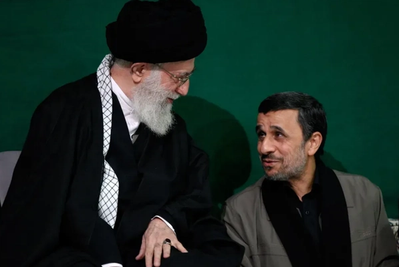
No link between Italian journalist’s arrest and Iranian’s detention in Milan - Iran

Jan 6, 2025, 10:10 GMT+0

Iran has denied any connection between the detention of Italian journalist Cecilia Sala and the arrest of Iranian national Mohammad Abedini Najafabadi in Milan, describing reports of a reciprocal exchange as false.

“These two matters are entirely unrelated,” foreign ministry spokesman Esmail Baghaei said during a press briefing on Monday. “The Italian journalist was detained for violating Iranian laws, while the Iranian individual was arrested for circumventing US sanctions.”

Baghaei also criticized what he described as the US targeting Iranian citizens abroad.

“Several Iranian nationals are pursued and extradited in certain countries at the request of the US, which we consider a form of hostage-taking,” he said.

However, a source familiar with discussions between Sala's family and the Italian government told Iran International that Tehran made clear to Rome that Sala's freedom depends on Italy's release of Mohammad Abedini Najafabadi, an Iranian arrested at Washington's behest.