• العربية
  • فارسی
BrandBrand
  • Iran Insight
  • Politics
  • Economy
  • Analysis
  • Special Report
  • Opinion
  • Podcast
  • Live TV
  • Iran Insight
  • Politics
  • Economy
  • Analysis
  • Special Report
  • Opinion
  • Podcast
  • Live TV
  • Theme
  • Language
    • العربية
    • فارسی
  • Iran Insight
  • Politics
  • Economy
  • Analysis
  • Special Report
  • Opinion
  • Podcast
  • Live TV
All rights reserved for Volant Media UK Limited
volant media logo

Khamenei allows policy review to ease Iran's trade restrictions

Dec 31, 2024, 12:54 GMT+0Updated: 11:58 GMT+0

Iran’s economy minister announced on Tuesday that the Supreme Leader has approved revisiting two critical international conventions required to ease banking restrictions resulting from Iran's blacklisting by the money laundering watchdog, the Financial Action Task Force (FATF).
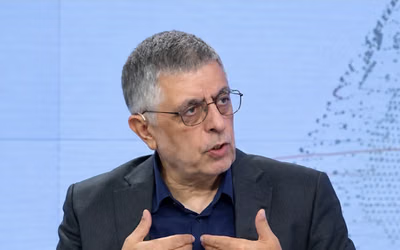
Abdolnaser Hemmati wrote on X, "The president informed me that the Supreme Leader has approved revisiting the Palermo and CFT bills related to the FATF in the Expediency Discernment Council."

The Expediency Discernment Council, which mediates disputes between parliament and the Guardian Council (a constitutional watchdog), became involved after parliament approved the legislation but the Guardian Council rejected the two bills concerning the Palermo and CFT conventions regulating money laundering and financing of terror groups.

The Financial Action Task Force (FATF), established by the G7 member countries to safeguard the international financial system, influences banking policies in most countries and guides businesses aiming to protect their own integrity and reputations.

Iran's status on the FATF blacklist has had a major impact on its international banking operations. The country remains on the list of high-risk countries with serious strategic deficiencies in countering money laundering, terrorist financing, and proliferation financing.

Iran needs to finalize legislation enabling the enactment of two international conventions: the International Convention for the Suppression of the Financing of Terrorism (CFT) and the UN Convention against Transnational Organized Crime (Palermo Convention).

The dispute between the parliament and the Guardian Council was referred to the Expediency Council in 2019 for arbitration.

The Expediency Council has stalled the matter since then, neither approving nor rejecting the bills. The inaction is apparently due to objections from hardliners, such as the Chairman of the Expediency Council Sadeq Amoli Larijani, who argue that joining the conventions would harm Iran's national security by exposing its dealings with regional Tehran-backed allies—precisely the activities these international agreements are designed to address.

“If you ask my personal opinion, Palermo and CFT are extremely detrimental to national security,” Larijani said in 2020.

Iran will remain on the FATF's list of High-Risk Jurisdictions Subject to a Call for Action until it fully implements its action plan, including ratifying the Palermo and CFT. Only then will the FATF consider next steps, such as suspending countermeasures.

The FATF says it remains concerned about the terrorist financing risk from Iran and its threat to the international financial system until these measures are implemented.

Even if Iran joins the FATF, more must be done to attract foreign investment, Mohammad Khazaei, Secretary-General of the Iranian Committee of the International Chamber of Commerce (ICC), said earlier in the year.

Most Viewed

‘We cannot bring America to its knees,’ former Tehran mayor says
1

‘We cannot bring America to its knees,’ former Tehran mayor says

2

Iran’s strikes on Persian Gulf water and power were deliberate - Reuters

3

Tehran hospital locks its main building and treats patients in the courtyard

4

Iran speaker says government overstepped on anti-terror finance rules

5

Iran shipped jet fuel to Myanmar despite US blockade - Reuters

Banner
Banner
Banner
Banner
Banner

Spotlight

  • Iran cultivated Houthis for years before opening new war front, Yemeni insider says
    PODCAST

    Iran cultivated Houthis for years before opening new war front, Yemeni insider says

  • After the killings, Iran turned on the families of the dead

    After the killings, Iran turned on the families of the dead

  • Iran’s rulers face a reckoning with their own people, former US envoy says
    ONE-ON-ONE

    Iran’s rulers face a reckoning with their own people, former US envoy says

  • Iran speaker says government overstepped on anti-terror finance rules

    Iran speaker says government overstepped on anti-terror finance rules

  • Ignore prices and economy is fine, Iran ex-minister says

    Ignore prices and economy is fine, Iran ex-minister says

  • Iran police killed brothers celebrating Khamenei’s death, source says

    Iran police killed brothers celebrating Khamenei’s death, source says

  • Nowhere else to go? The puzzle behind Iran’s stock rally
    INSIGHT

    Nowhere else to go? The puzzle behind Iran’s stock rally