Houthis say they have shot down a US MQ-9 Reaper drone

The spokesman for Yemen's Houthis says the Tehran-backed militants have shot down an American MQ-9 Reaper drone over Al-Bayda governorate.
The spokesman for Yemen's Houthis says the Tehran-backed militants have shot down an American MQ-9 Reaper drone over Al-Bayda governorate.
Every single one of these drones costs about $32 million, according to a Congressional report.
The US military has not yet commented on the Houthis' claim.
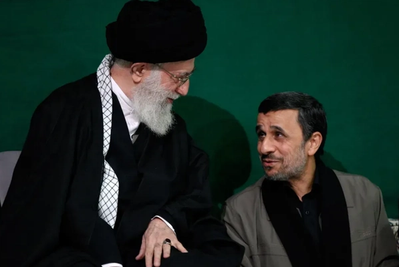



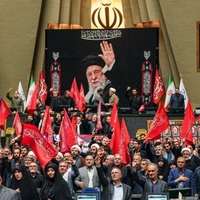
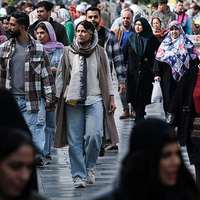

Iran’s defense minister announced a surprise series of military drills starting Saturday to show the Islamic Republic would not crumble easily like Bashar al-Assad's Syria.
"They are signaling that Yemen and Iran are next after Syria. But the truth is, it is their turn next, as these powers won’t leave them alone," Aziz Nassirzadeh said in remarks carried by Iranian media.
The United States, he said, employs Israel - a "70-year-old cancerous tumor" - to exploit the Middle East's resources, in familiar rhetoric for top Tehran officials.
“We have no issues on the hard warfare front. We are building power by all means and will remain prepared.” Nassirzadeh said, speaking on Friday during a ceremony commemorating Razi Mousavi, a Revolutionary Guards commander killed in Syria last year.
The drills, described as a display of Iran’s strengthened defensive capabilities, come in response to growing regional tensions and threats by Israeli officials to strike Iran directly if their Yemeni Houthi allies keep up missile attacks.
Earlier this week, Gholamali Rashid, commander of IRGC’s Khatam al-Anbiya Central Headquarters had mooted plans for “powerful defensive and offensive drills” in the coming weeks.
The announcement follows threats by Iranian officials that Tehran would launch True Promise 3, a third retaliatory attack against Israel in response to its October airstrikes on Iran.
However, after the fall of al-Assad’s in Syria, Tehran’s rhetoric on direct retaliation has subsided, with a focus now shifting to defensive readiness.
Nassirzadeh remarked: “We no longer have a presence in Syria, but even our statements instill fear in the enemy, leading them to issue warnings against us. Their fear stems from the strength of the resistance.”
Iranian Supreme Leader Ali Khamenei has previously vowed to reclaim Syria from opposition forces and encouraged Syrian youth to resist the new government. However, Syrian interim Foreign Minister Asaad Hassan Sheibani recently issued a warning to Iran, urging it to avoid interference in the country’s affairs.
The military drills starting Saturday are seen as part of Iran’s efforts to bolster its defensive posture as military setbacks abroad put the home front into focus.
Iran has plunged into multiple crisis in recent weeks, with energy shortages and a rapidly falling currency, creating a sense of weakness amid popular discontent.
A former engineer for a semiconductor company, Mahdi Sadeghi, pleaded not guilty in federal court on Friday to charges of illegally procuring US technology for an Iranian company linked to a drone attack that killed three US service members in January.
Sadeghi was indicted on December 19, along with the arrest of Mohammad Abedini in Milan, Italy, who was also involved in illegal military technology transfers to Iran.
Sadeghi, a dual US-Iranian citizen, was charged with violating US export control and sanctions laws. His arrest on December 16 led to his dismissal from Analog Devices, where he had worked since 2019. Prosecutors allege that Sadeghi used his position to facilitate the procurement of US-origin electronic components for San’at Danesh Rahpooyan Aflak Co, an Iranian navigation systems manufacturer headed by Mohammad Abedini.
On Friday, news emerged that an Italian reporter, Cecelia Sala, 29, was detained in Iran on the same day when the news about Sadeghi and Abedini became public. In the past, Iran has detained foreigners in similar cases to later exchange them with its agents arrested in the West.
According to prosecutors, Abedini's company supplied navigation systems to Iran’s Islamic Revolutionary Guard Corps for use in military drones. One such drone was reportedly involved in an attack on Tower 22, a US outpost near the Syrian border in Jordan, which killed three Army Reserve soldiers and injured 47 others.
The White House attributed the attack to the Islamic Resistance in Iraq, a coalition of Iran-backed militant groups. Iran, however, has denied involvement, with its foreign ministry calling the arrests of Sadeghi and Abedini a violation of international law.
Court filings reveal that Sadeghi traveled to Iran in 2016 seeking funding for a startup. Through an affiliated company, he allegedly began procuring U.S. technology for Abedini’s firm. Prosecutors claim that, after joining Analog Devices, Sadeghi helped Abedini’s Swiss front company secure contracts with the Massachusetts-based firm, allowing Abedini to access sensitive technology.
The components procured were reportedly used in the navigation system of the drone involved in the attack.
Sadeghi has remained in custody since his arrest. A hearing is scheduled for January 2 to determine potential bail conditions as discussions between the defense and prosecutors continue.
Iran announced surprise military drills on Saturday to showcase its continued strength after the Israeli blows to its defense systems as well as the loss of Syria to rebels marked one of the Islamic Republic's biggest military setbacks yet.
"You will see that our power has not diminished, contrary to what the enemy claims in its psychological warfare, but has actually increased," Iranian media quoted Iran's Defense Minister, Brigadier General Aziz Nassirzadeh as saying.
"Today, some deliberately and others inadvertently present analyses suggesting the weakening of resistance," he added.
"I believe these individuals fail to grasp the essence of resistance, which is an ideology," Nassirzadeh added, referring to the strength of Iran's allied groups in the region despite the setbacks.
In October 26 retaliatory strikes again Iran, Israel took out nearly all of Iran’s air defense system, according to Western officials including the UK's Chief of Defense Staff.
Israel has decimated Hamas infrastructure in Gaza, assassinated many of its leaders, including Ismail Haniyeh and Yahya Sinwar, and targeted Hezbollah’s commanders after killing successive leaders of the Lebanese group.
Notwithstanding, Iranian officials including the country's ultimate military decision maker, Supreme Leader Ayatollah Ali Khamenei, described the conflict as a victory.
A new airstrike on Friday struck the capital of Yemen, Sana’a, just a day after Israeli warplanes targeted key sites in Yemen to disrupt Houthi military operations, including their entry points from Iran.
The Iran-backed Houthi militants have blamed the US and Britain for the new attack. There has been no immediate comment from the US, Britain, or Israel.
An armed Shi'ite movement which controls most of northern Yemen, the Houthis are armed by Iran and part of its so-called Axis of Resistance against Israel.
After killing the top leaders and destroying the assets of other Iran-backed militant groups like Hezbollah and Hamas, Israel is now preparing for a new front against the Houthis in Yemen, which it calls "the last man standing" among Iran's armed allies, after rebels toppled Iran's key ally Syrian President Bashar al-Assad.
Israeli Prime Minister Benjamin Netanyahu announced Thursday that the fight against the Houthis “is only getting started.”
A clandestine factory in Russia is significantly scaling up production of Iranian-designed drones for use in the Ukraine war, according to a CNN investigation.
The plant, located in the Alabuga Special Economic Zone in Russia's southern Tatarstan region, utilizes a range of Chinese components in the production of these Iranian-designed attack and surveillance drones, according to the report.
Satellite imagery analyzed by CNN and experts shows that two additional buildings have been constructed at the site, and security increased.
In June 2023, US intelligence alleged Iran was aiding Russia in building a drone manufacturing facility in Yelabuga, within the Alabuga Special Economic Zone on the steppes of the Tatarstan region.
The plant focuses on producing Shahed-136 drones domestically, which Russia rebranded as the Geran-2. The collaboration aims to manufacture approximately 6,000 drones by mid-2025, ensuring a consistent supply for Russia's military needs.
CNN's analysis of associated social media accounts and assessments from Ukrainian defense intelligence sources reveal the factory's significant expansion and its reliance on a young, low-skilled workforce of Russian teenagers and African women.
The sources, who spoke to CNN anonymously for safety reasons, said that the factory is now also producing thousands of “decoy” drones, designed to exhaust Ukrainian defenses.