• العربية
  • فارسی
BrandBrand
  • Iran Insight
  • Politics
  • Economy
  • Analysis
  • Special Report
  • Opinion
  • Podcast
  • Live TV
  • Iran Insight
  • Politics
  • Economy
  • Analysis
  • Special Report
  • Opinion
  • Podcast
  • Live TV
  • Theme
  • Language
    • العربية
    • فارسی
  • Iran Insight
  • Politics
  • Economy
  • Analysis
  • Special Report
  • Opinion
  • Podcast
  • Live TV
All rights reserved for Volant Media UK Limited
volant media logo

Pundits in Iran cautiously assess prospects for talks with Europe

Behrouz Turani
Behrouz Turani

Iran International

Nov 28, 2024, 08:50 GMT+0Updated: 12:18 GMT+0
An undated photo showing Khamenei speaking with Larijani in a leadership gathering.

Observers and commentators in Iran remain cautiously optimistic about the upcoming talks with the United Kingdom, France, and Germany regarding the country’s contentious nuclear program. However, dissenting voices persist.
The talks scheduled for November 29 were announced following a resolution by the UN nuclear watchdog, the IAEA, condemning Tehran's lack of transparency and violations of its obligations under the 2015 nuclear deal with world powers.

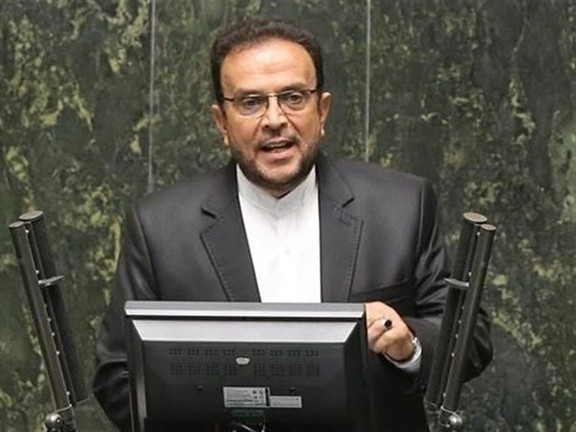
While the United States has stated it will not participate in the November 29 talks, some Iranian observers, including Mahmoud Abbaszadeh Meshkini, a former member of the Iranian parliament's foreign policy and national security committee, have expressed skepticism. Meshkini remarked, "Europeans do not make decisions on Iran's nuclear program independent of the United States. Their foreign policy aligns with US policies and priorities."

100%
Former lawmaker Mahmoud Abbaszadeh Meshkini

Meshkini warned that Iran should not enter the talks without a clear objective, adding that Tehran should avoid "negotiations for the sake of negotiating."

Former lawmaker Mahmoud Abbaszadeh Meshkini

The hardline daily Kayhan, closely aligned with the office of Supreme Leader Ali Khamenei, has emphasized that "while the talks are essential, the Pezeshkian administration should not be involved in the negotiations." Kayhan criticized the government for ignoring "the Europeans' hostile actions against Iran and the IAEA's recent resolution, which was drafted by the very countries Iran plans to negotiate with."

The paper further accused the administration of "repeated retreats" from its positions while the West continues to disregard the Pezeshkian administration's "optimistic overtures." It also noted that European nations have failed to acknowledge Pezeshkian's victory in Iran's presidential election. Kayhan warned that some might view the government's approach as "a treacherous disregard for past experiences that have harmed Iran's national interests."

The daily characterized "negotiations with Europe as a mistake" and reiterated that talks with the EU-3 are bound to fail.

100%
The firebrand editor of Kayhan Hossein Shariatmadari

The upcoming negotiations are set to take place two years after the last round of talks between Iran and European nations. However, this is not a high-level meeting, as deputy foreign ministers are scheduled to discuss "a range of bilateral, regional, and international issues," according to the Iranian Foreign Ministry spokesperson.

The broad scope of the talks suggests that the agenda extends beyond Iran's nuclear program. Meanwhile, the moderate news outlet Khabar Online described the talks as an effort by Iran to reduce tensions with Europe.

Iranian media have also lauded the role of former Majles Speaker Ali Larijani, now a senior adviser to Supreme Leader Khamenei, in shaping diplomatic developments with Europe and the Middle East. Larijani was the first to propose negotiating with Europe and the United States in recent weeks. Observers have also noted his involvement in brokering the cease-fire between Hezbollah and Israel.

Politician Ali Mohammad Namazi told Nameh News website that Larijani went to Syria and Lebanon with an important mandate from Khamenei and conducted some successful negotiations. Namazi said that Larijani's political comeback was significant and meaningful. He added that what brought him back to the forefront of Iranian politics included the prospect of a change in relations between Iran and the United States, and the tensions in Lebanon and Gaza that brought Iran very close to an all-out war with Israel.

He highlighted Larijani's experience as a former secretary of the Supreme Council of National Security from 2005 to 2007 and suggested that Pezeshkian, who maintains good relations with Larijani, should consider asking him to assume that role once again for Iran.

Reformist figure Mohammad Ali Abtahi echoed this sentiment, describing Larijani's recent mission to Lebanon as marking "a strategic shift in Iran's foreign policy" in the region. Similarly, another reformist, Mohammad Atrianfar, argued that Larijani should be reappointed as the secretary of Iran's Supreme Council of National Security, citing his pragmatic approach and his potential to facilitate the resumption of ties between Iran and the United States.

Most Viewed

Iran state TV says modified missile could reach US base in Britain
1

Iran state TV says modified missile could reach US base in Britain

2

Seven years after ‘Bloody November,’ Iran rations gasoline it dares not reprice

3

Third US carrier joins Iran blockade, Bessent warns of economic collapse

4

Blair's sister-in-law attended Iran conference linked to IRGC spy recruitment - Telegraph

5

Iran facing one of fastest economic collapses ever, Bessent says

Banner

Spotlight

  • Can higher fuel prices curb Iran’s smuggling problem?
    ANALYSIS

    Can higher fuel prices curb Iran’s smuggling problem?

  • Canadian MP to flag paintball gun findings after Iran protest blindings
    PODCAST

    Canadian MP to flag paintball gun findings after Iran protest blindings

  • Locks for cash: inside Iran's booming hair trade

    Locks for cash: inside Iran's booming hair trade

  • Seven years after ‘Bloody November,’ Iran rations gasoline it dares not reprice

    Seven years after ‘Bloody November,’ Iran rations gasoline it dares not reprice

  • Iranians and Israelis can defeat the IRGC together, says Arab-Israeli activist
    ONE-ON-ONE

    Iranians and Israelis can defeat the IRGC together, says Arab-Israeli activist

  • Iran's oil output plunges below pre-war domestic needs
    ANALYSIS

    Iran's oil output plunges below pre-war domestic needs

Banner
Banner
Banner
Banner
Banner
Banner












