Iran and Israel may eventually halt their back-and-forth strikes, but this could remain the reality for both sides for months or even years, an Israeli insider and former Air Defense Commander (2015-2018) told Iran International.
Brigadier General Zvika Haimovich said he can predict what’s next by examining the history of strikes between Iran and Israel.
One thing is certain: the next round will escalate further, with more missiles and greater complexity—a safe assumption, he added.
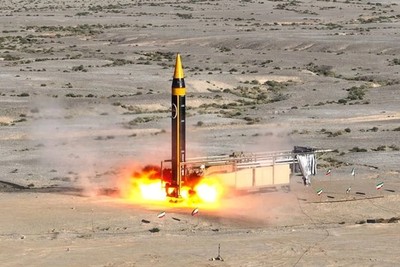
“They are never going back. The volume becomes much higher than before. Just look at the last the two events with Iran, April 14th and October 1st. April 14th there were 110 ballistic missiles. In October we found ourselves with almost 200 missiles, double that,” said Haimovich.
He referred to this as the formula based on his background in the Israeli military. He held a senior command in 2018 of the Juniper-Cobra joint exercise between Israeli and US Forces.
Patrick Clawson, a Research Counselor at The Washington Institute, told Iran International neither Israel nor Iran wants a full-scale war, but each is determined to show it can inflict sufficient damage to cause on side to pause.
But in doing that, Iran's supreme leader Ayatollah Ali Khamenei threatened Israel and the US with “a crushing response” over Israel’s strikes in Iran.
“The enemies, whether the Zionist regime or the United States of America, will definitely receive a crushing response to what they are doing to Iran and the Iranian nation and to the resistance front," Khamenei said on November 2.
While things could only get worse, Haimovich believes at some point, this will end, but the million-dollar question is what will stop one side.
“Somebody will stop somewhere in the future. The question is to what will force them to stop,” he lamented.
External pressure could be one factor.
The transition period over the next couple of months to incoming President Donald Trump will be crucial—a sensitive time for Israel and Iran, during which major decisions are unlikely, Haimovich said.
“For one side, it's very sensitive and the other side, it's a very dangerous time to take decisions.”
Israeli Prime Minister Benjamin Netanyahu announced on Sunday that he recently spoke three times with US President-elect Donald Trump, emphasizing that they share a common view on Iran, seeing “eye to eye on the Iranian threat.”
Beyond the US, other external factors in the Middle East could influence the duration and intensity of direct strikes between Iran and Israel.
Leaders from the Arab and Muslim world met in Riyadh on Monday for a summit focused on the conflicts in Gaza and Lebanon, with Iran and Trump on their minds.
Saudia Arabia had been on the verge of formalizing relations with Israel, but October 7 and the ensuing wars in Gaza and Lebanon negatively impacted that prospect. The Kingdom has recently found itself warming up to Tehran.
“We call on the international community to compel Israel to respect Iran’s sovereignty and not to attack its territory,” the Saudi King told those attending the summit.
Israel has several fronts to the war that has been raging for more than a year. The longer that goes on, the more complex it becomes and the more difficult to de-escalate, said Brigadier General Zvika Haimovich.
The former Commander of the Israeli Air Force told Iran International that all roads lead back to the Islamic Republic. "What does Israel have with the Houthis in Yemen or the militias in Iraq? Nothing."
He said Iran’s stated goal of destroying Israel is exactly why they have influence in Syria and Iraq and formed proxies just at the border with the Jewish State.
The dangerous tit for tat between the two foes is not sustainable but Israel may switch gears from other war fronts to focus their attention on Iran and its nuclear program, according to Haimovich.
Israel’s new defense minister Israel Katz has said Iran’s nuclear sites are more vulnerable than ever after Israel’s airstrikes on its air defense sites last month.
“Iran today is more exposed than ever to damage to its nuclear facilities. There is a possibility to achieve the most important goal, to thwart and remove the threat of annihilation from hanging over the State of Israel,” said Katz.