Hacking or sabotage? US probes 'top secret' leak of Israel's plan on Iran
As Washington investigates a top-secret document leak regarding Israel's retaliation plans to Iran’s recent aerial attack, questions have emerged over whether it was the result of a security breach or an Iran-backed cyberattack.
Two US intelligence documents, meant to be shared exclusively among the 'Five Eyes' nations, were leaked on the pro-Iran Telegram account Middle East Spectator, just as Israel prepares to retaliate for the October 1 barrage of 181 ballistic missiles. The platform's account on X lists its location as the Islamic Republic of Iran.
In a press statement, Middle East Spectator said the channel had no connection to the original source “which we assume to be a whistleblower within the US State Department."
The "top secret" documents, dated October 15 and 16, began circulating online Friday, meant only to be seen by Australia, Canada, New Zealand and the United Kingdom. Several options are now being discussed, including internal strategic leaks and possible state-backed hacking.
Holden Tripplet, a former FBI counterintelligence official, told Iran International: “The leak, if done without official sanction by the US government, may have been intended to dissuade an Israeli strike or at least limit the overall retaliatory response.”
However, Tripplet, who spent 15 years in the FBI, said it could also be the tip of the iceberg. “There may have been other documents leaked along with those which would likely indicate someone in the US government upset with US policy towards Israel in general,” he added. “They may be trying to harm the overall relationship.”
Jason Brodsky, head of policy research at United Against Nuclear Iran, wrote on X that the documents, which had been US surveillance of Israeli military activity in preparation for the retaliation, “risks eroding trust between the US and Israel at a sensitive moment”, the documents “of high value to Tehran as it plans a defense”.
Speaking to CNN, Mick Mulroy, former deputy assistant secretary of defense for the Middle East and a retired CIA officer, said: “If it is true that Israeli tactical plans to respond to Iran’s attack on October 1 have been leaked, it is a serious breach”, he too warning that future coordination between the US and Israel could be challenged as a result.
“Trust is a key component in the relationship, and depending on how this was leaked that trust could be eroded,” he added. CNN cites officials who have verified the authenticity of the documents.
One of the documents , which says it was compiled by the National Geospatial-Intelligence Agency, says it has observed Israel moving munitions around.
Another says it is sourced to the National Security Agency and outlines Israeli air force exercises involving air-to-surface missiles, also believed to be in preparation for a strike on Iran.
The reports also detail preparations of Israeli drone units, transfer of advanced munitions at Israeli air bases and air force exercises involving intelligence planes and fighter jets.
US President Joe Biden has said he will support Israel’s retaliation, but not an attack on Iran’s nuclear facilities.
Brodsky pointed out that “there are many possible culprits: from a hack to a leak. The Iranian regime, with assistance from Russia and perhaps China, has been perfecting its cyberwarfare skills in this regard.”
Only last month, a US grand jury indicted several Iranian nationals and IRGC employees on charges related to hacking efforts targeting Donald Trump’s 2024 presidential campaign.
They were charged with a conspiracy "with others known and unknown to hack into accounts of current and former US officials, members of the media, nongovernmental organizations, and individuals associated with US political campaigns”.
The Justice Department said the activity was “part of Iran’s continuing efforts to stoke discord, erode confidence in the US electoral process, and unlawfully acquire information relating to current and former US officials that could be used to advance the malign activities of the IRGC, including ongoing efforts to avenge the death of Qasem Soleimani, the former commander of the IRGC – Qods Force.”
The latest leak also raises serious questions about internal security among the most senior officials in the US. Brodsky added: “After a series of incidents that have raised serious questions, many people have been concerned about possible Iranian influence and infiltration in the US government, not to mention those with animus towards a key US partner Israel.”
Last year, US Iran envoy, Robert Malley, was suspended after what was described as his mishandling classified information. Malley was placed on unpaid leave and had his security clearance suspended, with the State Department still blocking all efforts to gather further information on the case.
Two influential congressmen suggested in May that Malley lost his security clearance because he had transferred classified documents to his personal email and cell phone, and the documents were then stolen by a hostile cyber actor.
It raises possible questions about the team he had around him who remain in place while the FBI investigates Malley.
Also last year, highly classified Pentagon documents were leaked online, once again risking relations with the country’s allies such as Israel, South Korea and Ukraine, revealing information about how the US spies on allies and foes alike.
Axios reported that US officials said the breach was extremely concerning for Washington.
On Sunday, Israeli officials were declining to comment on the matter while the country continues to fight Iran’s proxies across its borders.
In recent weeks, the rising tensions between the Islamic Republic and Israel, along with the increasing likelihood of an Israeli military strike, have had negative impacts on Iran's economy.
The Islamic Republic's threats of igniting a regional war have caused significant turmoil in Iran's financial markets. On Saturday, the Tehran Stock Exchange index plunged by 24,000 points, falling to just above two million points. Meanwhile, the US dollar surged to near-record highs, and gold prices spiked, both serving as clear indicators of the escalating crisis.
Iran's economy has clearly felt the looming threat of war and responded swiftly. As the likelihood of an Israeli military strike increases, further spikes in the dollar rate and gold prices seem inevitable, heightening public anxiety about their financial survival.
The U.S. dollar has surged by nearly 10 percent since August, before Israel escalated its attacks on Hezbollah, prompting an Iranian missile barrage on October 1. While the IRGC missiles were ostensibly aimed at Israel, their true impact has been felt directly on Iran's economy, with ripple effects hitting domestic markets like daily economic bombs.
Iran’s economy hostage to foreign policy
In this situation, President Masoud Pezeshkian's government is similarly powerless to take effective action, as both war and sanctions are beyond its control. Economy Minister Abdolnasser Hemmati's calls for lifting sanctions to improve economic conditions are made with the full knowledge—shared by Hemmati himself—that this is impossible under current circumstances. Iran’s military and foreign policy decision are made by Supreme Leader Ali Khamenei.
Iran's economy has essentially become hostage to its foreign policy—a policy that is increasingly moving toward greater tension and conflict with the US and Israel. Not only is there no hope of lifting the sanctions, but new sanctions, such as those against Iran Air, have worsened the situation, leading to the complete suspension of Iran's flights to Europe.
Social discontent and public anger
Amid the ongoing economic crisis, protests from various sectors of society, including retirees and nurses, have grown, with people consistently voicing complaints about worsening economic conditions and their increasingly empty dinner tables. A central theme in these protests is the widespread anger toward the government’s neglect of domestic issues in favor of supporting groups like Hezbollah in Lebanon and Hamas. Many feel that, in the face of these crises and mounting economic pressures, the government has abandoned its own people, focusing on its regional proxies. This sentiment has further widened the gap between the public and the government, with anger and dissatisfaction clearly reflected in the protestors’ messages.
Failed attempt to assassinate Netanyahu intensifies tensions
Meanwhile, the IRGC and its proxy groups’ attempt to assassinate Israeli Prime Minister Benjamin Netanyahu has ended in failure. A drone attack on Netanyahu’s residence in Caesarea, between Haifa and Tel Aviv, was unsuccessful as neither he nor his wife were home at the time. This failure has intensified Israel’s anger, resulting in renewed threats against the Islamic Republic.
The incident raises a crucial question: Why have Israel and the US successfully targeted and assassinated numerous IRGC commanders and leaders of proxy groups, while the Islamic Republic and its proxies have not managed to eliminate even a single senior Israeli commander? The answer is the Islamic Republics technological inferiority.
In summary, as political and military tensions persist, Iran's economy is facing mounting pressure with no clear path to recovery. The Islamic Republic's foreign policy, focused on supporting regional proxy groups rather than national interests, has effectively held the economy and people's livelihoods hostage. Continuing with this foreign policy approach will not only fail to improve the situation but will further exacerbate the economic and social crisis.
Iran’s Foreign Minister Abbas Araghchi has issued a warning to Israel, stating that Tehran has pinpointed all of its military targets in the country and would respond to any attack on Iranian soil.
The comments came during an interview with Turkey's NTV network on Friday, at a regional meeting in Istanbul.
Araghchi emphasized that any attack on Iran, particularly its nuclear facilities, would be seen as crossing a red line and would provoke a significant response.
"Any attack on Iran will be considered crossing a red line for us. Such an attack will not go unanswered. The necessary response will be given to any attack on Iran's nuclear facilities or any similar attack," Araghchi stated.
This latest rhetoric from Tehran comes amid escalating tensions between Israel and Hezbollah, Iran’s regional ally. On Saturday, a drone launched from Lebanon struck the seaside residence of Israeli Prime Minister Benjamin Netanyahu in Caesarea, an affluent town known for its luxury villas. Although Netanyahu and his wife were not present during the attack, the Israeli Defense Forces (IDF) confirmed that the drone, fired by Hezbollah, damaged a building in the area.
"The attempt by Iran’s proxy Hezbollah to assassinate me and my wife today was a grave mistake," the Israeli leader wrote on social media platform X. "This will not deter me or the State of Israel from continuing our just war against our enemies."
In his remarks, Araghchi underscored Iran’s position on what it sees as Israeli and American aggression in the region. He pointed to the ongoing conflicts in Gaza and Lebanon, stating that Israel could not act in these areas without support from the United States.
"Israel cannot commit crimes in Gaza and Lebanon without the US. All the weapons used there are supplied by the US" Araghchi said during the interview.
The foreign minister added that Iran had not attacked Israeli civilian or economic targets, it had focused solely on military sites. He suggested that Tehran might not continue this approach if provoked. "We have not attacked the economic or civilian facilities... we have only targeted military facilities. Now we have identified all our targets there, and a similar attack on their targets will be carried out," Araghchi warned.
Israeli Prime Minister Netanyahu, meanwhile, has vowed that “anyone who tries to harm Israel’s citizens will pay a heavy price. We will continue to eliminate the terrorists and those who dispatch them,”
Iran’s Foreign Ministry Spokesman Esmail Baghaei denied Iran’s role in launching attack on Netanyahu’s residence accusing Israel of being built on lies.
“The Zionist regime has been formed on the basis of lies and distortion of facts. Spreading lies is the current and permanent practice of this regime and its criminal leaders”, the spokesman said.
Araghchi, participating in Friday's meeting of South Caucasus nations in Istanbul after a regional tour which took him to Jordan and Egypt, described the growing tensions in Lebanon as very worrying.
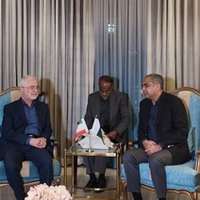
Iran's Foreign Minister Abbas Araghchi met with his Turkish counterpart Hakan Fidan on the sidelines of a South Caucasus nations meeting in Istanbul on October 19, 2024.
"The possibility of war in the region is always serious, and no one other than the Zionist regime wants that to happen. We want to reduce tensions, but we are ready for any scenario," he said.
These developments come at a time of heightened instability in the Middle East, with Israel facing threats from multiple fronts, including Hezbollah in Lebanon and Hamas in Gaza, both backed by Iran.
Bellicose comments about relentless war against Israel and the United States by a radical ayatollah in Iran has led to strong reactions by more moderate clerics, as Iran faces a likely Israeli attack.
A moderate seminarian as well as other critics have lashed out at the hardliner clergyman known to be the spiritual leader of ultraconservative Paydari Party for his comment on resistance against US and Israel at any cost.
Viral videos on social media show hardline cleric Mohammad Mehdi Mirbagheri stating that Muslims "from Israel to Yemen and from Iran to Palestine" must continue their resistance against Israel, even if it leads to the deaths of half the world's population in the conflict.
According to the Iranian Labor News Agency (ILNA), seminarian Mohammad Taghi Fazel Maybodi criticized hardline cleric Mohammad Mehdi Mirbagheri, stating: "Mr. Mirbagheri suggests that four billion people should die for him to achieve his goal. His destination aligns with the same agenda pushed by the Paydari Party."
Fazel Maybodi further remarked, "It seems Mirbagheri considers himself part of the half meant to survive, otherwise, he'd be in Gaza right now! It’s unfortunate that he makes such statements in the name of Islam."
According to a report by Rouydad24, the reformist daily Ham Mihan has labeled Mohammad Mehdi Mirbagheri as the "theoretician of war." The paper noted that Mirbagheri cited the late Ayatollah Ruhollah Khomeini, founder of the Islamic Republic, as allegedly saying, "If the superpowers hang all Muslim activists and take all our women as prisoners, our objective would still be worth it." Ham Mihan added that the authenticity of this quote attributed to Khomeini has yet to be verified.
The daily, along with other sources, reported that Mirbagheri and his fellow Paydari members are known for opposing Iran’s development according to common international standards. In response, Mirbagheri’s supporters labeled *Ham Mihan* a Zionist paper, arguing that Mirbagheri is a "theoretician of resistance," not war.
The core debate among Iranians now centers on the choice between constant confrontation with other states and pursuing peace, good relations, a strong economy, and development. After 45 years, it's evident that the Islamic Republic has failed to establish a healthy economy. Critics point to this failure and accuse the regime of fostering ongoing regional tensions that have left Iran increasingly isolated.
Prominent economist Mohammad Renani in Iran has accused Mirbagheri of being delusional, arguing that an alliance spanning nations from Afghanistan (Taliban) to Yemen and Palestine is unrealistic. Meanwhile, economic journalist Maysam Sharafi highlighted that Mirbagheri’s ideas are published on his Telegram channel under the heading of “war,” contradicting his supporters' claims that he advocates "resistance."
Meanwhile, contributing to the ongoing debate on the implications of Middle East conflicts for Iran, seasoned politician and former senior lawmaker Heshmatollah Falahatpisheh wrote in a commentary that the deployment of the American THAAD anti-missile system to Israel likely signals a shift in US policy in the region.
He highlighted two key points about the US move: first, Washington deployed the system specifically to counter Iran’s ballistic missiles; second, it aims to reassure its Arab allies in the region.
Falahatpisheh added that Israel and the US have entered a new phase in their alliance against Iran. However, while Israel views its confrontation with Iran as a tactical, step-by-step process, for the US, it is a strategic matter.
Commenting on the potential impact of the impact of the US election, Falahatpisheh noted: "If Trump wins, unlike the Democrats, he will manage tensions with Russia but will give more leeway for escalating conflicts in the Middle East." He also emphasized that Trump’s diplomacy leaves no room for concessions to Middle Eastern countries.
In his assessment of the region's dynamics, Falahatpisheh concluded that both sides in the conflict are intent on completely destroying each other, making it difficult for diplomats to achieve any meaningful progress.
Israeli Prime Minister Benjamin Netanyahu warned Iran after a Hezbollah drone strike targeted his Caesarea residence early Saturday. Though no injuries occurred, Netanyahu condemned the attack, linking it to Iran and its regional allies.
The drone, fired from Lebanon by Hezbollah, struck Netanyahu’s seaside residence, though the prime minister and his wife were not present. The Israeli Defense Forces (IDF) confirmed that a building was hit in Caesarea, an affluent town known for its luxury villas and ancient Roman ruins. Netanyahu’s office released a brief statement acknowledging the attack, followed by the prime minister’s vow of response.
"The attempt by Iran’s proxy Hezbollah to assassinate me and my wife today was a grave mistake," the Israeli premier wrote on X. "This will not deter me or the State of Israel from continuing our just war against our enemies in order to secure our future."
“Anyone who tries to harm Israel’s citizens will pay a heavy price. We will continue to eliminate the terrorists and those who dispatch them,” added Netanyahu.
Israel’s Foreign Minister Israel Katz echoed the prime minister's stance, stating that the attack "exposed Iran’s true face and the evil axis it leads." Katz added that Israel’s enemies "will pay a heavy price for any attempt to harm our citizens, soldiers, and leaders."
Houshang Hassan-Yari, a military expert, in an interview with Iran International, emphasized the gravity of the situation, noting that the IRGC (Islamic Revolutionary Guard Corps) has reached a point where it can launch such an attack. "The level of tension is rising," Hassan-Yari said, suggesting that this operation marks a shift in the IRGC's willingness to act directly. He indicated that the attack could lead to a broader conflict in the region.
It is not clear why Israel's sophisticated air defense system was not able to identify and shoot down a drone that flies relatively slowly.
“While this attack opens the path for a strike against Khamenei, the US can no longer prevent such actions to avoid escalation. Furthermore, no regional country would criticize such a strike. The involvement of the IRGC in Hezbollah’s activities has drawn attention to the possibility of a direct strike on Iranian officials,” added Hassan-Yari.
Israeli police set a roadblock on a street in Caesarea, following a drone attack from Lebanon towards Israel amid ongoing hostilities between Hezbollah and Israel October 19, 2024.
Mohsen Sazegara, a journalist and political analyst, also told Iran International that Saturday’s attack was carried out by the IRGC, which has assumed control of Hezbollah's operations following the assassination of its leader, Hassan Nasrallah. Sazegara suggested that the IRGC now has a direct intent to assassinate Netanyahu.
'Red lines crossed, Iran's regime closer to end'
Miki Zohar, Israeli Culture Minister, also said in a tweet in Farsi: "The Iranian attempt to assassinate the Israeli Prime Minister, even for a terrorist monster like Iran, whose hands are stained with the blood of thousands, is considered crossing a red line. The price Iran will pay will be deeply engraved in the history books. The end of Iran’s oppressive regime is closer than ever."
A spokesman for Iran’s mission at the United Nations in New York told the Wall Street Journal that the “action in question has been carried out by Hezbollah in Lebanon."
However, Middle East expert Menashe Amir believes that Iran may be trying to avoid further escalation. "Netanyahu’s remarks legitimize the targeting of Iranian officials," Amir told Iran International, adding that it remains unclear whether the focus would be on Supreme Leader Ali Khamenei, his son Mojtaba, or other key figures. Amir also noted that the attack on Netanyahu's villa could accelerate Israel's retaliatory plans, potentially leading to action before the upcoming US elections.
Amichai Stein, a correspondent for Israel’s public broadcasting corporation, reported that Israeli sources close to the prime minister have indicated a response is forthcoming, holding Iran responsible for orchestrating the attack through Hezbollah. Stein tweeted, "There will be a response to the drone attack against the Prime Minister's residence, and Iran, as the one behind Hezbollah, is also responsible."
This incident adds another layer of complexity to an already volatile regional situation, with Iran’s backing of Hezbollah now more clearly in the spotlight. As Israel prepares its response to Iran's October 1 missile barrage, the potential for further escalation remains high.
Elon Musk, the billionaire CEO of Tesla and SpaceX, took center stage at a campaign event for Donald Trump in Pennsylvania, where he criticized Iran and voiced strong support for Israel.
Musk, who has become a prominent supporter of Trump’s 2024 presidential campaign, has taken a more active role in US politics, particularly in matters involving the Middle East.
During the event, Musk delivered a speech that emphasized the threat he believes Iran poses to both Israel and the United States.
"You obviously can't have people who want to slaughter everyone in Israel. You’ve got to stop that. Those people either need to be killed or incarcerated, or they will simply try to kill more Israelis,” Musk said, addressing the crowd.
Musk linked the threat to the broader geopolitical rivalry between Iran and the West. “And they want to kill Americans too. Israel is referred to as the ‘little Satan’ and America, we are the ‘big Satan’, that's what the Ayatollah calls us,'" he added, reflecting concerns frequently expressed by US policymakers about Iran's rhetoric and regional ambitions.
The event comes as tensions remain high in the Middle East, particularly between Iran and Israel. Iran's ballistic missile attack on Israel on October 1 and Israel’s pledge to retaliate have drawn international concern.
Following Hamas's October 7 attack on Israel, Elon Musk urged Iran’s Supreme Leader Ali Khamenei to reconsider his anti-Israel stance. Musk posted on his social media platform, X, where Khamenei also has an account.
He stated, “Khamenei’s official position is clear that the eradication of Israel is the actual goal, not just supporting Palestinians,” adding, “That will never happen.”
Musk has not limited his involvement to speeches. His venture, Starlink, has played a role in providing internet access in countries experiencing conflict or state suppression. Musk first activated Starlink in Iran in late 2022 during widespread protests sparked by the death of Mahsa Amini, a young woman who died in custody after being arrested by the country’s morality police. The satellite internet service, according to Musk, was a tool to help Iranians bypass their government’s internet shutdowns and access global communication platforms during the protests.
However, the operation of Starlink in Iran remains fraught with challenges. While devices are smuggled into the country, it is potentially illegal given the government's policy of internet censorship, and those using it face risks. Musk compared the situation in Iran to Starlink’s deployment in Ukraine following Russia’s invasion, though the scale of operations remains much smaller in Iran.
Tesla CEO and X owner Elon Musk reacts next to Republican presidential nominee and former US president Donald Trump during a campaign rally, at the site of the July assassination attempt against Trump, in Butler, Pennsylvania, U.S., October 5, 2024.
Once seen as a tech innovator with libertarian-leaning ideals, Musk has now emerged as one of Trump’s most influential backers. His America PAC, largely funded by his own wealth, has poured millions into voter turnout efforts in swing states like Pennsylvania, Georgia, and Wisconsin. His financial contributions, coupled with personal appearances at rallies, are part of a broader strategy to mobilize conservative voters ahead of the November 2024 election.
As the 2024 US presidential election approaches, Musk’s words resonate not just in the political arena but also in international geopolitics, especially concerning the future of US-Iran relations and the security of Israel.