• العربية
  • فارسی
BrandBrand
  • Iran Insight
  • Politics
  • Economy
  • Analysis
  • Special Report
  • Opinion
  • Podcast
  • Live TV
  • Iran Insight
  • Politics
  • Economy
  • Analysis
  • Special Report
  • Opinion
  • Podcast
  • Live TV
  • Theme
  • Language
    • العربية
    • فارسی
  • Iran Insight
  • Politics
  • Economy
  • Analysis
  • Special Report
  • Opinion
  • Podcast
  • Live TV
All rights reserved for Volant Media UK Limited
volant media logo

Iranian support transformed Houthis into military power, UN report finds

Sep 27, 2024, 14:11 GMT+1Updated: 15:47 GMT+0
Armed men stand on the beach as the Galaxy Leader commercial ship, seized by Yemen's Houthis last month, is anchored off the coast of al-Salif, Yemen, December 5, 2023.

Yemen's Houthi group has grown into a "powerful military organization" due to significant support from Iran's Revolutionary Guards, Hezbollah, and Iraqi experts, according to a confidential UN report seen by Reuters.

The report indicates that foreign military aid has significantly enhanced the Houthis' capabilities, allowing them to play a more prominent role in regional conflicts.

Independent UN experts, who report annually to the UN Security Council, observed that Houthi fighters have received advanced tactical and technical training outside of Yemen.

Houthi operatives, using fake passports, have traveled to Iran, Lebanon, and Iraq to hone their military skills. These efforts have enabled the group to execute more complex operations, such as drone and missile strikes in key areas like the Red Sea.

On Tuesday, Reuters also reported that Iran has been assisting in organizing secret talks between Russia and Yemen’s Houthi militia. The aim is for Russia to supply the group with advanced anti-ship missiles. Two regional officials confirmed that representatives of the Houthis and Russia have met in Tehran at least twice this year to discuss these missile deliveries.

Despite a UN arms embargo on the Houthis since 2015, the report emphasized the significant amount of foreign assistance they continue to receive.

"Multiple testimonies from military experts, Yemeni officials, and individuals close to the Houthis indicate they lack the capability to develop and produce complex weapon systems independently," the UN experts wrote.

"The scale, nature, and extent of the military equipment and technology being transferred to the Houthis from outside sources, along with financial support and training, is unprecedented."

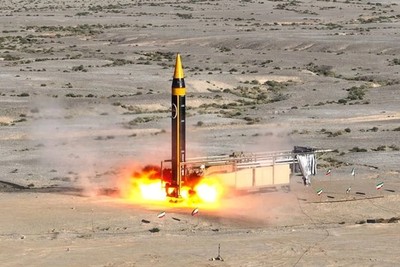
The report also noted that the weapons used by the Houthis resemble those produced by Iran or members of the so-called Axis of Resistance, a coalition of Tehran-backed organizations opposed to Israeli and US influence in the Middle East.

This transformation is largely attributed to the support of the IRGC-QF (Quds Force), Hezbollah, and Iraqi experts, who have provided the Houthis with training and material assistance.

The conflict in Yemen has become a central issue in the broader regional crisis. As the war in Gaza continues, the Houthis have intensified their blockade of the Red Sea, targeting commercial vessels under orders from Iran's Supreme Leader Ali Khamenei.

What began in the Red Sea has now spread to the Arabian Sea. These attacks have severely disrupted global shipping and led to the capture of several foreign sailors uninvolved in the Israel conflict.

In response, a US-led coalition of over 20 nations has mobilized to protect global trade routes and ensure the safety of maritime traffic in these crucial areas.

Iran’s influence in the region extends beyond Yemen. In early September, the Houthis launched a missile into central Israel for the first time, striking an area near Ben Gurion International Airport.

The attack, which the Houthis claimed involved a hypersonic missile, caused no injuries but marked a serious escalation. Israeli Prime Minister Benjamin Netanyahu warned that Israel would impose a "heavy price" on the Houthis.

Meanwhile, Iranian President Masoud Pezeshkian, in his first press conference since his election, denied that Tehran has supplied hypersonic missiles to the Houthis or short-range ballistic missiles to Russia, reiterating Iran’s position that it does not provide direct military support to the group.

Most Viewed

Iran state TV says modified missile could reach US base in Britain
1

Iran state TV says modified missile could reach US base in Britain

2

Seven years after ‘Bloody November,’ Iran rations gasoline it dares not reprice

3

Third US carrier joins Iran blockade, Bessent warns of economic collapse

4

Blair's sister-in-law attended Iran conference linked to IRGC spy recruitment - Telegraph

5

Iran facing one of fastest economic collapses ever, Bessent says

Banner

Spotlight

  • Can higher fuel prices curb Iran’s smuggling problem?
    ANALYSIS

    Can higher fuel prices curb Iran’s smuggling problem?

  • Canadian MP to flag paintball gun findings after Iran protest blindings
    PODCAST

    Canadian MP to flag paintball gun findings after Iran protest blindings

  • Locks for cash: inside Iran's booming hair trade

    Locks for cash: inside Iran's booming hair trade

  • Seven years after ‘Bloody November,’ Iran rations gasoline it dares not reprice

    Seven years after ‘Bloody November,’ Iran rations gasoline it dares not reprice

  • Iranians and Israelis can defeat the IRGC together, says Arab-Israeli activist
    ONE-ON-ONE

    Iranians and Israelis can defeat the IRGC together, says Arab-Israeli activist

  • Iran's oil output plunges below pre-war domestic needs
    ANALYSIS

    Iran's oil output plunges below pre-war domestic needs

Banner
Banner
Banner
Banner
Banner
Banner












