Israel says it foils Iran-backed Hezbollah assassination plot in Israel

Israel says it has foiled an Iran-backed Hezbollah plot to assassinate a former security chief on Israeli soil as the terror group gets ever more emboldened in its operations.

Israel says it has foiled an Iran-backed Hezbollah plot to assassinate a former security chief on Israeli soil as the terror group gets ever more emboldened in its operations.
The assassination attempt on a senior security official was imminent and was foiled after the discovery of a Claymore explosive device, known to be used by Hezbollah.
The explosive device found in Israel was equipped with a remote activation mechanism, with a camera and cellular technology, enabling it to be activated by Iran’s biggest proxy, Hezbollah, from Lebanon.
The Israeli military said that the device was similar to the Claymore explosive used in an attack by Hezbollah in September last year, in Yarkon Park in Tel Aviv, which was intended to target a senior Israeli official.
“The assessment within the security establishment is that the Hezbollah operatives involved in this latest incident were also behind the September 2023 attack,” a statement read, adding that the operation “had been under surveillance for an extended period”.
Ronen Solomon, an Israeli intelligence analyst, said the operation also bears similarities to a bombing attack in March last year in northern Israel. A Hezbollah operative had infiltrated the border and seriously injured a man in the area of Megiddo with an explosive device.
“Israel knows all the people behind all these units. Some have been assassinated, including Saleh Arouri who was the Hamas external connection working with Unit 2500. They’re using Hamas’s south Lebanon branch,” he said.
Like the Yarkon Park attack, the latest assassination attempt was planned for 6am, usually when a target would be out in some part of their daily routine, like running.
“I understand that Lebanon wanted to do it remotely by cellphone, so it’s not something that was to be done with a timer or an agent on the ground in the vicinity. This was a long distance operation but it was a complicated operation and something you need to have a circle of operatives,” Solomon added.
Solomon said that what is surprising now, is that even amid a war when Israel’s borders are locked down, that the infiltration was possible, pointing to links with Arab-Israeli or Palestinian operatives in the West Bank or East Jerusalem.
Hezbollah has also used criminal gangs in Israel to smuggle weapons and explosives across the borders.
“It makes you wonder how they are infiltrating and suggests that maybe the operatives came from Jordan to Jerusalem. They have to recruit someone from the West Bank. We know this kind of bomb is being smuggled from Jordan,” Solomon said.
The operation would span three units of Hezbollah, 1800, the strategic unit which gets weapons and explosives into Israel. They have been trying such operations since the early 2000s.
Unit 133 handles the operatives on the ground to pull the trigger, and 2500 which is managed by Hezbollah but is a mix of Iran’s Quds Force and Palestinian militias, would also be involved, Solomon explained. It has overseen the recruitment of operatives abroad including Turkey and Africa, as well as inside Israel and the occupied territories.
“Because Israel knows the identity of most people in these units, maybe we will now see more eliminations like we saw before,” he said.
In his first press conference since his election, Iranian President Masoud Pezeshkian denied on Monday that Tehran has supplied hypersonic missiles to Yemen's Houthi rebels or short-range ballistic missiles to Russia.
His comments come as Israeli Prime Minister Benjamin Netanyahu vowed retaliation, accusing the Houthis of escalating their attacks beyond Yemen’s borders. Western countries have also strongly condemned Iran's reported delivery of ballistic missiles to Russia to be used against Ukraine.
Pezeshkian rejected allegations that Tehran had provided hypersonic missiles to Yemen’s Houthi rebels. A day earlier, the Houthis claimed responsibility for firing a missile at Israel, which they described as hypersonic. Netanyahu responded by warning that Israel would impose a "heavy price" on the Houthis, who have controlled northern Yemen for years but are now expanding their operations far beyond the country's borders.
"It takes a person a week to travel to Yemen from Iran. How could this missile have gotten there? We don't have such missiles to provide to Yemen," Pezeshkian told reporters.
Despite Pezeshkian's denial, Iran last year showcased what it said was its first domestically made hypersonic missile, the Fattah. The growing influence of the Houthis, fueled by Iranian backing, has been a cornerstone of Tehran's regional strategy, as the group has continued to disrupt global trade routes in the Red Sea and Bab al-Mandeb Strait under the pretext of blockading Israel.
Iran’s support for the Houthis, alongside other proxy groups across the region, aligns with its long-standing foreign policy goals of opposing Israel and destabilizing Western-aligned governments. Yemen’s strategic location has given Iran a foothold in a region critical to international shipping, amplifying its leverage in the conflict.
Pezeshkian, in response to a question from a Japanese media outlet regarding the Islamic Republic's missile deliveries to Russia, stated, "As for the relationship between the Islamic Republic and Russia, I can say with certainty that since we took office, we have not provided them with anything."
He claimed ignorance about missile deliveries to Russia during Ebrahim Raisi's administration and prior governments. However he said, "We have and will continue to have relations with Russia."

Pezeshkian added, "However, our stance in all wars is that no country should invade another country’s territory."
Regarding his visit to Moscow, attendance at the BRICS summit, and relations with Russia, he said that the Islamic Republic’s ties with Russia and China have been "very good" and that this trajectory would continue.
He remarked, "It’s not the case that if we negotiate, trade, and make peace with the world, we will forget our friends."
He added, "Russia is our neighbor, and we have strong economic relations, which these meetings can help implement the vision that Ebrahim Raisi had."
Ties with China
In response to a question from a Chinese reporter about relations between Beijing and Tehran, he said, "Our strongest ties are with China and Russia." He also praised China’s efforts to mediate between the Islamic Republic and Saudi Arabia.
The president promised, "We will have a fully aligned and strategic partnership with China, and we will work to implement the agreements and increase cooperation in future relations."
Responding to a question from an Associated Press reporter about the Islamic Republic's production of 60% enriched uranium and his government’s plan to address the International Atomic Energy Agency’s concerns, Pezeshkian stated, "We are addressing our technical and scientific needs and are not pursuing nuclear weapons."
He continued, "We adhered to the framework of the JCPOA; they [the US] tore it apart. If they don't resume compliance, neither will we."
"We will continue within the framework of nuclear energy laws and agreements. If they uphold their commitments, we will do the same."
In response to another question, Pezeshkian said, "We don't seek conflict; we are not pursuing nuclear weapons, but we won't allow anyone to bully us."
Regarding recent efforts to resume and expand relations with Arab countries, particularly in the Persian Gulf region, such as Saudi Arabia, Pezeshkian stated: “I believe we are brothers, so why shouldn’t we visit each other? There should be no disagreements between us. I personally welcome any initiative that brings us closer together.”
He added, “We aim to strengthen our relations with Saudi Arabia, Egypt, Jordan, and all Islamic countries. We have invited the Saudi Crown Prince to visit us, and we are eager to meet.”
Foreign policy remains largely out of Pezeshkian's hands, with Supreme Leader Ali Khamenei and the Islamic Revolutionary Guard Corps (IRGC) maintaining firm control. Though Abbas Araghchi, a former diplomat, has been appointed as foreign minister, Tehran’s reliance on military proxies signals a continuation of its hardline stance.
In his remarks, Pezeshkian also discussed potential solutions for the country’s economic crisis. He suggested that resolving the nuclear issue and adhering to standards set by the international financial watchdog, FATF, could yield significant results. He also announced plans to send a letter to the Islamic Republic’s Expediency Council addressing nuclear sanctions and FATF compliance.

Iran’s new Foreign Minister Abbas Araghchi told state television that Tehran will fully back its ‘Resistance Front’ in the region by providing “unlimited support,” as Israel tries to fully defeat the Palestinian Hamas.
“The government’s policy is to provide unlimited support to the resistance. We will support the resistance front, which has established itself as a reality in the region. The regime [Israel] has so far failed to achieve its main goal of destroying Hamas,” Araghchi stated.
However, the foreign minister signaled that Tehran is reluctant to get directly involved in a wider conflict. According to Tasnim website affiliated with Iran’s Revolutionary Guard, he maintained that Iran would continue its support for the Resistance Front but “remains vigilant against traps that might be set to draw us into the conflict. We are monitoring regional developments with intelligence and awareness.”
Speaking about foreign policy, Araghchi highlighted relations with neighbors, in the absence of a real chance to resolve issues with West at this juncture. “We seek comprehensive and balanced diplomacy and aim to expand our communications. My colleagues are currently planning. When a head of state makes their first visit to a country, it signifies importance to us. The message of the President’s visit to Iraq was that our priority is first and foremost our neighbors.”
The foreign minister did not indicate any current discussions with the United States, noting that the Americans are in the midst of an election season. However, he announced that Iran is ready to engage in discussions with Europe "on the basis of equality."
“Europeans need to understand Iran’s concerns. If they have concerns, so do we. We have issues with Europe regarding sanctions and economic matters. Using failed tools is not the solution. Various sanctions were imposed on the nuclear program before, but they had to come to the negotiating table. It is clear that sanctions have failed,” Araghchi argued.
Despite the occasional denials by Iranian officials about the impact of sanctions, Iran’s economic crisis continues to deepen. Bread prices were more than doubled recently and politicians and experts warn of a much larger budget deficit in the coming fiscal year starting in March 2025.
Araghchi talked about the latest contentious issue of ballistic missile deliveries to Russia that have seriously alarmed the United States and its European allies, who have issued more targeted sanctions.
Araghchi appeared to be using the issue as a quid-pro-quo with Europe, not outright denying the accusation. “They are concerned about Iran exporting advanced weapons to Ukraine. If Europe is genuinely concerned, the solution is dignified dialogue. It is not reasonable to expect that their concerns will be addressed unilaterally. We are ready to engage in dialogue with Europe. Currently, establishing relations with Europe is not a priority for us,” the Iranian foreign minister stated.
Earlier this month, Western government began warning that Iran was delivering 200 short-range Fath-360 ballistic missiles to Russia for use in its war against Ukraine. Tehran earlier issued vague denials, but some lawmakers confirmed the news. Also, Iran's delivery of thousands of kamikaze drones to Russia since mid-2022 make the Western accusation more credible. The use of these drones against non-military targets are well documented and even Tehran, after some denials, has claimed that the weapons were delivered before Russia’s invasion of Ukraine.

A senior member of the Saudi royal family has accused Iran of breaching the terms of the 2023 agreement to resume ties as it continues to arm and fund armed militant groups in the region.
Turki al-Faisal, a former Saudi intelligence chief, said the West must also do more to deter the Iran-backed Houthi terror group in Yemen amidst the Red Sea blockade as the group holds the world "hostage".
Houthis began attacking international shipping in the Red Sea region last fall after Iran's Supreme Leader Ali Khamenei called for blockading Israel. They have expanded their reach far beyond Yemen disrupting a key global trade route.
Speaking at Chatham House in London, al-Faisal said on Friday: “The Houthis now hold the world as hostage in the Bab al-Mandab entrance to the Red Sea, and yet Iran is not showing that it can do something there if it wanted to, and the kingdom would have expected Iran to be more forthcoming in showing not just to us but to others that it can be a positive factor in securing stability and removing differences not just with Saudi Arabia but the rest of us.”

Dozens of projectiles have been fired at commercial vessels and dozens of hostages taken amid the blockade initially aimed at forcing an Israeli ceasefire in Gaza.
Iran also continues to destabilize countries including Syria, Lebanon and Iraq, which al-Faisal said had broken the terms of the 2023 agreement.
However, according to the UK's The Guardian, al-Faisal has said that the West's "pinprick bombings" carried out by the UK and US on Houthi infrastructure, is not enough to quash the group, armed, funded and trained by Iran.
In a frank admission, al-Faisal said the kingdom is disappointed in Iran's having broken its promise to limit the influence of its terror groups in the region, agreed upon last year when the two countries resumed diplomatic relations after several years' hiatus.
During the session at Chatham House, he said more must be done by the global community to combat the Red Sea blockade which began in November.
“We have seen the deployment of European and US fleets along the Red Sea coast and more can be done there to interdict the supply of weaponry that comes to the Houthis from Iran,” he said.
“Putting pressure on Iran by the world community can have a positive impact on what the Houthis can do in launching these missiles and drones to hit international commerce.”
On Sunday, a missile penetrated Israel's air defence systems, threatening once again, to inflame tensions amidst the war in Gaza which has seen Iran's proxies in the region surround Israel since the Hamas invasion of the Jewish state on October 7.

A former Royal Navy Commander told Iran International’s podcast Eye for Iran that Iran is winning against the Americans in the Red Sea, through their proxy the Houthis.
Tom Sharpe, who worked alongside the Americans in the Red Sea for two decades, witnessed their might as the most powerful navy in the world but in spite of that, under the tutelage of Iran, the Houthis have not been deterred by the limited US defensive and allied retaliatory actions.
“They're achieving their ends, all of them, and we're achieving none of ours. We're spending millions and millions of dollars on not winning. It's a real problem," he warned.
Critics say the US's risk aversion has meant that just like its kid gloves approach to Iran, the deterrence to its terror groups such as the Houthis is failing.
Rear Adm. Marc Miguez, a US Navy commander from the Dwight D Eisenhower Carrier Strike Group, told Ward Carroll's YouTube episode that more aggressive strikes on the Houthis were necessary.
"There are definite strategies that were put forward, but our National Command Authority decided that those - I would call more aggressive postures and more aggressive strikes - was not something we wanted to challenge," Miguez said last month.
Jason Brodsky, the policy director for United Against Nuclear Iran (UANI), agreed that the Biden administration's inability to deter Iran has led to an emboldened stance not only from the Islamic Republic but also, its proxies.
“We have a deterrence deficit with Iran. They have been attacking our forces. They have been attacking commercial vessels, with impunity since October 2023,” he said.
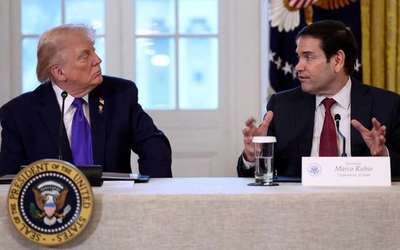

In Sunday's cabinet meeting, Israeli Prime Minister Benjamin Netanyahu said Israel is "at war with Iran's axis of evil" as Yemen's Houthis evaded the country's air defense systems.
"We are in a multi-front campaign against Iran's axis of evil, which is striving for our destruction," he said.
"This morning, the Houthis launched a surface-to-surface missile from Yemen at our territory. They should know that we exact a high price for any attempt to attack us."
Vowing a strong response, he pointed to the country's recent strikes against the Iran-backed terror group.
"Whoever needs a reminder of this, is invited to visit the port of Hodeidah," he said, referring to a retaliatory attack for a drone which hit a civilian building in Tel Aviv in July. The strike hit infrastructure such as electrical installations and an oil depot.
Netanyahu warned: "Whoever attacks us will not evade our strike." Pointing to the war in Gaza where Israel has been fighting Iran-backed Hamas after the deadly invasion of October 7, he added: "Hamas is already learning this through our determined action, which will bring about its destruction and the release of all of our hostages."

In Israel's north, 60,000 civilians have been displaced since the Gaza war began, Iran's biggest proxy Hezbollah firing over 6,000 projectiles towards Israel in allegiance with Hamas in Gaza.
Iran's proxies in Syria and Iraq have also been involved in attempted attacks against Israel, including a direct attack from Iran in April, the first of its kind from Tehran.
Nasruddin Amer, the deputy head of the Houthi's media office, said in a post on X on Sunday that there had been "a qualitative shift in targeting Israel with hypersonic missiles".
He wrote: "This missile is characterized by its super-speed, which exceeds the speed of sound by several times, making it able to easily bypass traditional defense systems, including air defense systems such as the Patriot."
Sunday's missile had crossed a distance of 2040 km in 11 and a half minutes, he said. Nobody was injured in the attack, according to the Israeli military, though shrapnel caused damage to a train station in Modiin, central Israel.
Through their Telegram channel, the group said its military spokesman would soon give details about a "qualitative operation that targeted the depth of the Zionist entity”.
It comes as the Iran-backed terror group continue the Red Sea region blockade, launched in November on the instruction of Iran’s Supreme Leader, Ayatollah Khamenei.
Initially intended to attack and hijack Israeli-linked vessels in a bid to force a ceasefire in Gaza, it has since expanded to target global shipping on the trade route with direct strikes on Yemen from the US and UK as a result.
Dozens of hostages from across the world have been taken and missiles launched at multiple international vessels.

On Sunday, Iran reiterated that its nuclear program is peaceful, despite skepticism among Western governments and experts, as well as increasing international pressure over its recent activities.
“The reality of the peaceful objectives of Iran's nuclear industry … will be made clear to the world,” the head of Iran’s nuclear program, Mohammad Eslami, stated upon his arrival in Vienna for the 68th annual session of the International Atomic Energy Agency (IAEA) General Conference.
However, the partnership between Iran and Russia has triggered fresh concerns in Washington and London, particularly over Tehran’s supply of ballistic missiles to aid Moscow’s war effort in Ukraine.
In return, Russia is suspected of providing Iran with sensitive nuclear technology and intelligence, an exchange that has Western officials on edge as it risks pushing Iran closer to achieving its goal of developing nuclear weapons.
According to sources cited by Bloomberg, “the Kremlin has increased its cooperation with Iran over its ambitions to obtain atomic weapons in recent months", citing Western officials.
Western intelligence has identified increased cooperation between the two countries in recent months, raising alarms over the possibility that Russia is sharing nuclear expertise that could facilitate Iran’s weaponization of its atomic program.
The revelations were discussed during a meeting between British Prime Minister Keir Starmer and US President Joe Biden at the White House last week.
According to the Bloomberg article, one of “the most troubling” aspects of the partnership is the trade of ballistic missiles. Iran has provided Russia with Fath-360 missiles, short-range ballistic weapons that have been deployed against Ukrainian targets.
Despite reported inaccuracies in these missiles highlighted by a recent Business Insider report on their performance during a prior Iranian attack on Israel, they are still an addition to Russia’s military arsenal.
Iran’s missile shipments come at a time when Moscow is seeking to replenish its stockpiles in a war begun in 2022. The cooperation further deepens the ties between the two nations after Iran has provided drones to Russia to support its war on Ukraine.
The Russia-Iran alliance has forced Western powers to reassess their defense strategies, leading to renewed sanctions and diplomatic efforts aimed at curbing Tehran’s military support for Moscow.

UK newspaper, The Guardian, said the Kremlin has increased its cooperation with Iran over its ambitions to obtain atomic weapons in recent months, citing anonymous Western officials.
The Guardian report noted that the growing Russia-Iran military and nuclear cooperation poses a “direct threat” not only to the West but also to Israel, which views Iran’s nuclear advancements as an existential danger.
It also pointed out that Tehran’s partnership with Moscow has sparked fears in Jerusalem that Iran could soon possess the capability to develop and deploy nuclear weapons. With Iran also backing militant groups like Hezbollah and Hamas on Israel's borders, its nuclear ambitions raise concerns about destabilizing the Middle East more, added the piece.
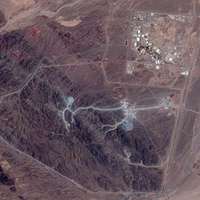
The Islamic Republic has long maintained that its nuclear activities are for “civilian purposes,” but recent statements by Iranian officials cast doubt on such remarks.
In April, an Iranian general suggested that Tehran might revise its nuclear doctrine if Israel were to attack its atomic facilities, a threat that could signal a shift toward nuclear weapons development.
Meanwhile, reports from the IAEA indicate that Iran has enriched its uranium stockpiles, with enough material to potentially fuel multiple warheads.