Oil and gas workers join Iran's intensifying labor protests

As labor protests in Iran gain momentum, oil and gas workers have joined the movement, underscoring the deepening concerns over economic and working conditions across the country.
As labor protests in Iran gain momentum, oil and gas workers have joined the movement, underscoring the deepening concerns over economic and working conditions across the country.
The staff at the refineries of the South Pars Gas Complex (SPGC) organized a protest gathering on Tuesday, driven by economic grievances and the incomplete payment of wages, as they sought to address and pursue their demands.
On Monday, permanent employees of the Pars Oil and Gas Company (POGC), a National Iranian Oil Company (NIOC) subsidiary, staged a protest march in Asaluyeh, Bushehr Province, calling attention to the growing turmoil in Iran's key industries. Simultaneously, workers at the Kangan Cement Factory, also in southern Iran, continued their strike, now in its 28th day, demanding accountability from the authorities.
The striking workers at Kangan Cement have outlined several demands, including the permanent employment of contract workers, the implementation of a comprehensive job classification plan, and increased vacation days. Despite their prolonged efforts, these demands have yet to be addressed, leading to continued protest actions.
Additionally, the Council for Organizing Oil Contract Workers' Protests has been actively sharing images and reports of various protest actions within the oil and gas sector on social media, indicating a coordinated effort among labor groups. The council noted that similar actions were undertaken by Parsian Oil and Gas Holding and Fajr Jam Gas Refinery in southern Iran.
The group has outlined a series of critical demands, including the “dismissal of incompetent and corrupt officials, the removal of wage ceilings, the elimination of retirement pension restrictions, and a comprehensive revision of the Retirement Fund's regulations.”
The requests illustrated the profound and systemic issues within the oil and gas sectors, which are pivotal to Iran’s economy.
Earlier, workers overseeing drilling operations in the southern oilfields also held protests.
Workers in Iran have consistently protested against deteriorating economic conditions and inadequate wage policies, as well as late payments of salaries. However, despite the frequency of these protests in recent years, their demands have largely been ignored.
A report by the US-based Human Rights Activists News Agency (HRANA) in April revealed that between April 2023 and April 2024, there were 428 reported labor protests.
Amidst these challenges, Iran's summer power crisis—which reduced electricity supply to industries by half and caused widespread blackouts—has now given rise to urgent warnings of an impending severe gas shortage this winter.
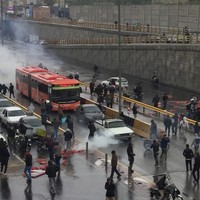
The strikes are not confined to southern Iran; a wave of protests has swept across the country, with Iranian nurses taking to the streets to demand better working conditions, fair pay, and respect for their profession.
These demonstrations, which began on August 5, have escalated into widespread strikes. The nurses’ demands are clear and urgent: an immediate wage increase, the elimination of mandatory overtime, proper and timely implementation of nursing tariffs, payment of overdue wages, improvement of harsh working conditions, and an end to security crackdowns on protesting nurses. These demands extend beyond financial compensation; they seek recognition of the critical role that nurses play in Iran’s healthcare system.
However, the Iranian government faces a significant budget deficit, estimated to exceed 50%, making it challenging to meet the nurses' demands. Similar grievances exist in other sectors, where most workers are struggling to survive on approximately $200 per month.