Iran’s 2024 presidential election -- held almost a year early, after President Ebrahim Raisi died in a helicopter crash in May -- gave rise to a President that few had heard of a few weeks before.
Outside of Iran, many observers are trying to explain the political landscape or searching for signs of change for the country with the election of Masoud Pezeshkian—a man labeled by Western media as a "reformist," though he has never referred to himself as such.
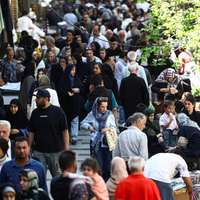
Inside Iran, however, the optimists are few and far between, primarily those poised to benefit from the seemingly bureaucratic reshuffle, securing a desk in a governmental office or a seat on a state-led institution’s board. Beyond these few, there appears to be little interest for the election, Pezeshkian — or any of the alleged “reforms” he may bring.
“Nothing has changed and nothing will,” says Rana, a 34-year-old mother of two, who decided not to vote. “I felt I had to vote for my children. I thought Pezeshkian might pick an education minister who would stop the wave of Islamic clerics teaching in schools. But my friends dissuaded me, saying that the current Majles (parliament), dominated by hardliners, would never vote in a candidate who might attempt or even consider such a change of policy.”
Rana says nothing has changed. But, when it comes to the further decline in human rights — it has.
In just one week following the July 5 election, several prisoners on death row were executed in Tehran; about a dozen women’s rights' activists with long sentences hanging over their heads were detained violently and reportedly faced death and rape threats; a prominent lawyer who campaigned for Pezeshkian was arrested; and Turkish Airlines was forced to close its Tehran office because it failed to comply with the mandated Islamic hijab regulations.
“There’s still room for optimism,” says Mohammad, a junior student at a law school in Tehran, “but only if you’re sitting in a cafe in Washington, D.C. getting your news from the so-called reformists on social media.”
Mohammad is not alone in his disdain for the "pundits" in the West, whom he believes "whitewash" the true situation in Iran from the comfort of their homes. “It’s not that they can’t see; they choose not to see,” he says, visibly frustrated.
Unlike Rana, Mohammad was “positive” all along that he wasn't going to vote. He thinks a “moderate” president could mean more repression.
"The hardline fundamentalists have a scapegoat now,” he says: “A so-called reformist administration that they can blame for all sources of popular discontent."
Mohammad continues: "We’ve seen it before, in the fall of 2019, when they killed 1,500 protesters, shut down the Internet for several days, and pinned it all on the supposedly moderate government of Rouhani for mishandling people’s reaction to the rise in petrol prices. That was Rouhani, a grandee of the Islamic Republic, and they broke his back. His government's second term was as bad as that of any hardline government."
Mohammad describes Pezeshkian as a "meek and yielding lightweight" with an even weaker popular mandate, citing an example from one of his first speeches after being elected, where the President couldn't be bothered to finish and instead told his supporters to read it when it was published. "Pezeshkian is no match for those who hold the real power in Iran," Mohammad says. “The more they clash up there [parliament], the more we [the people] lose down here. It’s best if the hardliners control everything, then all this sh*t would be on them.”
Not everybody agrees with Mohammad.
More than 16 million voted for Pezeshkian, many in the hope of seeing what Mohammad fears: discord among those in power. They didn’t want to see the hardliners heading all three branches of government, however nominal the division might be in Iran. They believe any crack in the political structure could be an opening for people to breathe. In their final analysis – which is also the premise of their argument – the president wields some power, and it does matter who holds that office. They don’t expect any grand breakthrough (like the revival of the nuclear deal). The tiniest of changes, anything that could slow what they see as the destruction of their country, would do.
This is in fact the theme on which Pezeshkian and his team built their campaign. Their slogan was “For Iran,” a rallying call for Iranians to put aside their rage against the state and think of their homeland; vote, not for a politician, but for Iran. It was a successful campaign that won them the presidency, albeit with a historically low turnout.
Then, of course, there are those who don’t trust the official figures in the first place. They are not few. They view the election as a “show”: scripted, cast, and directed by the Supreme Leader’s office. According to Parsa, 29, a junior clerk in a public organization:“Pezeshkian is [Khamenei’s] pick. He is who he wanted from the beginning.” Parsa goes on: “Just ask yourself this: How come he was allowed to run for president when he was barred from the parliamentary election only a few months ago?”
Interestingly, Pezeshkian had previously been disqualified by the Guardian Council, the 12-member body responsible for vetting candidates in every election in Iran, from becoming a member of Parliament.
“Khamenei wanted the reformist bunch back in government to check the power of the hardliners, while [also] shielding them both and himself from popular rage if things were to go wrong,” Parsa adds: “In a few weeks or months, when people once more take to the streets, Pezeshkian and his administration will be the first in the line of fire. That is his main function: to shield Khamenei and to restore the cover that was shattered in the 2022 protests.”
The president-elect would be proud. Parsa might sound overly suspicious, conspiratorial even, but either way, Pezeshkian has made it abundantly clear that he would walk the Supreme Leader’s line.
Shortly after the election, he canceled a press conference to go see Khamenei. “His campaign slogan was 'For Iran,'” Parsa says, smiling as he adds: “If the Leader sees fit, of course.”
Campaign posters of President-elect masoud Pezeshkian in Tehran
In its latest move, Iran’s “Reform Front” says it will not interfere in newly-elected President Pezeshkian’s decisions, but will instead support his administration and question decisions when necessary.
Speaking on behalf of the coalition of reformist factions in Iran, Secretary Azar Mansouri’s statement did not signify merely avoiding undue interference in the executive branch's work.
Instead, it implies a refusal to take responsibility for an administration that came into office with the reformists' support, but falls short of addressing their demands from three decades ago.
Are the reformists now abandoning their quest for influence within an administration they heavily invested in, both materially and politically, and staked their remaining political capital on? The question remains: Why did they support Pezeshkian if they now choose to remain political spectators?
Reformists and the Khatami administration
Former President Mohammad Khatami's administration (1997-2005) was the first to receive full support from the reformists.
Despite some members, such as the ministers of foreign affairs, defense, commerce, information, and education, not being reformists, they did not openly oppose reformist agendas.
Consequently, reformist parties and the “Reform Front” regarded this administration as their own and felt obligated to defend it. They continue to defend its record despite failures that have been much discussed in the past two decades.
Reformists and Rouhani's administration
None of the prominent reformist parties and figures considered former President Hassan Rouhani to be a reformist, nor did he claim to be one.
As a member of the Moderation and Development Party, Rouhani presented himself as a moderate, particularly in foreign affairs.
For this reason, reformists saw his administration as a "surrogate womb," allowing them to remain within the establishment's structure with the hope of regaining power in the future. They adopted this tactic after forces loyal to Supreme Leader Ali Khamenei sidelined them during Mahmoud Ahmadinejad's second term, leaving them little chance of taking back the presidency.
Reformists and Pezeshkian’s administration
Now, as Pezeshkian's administration is about to be formed, the question arises: What do prominent reformist parties and figures like Mohammad Khatami expect from this administration, and what were their expectations when they supported him in the election?
The Pezeshkian administration does not have the stature of Khatami’s, which was backed by a massive social movement and 23 million votes.
Nor does it match Rouhani’s, who was one of the founders of the Islamic Republic. Therefore, they do not expect the new president to be a channel for the reformists to rise to power as they did in 1997.
The two finalists for the Vice President position are Mohammad Reza Aref, who served as Khatami’s VP, and Mohammad Shariatmadari, a minister in both the Khatami and Rouhani cabinets. Both candidates are loyal to and trusted by Khamenei.
The inclusion of former Foreign Minister Javad Zarif and other so-called "reformists" and "moderates" in the transitional council responsible for introducing ministerial candidates to Pezeshkian highlights the likely composition of the new cabinet.
Several working groups have been established to compile a list of candidates for each ministry, allowing for reasonable predictions about the final selections. The future ministers, supposedly younger and without prior ministerial positions, will in all likelihood be drawn from five distinct groups:
One natural group would be officials personally chosen by Khamenei. Typically, the ministers of foreign affairs, intelligence, Islamic guidance, and the interior are chosen by Khamenei himself.
Another group would include the ministers of defense and justice, who are selected by the Islamic Revolutionary Guards (IRGC) and the Judiciary, respectively.
People from the opposite faction will be added to the cabinet so that Pezeshkian can show that his cabinet is multi-factional.
The economic ministers will be determined according to the demands of Khamenei and the IRGC’s economic empires.
The remaining few will likely be determined by individuals who identify as “reformists” or “moderates” – though, the “reformist” social base in Iran typically does not view these individuals as good representatives of their agenda.
Based on Khamenei’s recommendation, Pezeshkian’s administration will follow Raisi’s path rather than pursuing a national unity agenda.
It would appear that “reformists” do not and cannot expect the new president to do much beyond offering them minimal support to keep their movement alive.
Thus, if the first week after the elections has not disappointed some of his supporters - with his meetings with military commanders and having night tours of religious mourning ceremonies – they will in near future when his admin will be introduced to Parliament.
In an op-ed, Rouhani's political advisor called the Pezeshkian’s foreign policy map "confused, without priority, dreamy, incoherent, with a lot of generalizations about everything and anything".
If the "We Regret" campaign of Rouhani's voters emerged six months after his second inauguration, it will likely arise much sooner for Pezeshkian. The composition of his cabinet is expected to reveal that no significant changes are forthcoming.
This time, the anticipated regret from the supporters of the new administration will be conveyed through silence and harsh criticism. Their regret won't be used as a tool to pressure the administration for change, unlike before, but rather to express mere hopelessness.
Photos of late President Ebrahim Raisi and Foreign Minister Hossein Amir-Abdollahian during a memorial ceremony at the country’s parliament, Tehran, May 2024
In May, a helicopter crash killed Iranian President Ebrahim Raisi and his foreign minister. Despite the shock, there were no notable economic repercussions, highlighting the insignificance of elected officials on the economy.
We consider two indicators to capture the economic shocks in Iran: the market exchange rate of USD to Iranian rial and the price index of the Iranian stock market. The importance of looking at both indicators is that the first one is the anchor of inflationary expectations in Iran, and the second one is the best indicator available publicly for capturing the private sector’s response to a shock.
The plots below capture these indicators for the days leading to and after the sudden deaths of the president and foreign minister Hossein Amir-Abdollahian. Based on these indicators, Iran’s economy did not experience any shocks.
Facing economic sanctions for most of the past decade, the Iranian economy is now more dependent on imports than before. This observation is in contrast with how Iranian authorities and some policy analysts in the US describe the Iranian economy as resilient against sanctions by tapping into domestic resources (e.g., Chapter 4 of the book How Sanctions Work by Narges Bajoghli et al., 2024). The term resistance economy coined by Supreme Leader Ali Khamenei is used in such contexts to prove the point. But, if the economy was truly more independent and self-sufficient, why do the economic indicators show considerably more sensitivity to internationally significant news compared to the domestic shocks? While Raisi’s death had little impact on the value of the Iranian currency, heightened tensions with Israel in April resulted in a sudden boost for the dollar in Tehran’s currency markets.
Promoting domestic production and becoming more self-sufficient require some fundamental conditions, such as a healthy private sector, protection of people’s rights, and institutional integrity. Since the inception of Islamic government in 1979, constitutional errors as well as repeated malpractices have compromised these basic prerequisites for improving the economy.
Among the constitutional deficiencies that directly lead to budget deficits and inflation is the lack of independence of the Central Bank of Iran (CBI) as the authority responsible for the implementation of monetary policies. The governor of CBI shall be assigned or removed by the president. In the most recent version of the CBI’s governing law, nine out of ten voting members of the Supreme Council, the body responsible for the IR’s monetary policies, are either directly or indirectly assigned and removed by the president. This creates a conflict of interest as the government’s budget is financed by the money supply under the control of the central bank. Lack of independence for CBI means that each administration could draft a fiscally unbalanced budget, and CBI would compensate for the deficit by printing more money. This is one of the reasons that all governments since 1979 have drafted budgets with considerable fiscal deficits that favor their social policies and ambitions, only to exacerbate inflationary forces.
Privatization is another example of constitutional errors combined with malpractices by corrupt actors. Article 44 of the IR’s Constitution specifies that all major industries shall be owned by the government. That led to approximately 80% state ownership of Iran’s economy after the revolution. Twenty-five years later, in 2004, the article was amended to distribute the ownership of infrastructure and backbone industries among the private sector, cooperatives, and the state. Despite all the efforts of every government since 2004, the latest figures presented by members of chambers of commerce and other officials, as well as the CBI’s research, suggest the government, along with the office of supreme leader, and the public sector constitute between 60-80% of the economy.
Given that privatization has remained on paper for almost two decades of official proclamations, we could safely assume it is not an objective actively pursued by the authorities. Looking at the preconditions and impunities that Ali Khamenei offered to a task force he initiated in 2022 for the same purpose captures the realities and his true intentions for privatization. He assigned the vice president at the time, Mohammad Mokhber, to lead the privatization task force. While the majority of the members of the task force, including Mokhber himself, have on-going criminal cases in the IR’s courts for corruption, they are provided with judicial impunity, no parliamentary oversight is allowed, and there will be no transparency on price discovery mechanisms or accepting bids from the public.
In such a context, no single president could change the course of the country or the public’s perception of the economic conditions. It appears that some of the candidates in the recent presidential race had come to terms with this lack of power. Take the president-elect, Masoud Pezeshkian, who in his televised debate simply stated that he is nominated to execute what the Supreme Leader will envision and order. He did not even try to present any economic plans during his campaign.
The economic mismanagement in the Islamic Republic (IR) does not originate from any particular administration, nor is it corrected by successive governments. Over the past forty-five years, the IR has consistently made errors that have worsened the livelihood of the people year after year. Such malpractices, rampant corruption, and constitutional barriers to economic growth have inevitably led to a loss of public trust in the institution of the IR.
One consequence of this distrust is that inflationary expectations are anchored to the market exchange rate of the USD rather than the Central Bank of Iran’s interest rate adjustments. Similarly, the economy does not react to domestically disruptive news in the same way it responds to internationally significant events. While public distrust renders almost all economic policies of the IR ineffective—regardless of whether the government is reformist or conservative—the international community's role becomes increasingly significant for the Iranian public.
Given its inherent weaknesses, Iran’s economy is more vulnerable to foreign sanctions. The economy is more than ever dependent on imports. The agricultural sector is threatened by serious drought and water mismanagement. The industrial sector is worse off than a decade ago due to chronic negligence in investing in fixed capital formation, and the private sector is rapidly declining due to unequal competition with IRGC-affiliated actors that have deep pockets and benefit from influence over state institutions. Therefore, sanctions that target oil exports and revenues are effective in limiting the Islamic government’s ability to project power in the region and engage in domestic repression.
Iran's President-elect Masoud Pezeshkian and Iran's Supreme Leader Ayatollah Ali Khamenei attend a Muharram mourning ceremony in Tehran, Iran July 12, 2024.
Supporters of Iran's President-Elect Masoud Pezeshkian, with good intentions, have recently caused trouble for him, prompting him to publicly affirm that he remains the same person and that his election has not changed his self-perception.
Some of his supporters have been attempting to elevate his status above his predecessors by highlighting that he is the first and only president in the world who is both a medical doctor and a fully accredited university professor.
Iranian fact checkers at home and around the world maintained that this a myth. Foreign-based fact-checking group FactNameh refuted the claim as a flat lie, adding that both at the present time and in the past many heads of state have or had equal or higher academic credentials than Pezeshkian.
According to FactNameh, "These include former German Chancellor Angela Merkel who had a Ph.D. in Physics, former Afghan President Mohammad Ashraf Ghani Ahmadzai who was a doctor of cultural anthropology, Cameroon's former Prime Minister Joseph Ngute who had a Ph.D. in Law, the Prime Minister of Congo Anatole Collinet Makosso who has a Ph.D. in law, former Albanian President Alfred Moisiuwho was a doctor of military sciences, and Jordanian Prime Minister Bishar Khasawneh who is a doctor of philosophy of law."
FactNameh added that many of those heads of state are perhaps much better educated than Pezeshkian with high recognitions as graduates of law, political scienceand economics.
Meanwhile, Iran's first president, Abolhassan Banisadr, held a doctorate in economics, and former president Mahmoud Ahmadinejad held a Ph.D. in transportation and traffic engineering.
At the same time, an initiative to introduce Pezeshkian as a deeply religious individual backfired as he went to see preacher Hossein Ansarian. Ansarian gave the president-elect his own black handkerchief and rosary. However, Pezeshkian's supporters were displeased that he visited Ansarian, one of the few clerics permitted to enter Khamenei's residence and recount the tragedy of Karbala to move the Supreme Leader to tears.
To add a dramatic flair to the session, Ansarian told Pezeshkian that he wanted the handkerchief to be buried with him when he dies, as he had shed many tears into it for the martyrdom of Imam Hussain, the third Imam of the Shiites.
In another dramatic show, some of Pezeshkian's supporters doctored a video of his arrivalat Ansarian's mosque, creating a slow-motion version accompanied by epic music, making it appear as though he was performing an extraordinary act by visiting a mosque during the mourning month of Muharram. Social media users harshly criticized Pezeshkian for this utterly sensational yet otherwise banal video.
Iranian journalist Maryam Shokrani wrotein a tweet that it was ridiculous that some of Pezeshkian's supporters expected to behave like one of those traditional landlords who bossed citizens around. She reminded that in other countries, even the biggest officials are the people's servants, not the other war round.
Meanwhile, as Pezeshkian was caught offhand on live TV while a crowd chanted slogans in support of Green Movement leader Mir Hossein Mousavi, who has been under house arrest since 2011. The president-elect was suddenly speechless and finally he was saved by the state TV cutting off the sound, otherwise, whatever he said could turn out to be controversial or worse.
The new president seems to need some training on how to diplomatically handle such situations, as appearing in large crowds could expose him to unexpected challenges. His supporters defended him by saying he did not comment on the slogans because Mousavi did not support him in the election. However, expecting support from an elderly man who has been under house arrest for so long is unrealistic. This incident has already tarnished Pezeshkian's reputation as someone who promised to uphold the rights of all citizens.
A Spanish and Persian mural showing Jesus and a Shia imam with Qasem Soleimani, other militant leaders and Venezuela's Chavez.
Since Javier Milei took office as Argentina's president in December 2023, there has been increased focus on national security, especially regarding potential threats from Iran through its alliances with Bolivia and Venezuela.
Argentina has a complex history with Iran, especially following the 1992 Israeli embassy and the 1994 AMIA bombing in Buenos Aires, which has left a legacy of vigilance against Iranian activities in the region.
Iran has significantly strengthened its ties with Bolivia and Venezuela over recent years. In Bolivia, the relationship deepened during Evo Morales' presidency and has continued under President Luis Arce.
This cooperation has included multiple bilateral agreements, particularly in defense and security, resulting in Iran providing drones and other military equipment to Bolivia under the guise of commercial exchanges. These moves are seen as a strategic effort by Iran to establish a foothold in Latin America, potentially facilitating the movement of its operatives.
Threat to Argentina
The Argentine government has expressed concerns about the potential introduction of Iranian agents into the country via Bolivia and Venezuela. Iran has been using these countries as bases to conduct activities linked to terrorism and drug trafficking. This includes the alleged provision of Bolivian passports to Iranians with fake identities, enabling them to operate across Latin America. Such activities are primarily facilitated through Iran's Quds Force and the Ministry of Intelligence and Security.
Argentinian president Javier Milei in December 2023
Bolivia and Iran, under President Luis Arce, signed a formal defense pact in July 2023, extending the 2012 La Paz bilateral agreementsigned by Evo Morales and Mahmoud Ahmadinejad, which included security cooperation. The deal was said to include an Iranian pledge to provide Bolivia with drones for narcotics enforcement. The terms, however, were secretive, prompting both Argentina and the Bolivian opposition to demand clarity on the details.
This cooperation has included multiple bilateral agreements, particularly in defense and security under the guise of commercial exchanges. These moves are viewed as a strategic effort by Iran to expand its foothold in Latin America, potentially facilitating the movement of its operatives.
Argentina has stepped up the breadth of its security, particularly at the border to the north, with Bolivia. The government has heightened surveillance and border controls to prevent the infiltration of Iranian agents. This move follows the broader strategy of ensuring that the country's security apparatus is robust against any covert operations that might be directed from Iran through its Latin American allies.
“We have Hezbollah cells on the Triple Border. But it is on the Bolivian border where we see the highest level of alert and security in the country, because there has been a memorandum signed by Bolivia and Iran,” Patricia Bullrich, Argentina's minister of security said in an interview with La Nación. “That pact allowed the presence of Iranian members of the Quds forces, which are combatant forces and are integrated into Iran’s armed branches, in the territory. We are investigating whether there are people who do not speak Spanish yet have Bolivian passports.” she added.
The country has formally requested from Interpol to arrest Iran’s interior minister, Ahmad Vahidi, for his alleged role in the attack that claimed 85 lives. Argentina has taken a significant step in its pursuit of justice for the victims of the 1992 Israeli embassy and 1994 bombing of AMIA - a Jewish community center in Buenos Aires.
Argentina draws the line in the sand
Several days before Tehran’s April 13th drone and missile attack on Israel, Javier Milei’s administration announced that it has placed its borders on alert considering the likely infiltration of Iranian and Hezbollah operatives into Argentina. There have long been concerns about a Hezbollah presence in the Triborder Region where Argentina, Brazil and Paraguay meet. But Interior Minister Patricia Bullrich’s announcement this time emphasized an apparent threat from Bolivia.
Then, following Tehran’s drone and missile attack on Israel, a statement condemning the attack was issued by Milei’s press team that read: “The office of President Javier Milei expresses its solidarity and unwavering commitment to the State of Israel following the attacks by the Islamic Republic of Iran.” It adds that the new administration in Argentina has adopted a new foreign policy based on the “defense of Western values” such as “life, freedom, and private property” and “strongly supports the State of Israel in the defense of its sovereignty, especially against regimes that promote terror and seek to destroy western civilization.”
According to recent reports, Venezuelan President Nicolas Maduro has sent armored carriers, light tanks, missile-equipped patrol boats, and military troops to the Guyanese border, in the Essequibo region, controlled by Guyana, in an apparent threat to take two-thirds of the smaller neighboring country's national territory by force.
An understanding between Venezuela’s Maduro and Guyanese President Irfaan Ali was signed in December of 2023, which rebuked the use of force.
Now, following recent overflights by US F/A-18 Super Hornet fighter jets over Guyana, Venezuela has mobilized troops towards the disputed border Essequibo region and Venezuela’s threats to invade Guyana has escalated. While an initial analysis would focus on local implications, the projection of this conflict on the global stage reveals a clash between major powers; with the United States and its allies on one side, and an axis composed of Russia, China, and Iran on the other.
Maduro with former Iranian president Raisi in Tehran, June 2022
According to the US Energy Information Administration, Guyana’s most recent estimate of recoverable oil and natural gas resources is more than 11 billion oil-equivalent barrels, and developers are still exploring the country’s offshore waters. According to Natural Resources Minister Vickram Bharrat, Guyana also boasts an impressive reserve of lithium and copper, gold, diamonds and other rare minerals.
Venezuela's Allies
Russia and China’s investments in Venezuela aside, the Islamic regime’s alliances and agreements with the South American dictatorship, especially in the military and energy fields, will see this conflict as an opportunity to strengthen its position against the United States.
Latin American Affairs expert, Mookie Tenembaum told Iran International: “If these tensions escalate into an armed conflict, the confrontation will become a global flashpoint where local interests clash, and global superpower strategies are involved.”
Tenembaum added that such a scenario will lead to an indirect confrontation between the US-led bloc and the Russia-China-Iran axis, each seeking to expand its influence and protect its strategic interests in Latin America. “Therefore, the potential conflict between Venezuela and Guyana should be considered not only in the context of a territorial dispute but also as a possible catalyst for global confrontation. The international community, including organizations such as the United Nations and the International Court of Justice, plays a crucial role in mediating these tensions to avoid an escalation that could have much broader and severe repercussions.”
Patterns
Between November 2014 and June 2015, three fake bombs were found outside of the Israeli Embassy in Montevideo, Uruguay. All were assumed by Uruguayan police to have been placed there by agents of the Islamic Republic of Iran. Analysts and officials in Latin America have often described Uruguay as a staging base for Iranian and Iranian-supported terrorist activities in the region.
On November 24, 2014, a suspicious-looking suitcase, thought to contain explosives, was discovered outside the Israeli embassy building in Montevideo, Uruguay. Upon controlled detonation, the police established that the device was fake. Uruguayan police viewed surveillance footage shot outside the embassy and discovered the car of an Iranian diplomat stationed at Iran’s embassy in Uruguay, Ahmed Sabatgold, parked right where the suitcase had been deposited.
Ahmed Sabatgold was reported as having a long history of public expressions of anti-Semitism as well as interference in Latin-American internal politics. Before coming to Uruguay, he had served at the Iranian embassy in Venezuela, where he was the official translator during the 2013 meetings between Venezuelan President Hugo Chavez and Mahmoud Ahmadinejad. He had openly criticized Uruguay’s President, Jose Mujica, and encouraged young Uruguayan converts to Islam to support the radical leftist political party, Unidad Popular. Sabatgold also denied the Holocaust, an assertion supported by his boss, the Iranian ambassador to Uruguay, Hojjatollah Soltani.
Hojatollah Soltani, later appointed ambassador in Venezuela
Uruguay’s Foreign Minister, Luis Almagro, summoned ambassador Soltani on December 10, 2014, to complain about the suitcase and warned the Islamic Republic’s representative that Uruguay would adopt “more severe measures should similar circumstances arise in the future.”
However, Ahmed Sabatgold, the alleged perpetrator, had left the country three days before the ambassador was summoned. Observers characterized his departure as fleeing the country before he could be charged with terrorism-related crimes. Almagro himself has come under question as to whether he honestly pursued Iran’s activities against Israel in Uruguay, due to his history of close relations with Iran. No reports on Sabatgold’s further activities have surfaced since his departure from Uruguay. Typically, it is entirely likely that Ahmad Sabatgold was not his real name.
The Israeli embassy changed locations in the aftermath of the suitcase incident; but on January 8, 2015, a realistic-looking fake bomb was discovered outside the new Israeli embassy building. The embassy was evacuated before Uruguayan police discovered that the device did not contain explosives. The Uruguayan police assumed the Islamic Republic of Iran was responsible, and that it was a repeat of what had occurred on November 24, 2014. No arrests were ever made in this case.
On June 17, 2015, another fake bomb was discovered outside the Israeli embassy. An embassy employee was arrested soon afterward but quickly released due to lack of evidence.
In October 2022, Argentine politician Elisa Carrio, recalling the 2015 Israeli embassy incidentsalong with the 1994 attack on the AMIA Jewish cultural center, stated that the "Iranian penetration in Latin America is based in Montevideo." Alberto Nisman, the Argentinian prosecutor who had investigated the AMIA attack, had repeatedly requested information from Uruguay about the activities of Iranian officials in the country. He was mysteriously murdered in July 2013.
Also, the same October, Uruguayan Senator Graciela Bianchi published documents linking suspected Iranian terrorists to properties in Montevideo.
Iran's newly elected president is likely an attempt to be a 'charm offensive' in anticipation of a possible second Trump presidency, a former US special envoy told the 'Eye for Iran' podcast.
Ellie Cohanim, a former Deputy Special Envoy to Monitor and Combat Anti-Semitism during the Donald Trump administration, was urging the public not to be fooled by an image campaign touting Iran's newly elected president as a reformer or a game changer .
She accused Tehran of promoting Masoud Pezeshkian in a ploy to turn up the 'charm' to try and manipulate the West - and Donald Trump.
Pezeshkian won Iran's run-off presidential election on July 6, besting hardliner Saeed Jalili. The whole election process triggered by the sudden death of President Ebrahim Raisi, was a process tightly controlled by the core of the regime that hand-picked candidates.
"I understand that in Iran, they are already talking about and preparing in some ways for a Trump presidency." said Cohanim on 'Eye for Iran.'
"I don't think it would have any effect whatsoever. I don't think that Islamic Republic charm offensive is going to sway president Donald Trump."
But just why has that image campaign worked when Pezeshkian refers to himself as a "reformist principlist" who is devoted to Iran's Supreme Leader? Why then has Western media largely propagated him as the hope Iranians need?
Cohanim points to the the Iranian influence network that is operating at the heart of the US government, citing an Iran International investigation. The investigation by Iran International'sBozorgmehr Sharafedin uncovered Iran experts who have worked closely with Robert Malley, as members of an influence network formed and guided by Tehran.