US accuses Iran of exploiting anti-war protests on university campuses
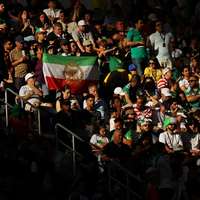
Undated photo of pro-Palestine protesters in the US
The Iranian government has tried to hijack ongoing Gaza war protests in US universities, and actors close to Tehran have provoked and financially supported the protesters, the Director of US National Intelligence said on Tuesday, as she warned against Iran's influence efforts.
"Iran is becoming increasingly aggressive in their foreign influence efforts, seeking to stoke discord and undermine confidence in our democratic institutions," Director of the US National Intelligence Avril Haines said in a statement.
She said that in recent weeks Iranian government actors have sought to "opportunistically" take advantage of ongoing protests against Israel's war on Hamas in Gaza.
"We have observed actors tied to Iran’s government posing as activists online, seeking to encourage protests, and even providing financial support to protesters," Haines said.
The pro-Palestine protests in the US and Europe, especially in university campuses, have been widely praised and politically leveraged by Iranian leaders, including Supreme Leader Ali Khamenei. He has repeatedly lauded the protesting students for their alignment with Iran's stance against American and Israeli policies.
In a recent speech, Khamenei branded the campus protesters part of Iran's 'resistance front' against the US and Israel.
However, Haines said Americans who are being targeted by Iran may not be aware that they are interacting with or receiving support from a foreign government.
Haines also said in May that Iran will pose a significant threat to the upcoming US elections, warning that Tehran will intensify its cyber and influence activities.
In her Tuesday statement, she warned again about Iran's increased efforts to undermine confidence in US democratic institutions ahead of this year's Presidential and congressional elections, urging Americans to remain "vigilant".
White House Press Secretary also denounced the Islamic Republic's influence efforts in the US during a Tuesday press conference.
"I want to convey a firm message from here to Iran and any other foreign actor that seek to conduct these types of influence activities: Meddling in our politics and seeking to stroke division is unacceptable," she said.
"We will continue to expose attempts to undermine our democracy and our society just as we are today. That is something that we will continue to do," Karine Jean-Pierre said.
Influence by “foreign actors” has been a source of apprehension in recent US elections, especially since 2016, when ‘Russian meddling’ became a major theme, with people on both parties accusing the other of having benefited from it.
There seems to be a growing consensus in Washington that the ‘influence’ offensive from the Tehran has to be taken seriously, even though it’s not yet as serious as threats from Moscow and Beijing –and perhaps not on the same global scale.
Russia, China, and Iran deny all such accusations, punching back with allegations of American influence campaigns –and direct interventions– across the world.
Iran International revealed in an investigation with Semafor last year that an Iranian-backed influence network, called the Iran Experts Initiative, sought to build relationships with overseas academics and researchers in the West to affect Washington's foreign policy on Tehran.
The Arab league is no longer classifying Hezbollah as a terrorist entity, a move that experts say is a big win for Iran and serves to strengthen the Iranian proxy in Lebanon.
The Arab League’s Assistant Secretary-General Hossam Zaki made the announcement on Saturday, according to Arab media. Zaki said on Egyptian Al-Qahera News that “the member states of the League agreed that the label of Hezbollah as a terrorist organization should no longer be employed.”
The Arab league labeled the Shiite militant group a terrorist organization in 2016, backed by 22 member states with the firm support of Saudi Arabia.
Walid Phares, a Foreign Policy expert and American academic who has advised US presidential candidates, said the Iran influencers in Washington may have made the suggestion to remove the Iran-backed proxy as a terror organization to keep the status-quo in Lebanon, and prevent a looming war between Hezbollah and Israel.
The Iran influence network “may have convinced those Arab countries that for the time being, if you stop the designation, this will convince the Israelis that the international community is against any action Israelis are going to take into Lebanon,” Phares told Iran International.
In recent weeks, Hezbollah has been conducting attacks using exploding drones and low-flying missiles that, in some instances, Israel's short-range Iron Dome has struggled to intercept. Many of the recent drone attacks in the North of Israel have led to massive forest fires in the agriculture-rich dependent region.
Iran International reached out to the US State Department for comments on the Arab League's move and its possible link to Iran's influence network in Washington DC.
"We understand that the Arab League position has not changed, but refer you to the Arab League for further comment," said a spokesperson for the US State Department.
The United States, Canada and many other countries have designated Hezbollah as a terrorist organization.
Phares, the author of “Iran, Imperialist Republic and US policy,” said capitalists tied to international gas companies might also benefit economically from Hezbollah's removal as a terror organization as they could sign energy deals with Lebanon for its sub-sea gas fields.
In October 2022, Israel and Lebanon signed a US-brokered maritime agreement, allowing both countries access to gas deposits, according to Reuters. That established their permanent maritime boundary and exclusive economic zones, and regulated their rights to gas exploration in the eastern Mediterranean.
Expert: terror removal benefits Iran and Hezbollah
Alex Selsky, an advisor to the Middle East Forum and former advisor to Israeli Prime Minister Benjamin Netanyahu, said the Arab League's removal of Hezbollah from its terror list, only shows support to the Iranian government and its Lebanese proxy.
“I think everybody's surprised to see that because it's clear that Hezbollah is a terrorist organization. The symbolic move of un-listing Hezbollah even the image of it benefits Tehran and hurts the West,” Selsky told Iran International.
The Arab league is made up of predominately Sunni dominated countries, like the United Arab Emirates and Saudi Arabia, all of which demanded the Iran-backed proxy join the list in 2016, according to Selsky. That shift, he said, makes Hezbollah stronger.
However, Selsky believes the move could give Israel the upper hand in the ongoing conflict in the region. If Hezbollah is not a "terrorist" organization in the view of the league, Selsky said, then Israel may view Lebanon as effectively the problem if Hezbollah continues to strike Northern Israel.
“It looks to me that it's either someone wants in a very sophisticated way to bury Lebanon or it's some backing for Iran,” he said.
The Potential for full out war
The question still remains, will Lebanon be dragged into a full out war?
Israeli security expert Sarit Zehavi, told Iran International in May that usually most of Hezbollah's attacks strike in evacuated areas of Northern Israel, but recently there were more attacks on areas which are further from the border with Lebanon. It is estimated that around 60 thousand Northern Israeli residents are still displaced after October 7.
The last time Israel and Hezbollah engaged in an intense, direct war was in 2006 after the kidnapping of Israeli soldiers by the Iran-backed proxy. The end of that conflict was brought on the by the UN Security Council Resolution 1701, mandating the disarmament of Hezbollah, which has not been enforced since.
Hezbollah was founded in 1982 by Iran’s Revolutionary Guards. At the time, Lebanon was engaged in a civil war, which lasted from 1975-1990. Experts say the militia group was part of Iran’s goal to export its 1979 Islamic Revolution around the region and the world.
The Islamic Education Center (IEC) of Washington in Potomac, Maryland
A helicopter crash on May 19 claimed the lives of Ebrahim Raisi, Iran's eighth President, and his foreign minister, Hossein Amir-Abdollahian, leading to a series of consequential events.
Memorial services organized by the Iranian government globally in their honor, faced significant criticism from opponents of the Islamic Republic, sparking widespread discontent and controversy.
In Washington DC, a staff member of Iran's Interests Section in the US exacerbated tensions. In a video circulated on social media, Ramezan Soltan-Mohammadi was observed making a threatening gesture towards protesters, leading to an extended restraining order against him by a US court on June 17.
This incident, occurred on May 22 on the sideline of Raisi’s memorial service held by the Islamic Education Center (IEC) in Maryland, sparking renewed scrutiny into the ties between this sizeable mosque in Potomac and the Islamic Republic of Iran.
Islamic Education Center (IEC) in Maryland
Despite concerted efforts over the years by the administrative staff and board members of IEC to keep a low profile and refrain from drawing undue attention to this prominent Shia center in Montgomery County, the facility has consistently faced accusations from critics who allege it has functioned as a haven for supporters of the Islamic Republic for numerous years.
These allegations against the IEC, which also serves as a mosque, seem firmly grounded in reality.
Federal prosecutors in Manhattan initiated legal action to seize this center in 2009 for its connection to Alavi Foundation, a New York City-based organization accused of illegally providing money and services to Iran and spending millions of dollars to obtain and develop properties in violation of federal laws that ban trade with Iran, the New York Times reported.
IEC managers have endeavored to distance themselves from Alavi and have long asserted that the mosque's association with the foundation is purely that of tenant to landlord.
Furthermore, the management board has opted to enhance the organization's public image by revising its mission statement, asserting that it functions solely as a place of worship and religious center without any political affiliations. Nevertheless, there are compelling facts that contradict these assertions. Since its inception, the leaders and members of this organization have consistently shown fervent support for the Islamic Republic, demonstrating unwavering devotion and admiration for the regime in both rhetoric and actions.
Hosting Raisi’s funeral and several meticulously organized ceremonies directed by authorities in Tehran serve as undeniable examples that underscore the current bond.
Ahamad Bahraini Imam of IEC
Such is the depth of influence that throughout its operational history, the prayer leader of the center has consistently been appointed by Tehran. The current Imam, Ahmad Bahraini, who has served at the center for approximately two decades, previously held the position of Ali Khamenei's representative at Shahid Beheshti University before relocating to the United States.
His predecessor, Hojatolislam Mohammad-Reza Hejazi, sparked controversy when he was detained at Washington Dulles International Airport in 2005 while trying to depart for Iran with nearly $100,000 in cash, disregarding US tax rules.
The IEC's notable connections to Tehran include hosting prominent figures and clerics closely associated with Iran's power structure. Mohsen Qara'ati, a high-profile clergyman with ties to the regime; Mohammad Kazem Rashed Yazdi, a cleric with personal connections to Ali Khamenei; Mohsen Taj Langaroudi, a prominent loyalist cleric; and Mohsen Taheri, a well-known eulogist affiliated with the Khamenei’s office, have all been hosted by IEC and visited the US at the center's invitation.
According to Iranian International investigations, the IEC has been found to have substantial ties with the Iranian Interest Section (IIS). This section acts as the representative of the Iranian government in the absence of formal diplomatic relations between Washington and Tehran. Our interviews with knowledgeable individuals suggest that certain current or former staff members of this center, as well as their spouses, have been employed by the ISS. Additionally, over the years, the center has frequently organized non-religious activities that align with the objectives of the Islamic Republic.
The authorities of the IEC have shown no willingness to respond to the claims stated.
According to its website, the Islamic Education Center in Washington was founded as a nonprofit organization dedicated to promoting Islam through cultural and religious activities. Despite its location in Potomac, Maryland, the decision to include "Washington" in its name reflects a historical dispute stemming from the 1979 Islamic Revolution in Iran.
The Center was established amid controversy following the expulsion of several of its current members from the prominent mosque of nation’s capital due to their occupation of the premises in 1981. According to the Washington Post, the dispute originated when "about a dozen demonstrators who support Iranian leader Ayatollah Ruhollah Khomeini occupied the mosque."
As reported by the newspaper, the board of the mosque, consisting of ambassadors to the United States from more than 40 Islamic nations, took legal action. Subsequently, a Superior Court judge issued an order for the demonstrators to evacuate the premises. When they declined to comply, some of the zealous supporters of Islamic Republic were charged with criminal contempt.
With sustenance from the Alavi Foundation, followers of Khomeini who were expelled from the Islamic Center of Washington instituted their own sanctuary by acquiring and renovating a sizable facility located in an affluent Maryland area.
The Islamic Center of Washington has displayed no interest in responding to Iran International’s questions regarding the four-decade-old conflict.
Questions surrounding Biden admin's suspended Iran envoy Rob Malley became more serious Wednesday with reports that he may have shared sensitive and classified documents with individuals outside the US government.
On Wednesday, Semafor reported, quoting people familiar with a Congressional probe into Malley's handling of classified information, that Biden’s Iran envoy transferred documents to his personal devices “with classifications ranging from sensitive but unclassified to classified”, and may have shared some with unauthorized people, “to advance his diplomatic efforts.”
This allegation follows earlier reports that a “hostile cyber actor” may have had stolen documents from Malley’s personal email and cell phone. It’s not clear who the “cyber actor” was, but US senators have expressed concern about the possibility that it could have been related to Iran’s intelligence or Revolutionary Guards (IRGC).
Among the documents downloaded by Malley on his personal devices, Semafor reports, “are detailed notes of the diplomat’s encounters with Iranian officials in the months leading up to his suspension. There also may have been documents related to the US government’s response to the wide scale political protests that erupted in Iran – and globally – during the fall of 2022 following the death of a young Kurdish woman, Mahsa Amini, in police custody.”
Malley was appointed by Biden in early 2021 to spearhead the administration’s efforts to revive the 2015 nuclear deal with Iran that Donald Trump had tossed out in 2018. After about two years in the job, Malley was placed on leave and had his security clearance suspended. Iran International was first to report this in June 2023, with very little detail as to why such drastic measures were taken by the Department of State.
The matter was then taken up by Republican lawmakers who tried to obtain information about the reasons for and the circumstances of Malley’s suspension. But the State Department refused to provide answers on numerous occasions – up to the point that Senator Jim Risch, Ranking Member of the Senate Foreign Relations Committee suggested in a hearing on 16 May that they would have to issue a subpoena to extract answers.
The State Department's refusal to provide details on Malley’s case and the ongoing probe has led many to believe that there may be a case of serious ‘wrongdoing’ that could be damaging to Biden in the run up to the 2024 elections.
Biden critics in the Congress have been particularly vocal about his Iran policy, ever since he took office, but even more so after October 7, 2023, when Hamas rampaged border areas inside Israel, killing several hundred civilians – and triggering the ongoing onslaught on Gaza, which has reportedly killed more than 30,000 Palestinians.
Avril Haines, Director of National Intelligence, at the Senate Intelligence Committee hearing on foreign threats to the 2024 elections on May 15, 2024
Iran will pose a significant threat to the upcoming US elections, Director of National Intelligence Avril Haines said on Wednesday, predicting that Tehran will intensify its cyber and influence activities.
“Iran is becoming increasingly aggressive in their efforts,” Haines told the US Senate Select Committee on Intelligence. “[They] seek to stoke discord and undermine confidence in our democratic institutions, as we have seen them do in prior election cycles.”
Influence by “foreign actors” has been a source of apprehension in recent US elections, especially since 2016, when ‘Russian meddling’ became a major theme, with people on both parties accusing the other of having benefited from it.
Haines in his Senate briefing Wednesday also singled out Russia as the “most active foreign threat” to US elections, adding that China and Iran were also “significant actors” in trying to leave their mark.
On Iran, specifically, he said: “They continue to adapt their cyber and influence activities, using social media platforms, issuing threats, and disseminating disinformation. It is likely they will continue to rely on their intelligence services in these efforts and Iran-based online influencers to promote their narratives.”
There seems to be a growing consensus in Washington that the ‘influence’ offensive from the regime in Tehran has to be taken seriously, even though it’s not yet as serious as threats from Moscow and Beijing –and perhaps not on the same global scale.
This was pointed out Wednesday by the president of the US Council on Foreign Relations, Michael Froman, who suggested in an interview with CNN’s Christian Amanpour that the outlook is not all gloom, as those worried about or affected by such threats rally to fend them off.
“There’s a concerted effort by Russia, China, Iran, and North Korea to challenge the rules-based international order…but it has strengthened, in many respects, alliances around the world. So there’s been an action and a reaction.”
Russia, China, and Iran deny all such accusations, punching back with allegations of American influence campaigns –and direct interventions– across the world. This is a game to which Iran seems to be a new but fast-learning player, attempting to shape not just public opinion and discourse, but also high-level decisions and policy.
“There is evidence that some think tanks, advocacy organizations, and universities are uncomfortably close to a U.S. enemy,” Policy director at United Against Nuclear Iran, Jason Brodsky, posted on X.. “ Some of them do so unwittingly, others perhaps wittingly. They risk becoming components of an information operation benefitting Tehran.”
This has been well documented by Iran Internationaland Semafor in a number of exclusive, investigative reports.
Interestingly enough, the Iranian regime is no longer hiding its intentions, even publishing research papers on the subject of ‘influence’.
In a 128-page report published recently, an Iranian think tank (SARAMAD), recommends a number of measures to be considered after the 2024 US elections, including establishing “a network of elite lobbyists” to indirectly “advance” the regime’s interests in “policies and US public opinion."
The report calls for the creation of a "special network" in the US that would “put Iran's interests first” and are able and willing to express their views to "restore Iran's image”.
This, of course, has been pursued before –and with some success– in such measures as the Iran Expert Initiative, whose affiliates worked tirelessly to promote the regime’s stance during and after the negotiations that led to the 2015 nuclear deal. A key figure in that initiative, Arianne Tabatabaei, is now a high-ranking official at the Pentagon, while her mentor, Robert Malley, President Joe Biden’s former Iran envoy is being investigated by the FBI for potentially criminal mishandling of official documents.
The US Congress has been trying to learn more about Malley’s case for months–including the reasons his security clearance was suspended– but the State Department has refused to offer information.
Some Biden critics accuse him of ‘appeasing’ Iran. They say he has been paralyzed by fear of ‘escalation’ that he thinks could lead to an “all-out war” in the Middle East, failing to confront, even to recognize the magnitude of threats posed by, the Iranian regime.
“Many US media and think tankers refuse to believe that Iran would seek to run sophisticated info operations on US soil,” former national intelligence manager on Iran Norman Roule posted on X. “It's past-time for the kid gloves and denials to drop.”
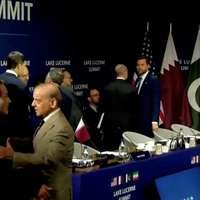
Iran International’s executive editor, Aliasghar Ramezanpoor and TV host Pouria Zeraati at the opening of the Geneva Summit
At this year’s opening of the Geneva Summit, Iran International’s journalist Pouria Zeraati issued a call to Western leaders, urging them to craft a new policy to back the Iranian people and confront the "terrorism stemming from the Islamic Republic of Iran."
“In this path, we all have a key role to play…so that the Iranian people’s great revolution, which began in September 2022, will become triumphant – and you, in the Western world, will no longer be threatened by a regime that is against basic human values,” Zeraati said.
Now in its 16th year, the Geneva Summit for Human Rights and Democracy is a leading annual event organized by a coalition of 25 NGOs. It convenes activists globally on the eve of the UN Human Rights Council's main session to bolster international awareness of human rights issues.
This year, Iran International was named the winnerof the 2024 Geneva Summit Courage Award for "fearlessly” uncovering the daily “abuses of the Islamic Republic of Iran."
Accepting the award alongside Zeraati on Wednesday, is Iran International’s executive editor, Aliasghar Ramezanpoor.
In his speech in Geneva on Tuesday, Ramezanpoor paid tribute to the “brave people of Iran” who he said “support Iran International’s work” by sharing their stories with the network.
“The truth comes from the people of Iran. It is in their voice. And the telling of it comes at great risk to their lives. I applaud their courage, which continues to inspire me and my colleagues in the work we do,” Ramezanpoor said.
Echoing a similar sentiment, Zeraati referenced the Iranian populaces’ persistent anti-regime sentiments.
“In the past two years, the people of Iran have made their demands explicitly clear on the Iranian streets. We need to hear their voices loud and clear,” he said.
Citing the Iranian people's contributions to the news outlet's coverage, often serving as citizen journalists, and documenting incidents to share them in the absence of an independent press in Iran, Ramezanpoor said that “their contribution during the Mahsa movement significantly enhanced our coverage of the unrest."
The Mahsa movement refers to the nationwide anti-regime protests that erupted in Iran after Mahsa Jina Amini died at the hands of the so-called morality police in 2022. In its crackdown on demonstrators, security forces killed at least 550 protesters, including dozens of children.
In that vein, Ramezanpoor and Zeraati emphasized the necessity of keeping international attention focused on the repression of protesters by authorities in Iran, the abuse of political prisoners, and the death penalty.
“Although often powerless to prevent such horrors, the need to talk truth to power has real meaning for people without power,” Ramezanpoor said.
The award is being given to Iran International almost 50 days after Zeraati was stabbed by unknown assailants, outside of his London home.
While British police stated it was premature to determine a motive for the crime, Zeraati's occupation, along with other threats to Iran International, prompted the involvement of the counterterrorism unit in investigating the attack.
“It was an attack on journalism. It was an attack on freedom of speech and an attack on our core liberal values in the West,” Zeraati stated. “This act of terror to silence and imitate us abroad gives a small glimpse of what the brave people of Iran face on an everyday basis.”
For many years, Iran International has faced threats from the Iranian government. Danger to the network’s employees escalated last year, with domestic security services unable to guarantee employee safety.
The network temporarily relocated its London offices to Washington, D.C.. Before the incident, Iran's intelligence minister had declared Iran International a terrorist organization, paving the way for all manner of actions against its journalists and broadcasters.
Ramezanpoor, who was convicted by the Iranian regime in absentia for “propaganda against the government,” stated at the summit: “I am happy to report that the ongoing attempts to stop us from broadcasting have not worked - we’re still on the air.”