Violent protests shook Iran in November 2019, when the government suddenly tripled gasoline prices.
The thorny issue of a possible fuel prices hike has taken the centerstage in the debates between supporters of the pro-reform Masoud Pezeshkian and ultra-hardliner Saeed Jalili, and among eligible voters.
The duel began Sunday with Jalili supporters claiming on social media that fuel prices would increase several-fold if Pezeshkian wins the runoff elections on July 5, and reach as high as 250,000 rials per liter (around 40 cents).
Currently rationed gasoline is sold at 15,000 rials per liter (2.5 cents). The cost of anything used over the rationed amount (From 25 liters per month for motorcycles and 60 liters for personal cars to 500 liters for ambulances) is 5 US cents per liter.
This heavily subsidized price, coming to less than 10 cents a gallon, is the second cheapest in the world and costs the government tens of billions of dollars per year. Average gasoline prices in the region is closer to $1 per liter.
Jalili’s campaign officials and supporters’ intensive attacks on Pezeshkian’s campaign were followed by a Jalili tweet on Monday. The image posted by Jalili with no comment looked like the map of an Internet Taxi application with Pezeshkian as the taxi’s passenger going to the presidential office. The caption read “Will increase transportation costs” to suggest that Pezeshkian’s government intends to increase fuel prices to 250,000 rials (around 40 cents) per liter.
“Mr. Jalili, I haven’t proposed any plans for increasing gasoline prices but you must say if the price of gasoline will be less than 600,000 rials (nearly $1) after your government implements your ‘The One Plan’,” Pezeshkian’s official X account respondedto Jalili shortly after.
Jalili has proposed "The One Plan" to distribute energy subsidies equally to all Iranians, regardless of income, instead of the current income-based cash subsidies in 2021 by allocations of “One” units which could be used like cash to buy fuel or electricity instead of money. Fuel should be sold at international rates after the introduction of the plan.
The plan, he argued, would allow individuals with less energy consumption to sell saved units at any price through a mobile application or treat them as investments for the future. According to information on Jalili’s website, One units can also be used to pay water bills.
Neither Jalili, nor his campaign had made any reference to the plan during the campaign before Friday’s low turnout elections in which he came second after Pezeshkian but his campaign aides and supporters are now extensively promoting the plan as one of Jalili's measures to improve the lives of low-income Iranians.
Jalili formed a shadow government during the presidency of moderate Hassan Rouhani and maintained it during Ebrahim Raisi’s administration to which he appears to have proposed his plan.
Raisi’s government did not implement The One Plan and the price of gasoline remained the same as in 2019. A mini model, however, was introduced in the Persian Gulf free economic zone Island of Kish as a pilot in March 2022 for four months.
Not only economists, but even hardliners media including the Revolutionary Guards (IRGC) linked Javan newspaper criticized the pilot plan in Kish Island and said it had increased fuel usage instead of decreasing it.
Fuel gasoline has always been highly subsidized by the government. Smuggling of gasoline and other fuel in huge quantities to neighboring countries including Iraq, Afghanistan, Turkey, and Pakistan where it is much more expensive is a serious problem for all Iranian governments. Some economic experts say as much of 20 million liters of fuel is smuggled out of Iran every day.
The quadrupling of fuel prices by Mahmoud Ahmadinejad’s government in 2007 sparked riots, particularly in Tehran where petrol stations were torched by angry protesters. Hassan Rouhani’s government increased fuel prices three times. The last increase in November 2019 the tripling of the prices led to extensive protests across the country that lasted a week. Hundreds were killed and security forces seriously injured thousands during the crackdown on protesters.
Iranian pro-reform candidate Masoud Pezeshkian said on Monday that the low turnout in Iran’s presidential election was “unacceptable” and a sign of flaws in the system, while his hardline rival Saeed Jalili called for strategies to encourage greater voter participation.
The June 28 presidential election marked the lowest voter turnout in the history of the Islamic Republic, with only 39.92 percent participation. This breaks the previous record set during the last election, in which the late President Ebrahim Raisi won with a turnout of 48 percent.
In a televised debate ahead of the runoff election on July 5, Pezeshkian said the concerns of the 60 percent who abstained from voting should be addressed, stressing the importance of caring for all Iranians, especially women and ethnic groups.
Jalili said, "If the current situation is far from the desired level of public participation, we must motivate people with a plan to move towards the desired participation."
Both candidates tried to garner support from Sunni Muslims. Pezeshkian criticized the exclusion of Sunnis from key government positions. Jalili also pledged to restore Sunni rights if elected.
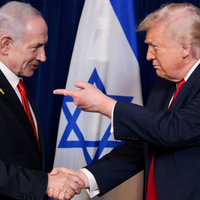
Foreign Policy and Sanctions On foreign policy, Pezeshkian emphasized the importance of expanding Iran's international ties, prioritizing neighboring countries first and then other nations to achieve economic growth. He defended the 2015 nuclear deal (JCPOA), and said why figures like Israeli Prime Minister Benjamin Netanyahu, former US President Donald Trump, and Saudi Arabia opposed the deal if it was against Iran’s interests.
Pezeshkian highlighted the "huge" financial losses incurred without the nuclear agreement and urged adopting the Financial Action Task Force (FATF) regulations, comparing it to FIFA in international sports where non-compliance results in exclusion from global engagements.
Jalili criticized the focus on expansion of ties with just "three world powers" in the moderate faction's foreign policy, arguing that there are over 200 countries that Iran should engage with to seize various opportunities.
He said Iran currently sells "less than two million barrels of oil per day" at standard rates despite the US sanctions.
Pezeshkian asked why despite huge oil sales, the lives of ordinary Iranians remain "miserable".
"Why don't you tell the people at what rate you are selling the country's oil?" he asked.
Smear Campaigns
In another part of the debate, both candidates tried to address smear campaigns against them. Jalili had brought a thick pamphlet which he said was comprised of the articles published online against him. He claimed that supporters of Pezeshkian called his supporters “Taliban” while Pezeshkian said Jalili’s supporters called him “munafiq”.
In Islamic term Munafiq is a person who in public and in community shows that he is a Muslim but rejects Islam or speaks against it either in his heart or among the enemies of Islam. The hypocrisy itself is called nifāq.
Internet Censorship and Technology
Jalili said the already-restricted social media platforms (like Telegram, X, and Instagram) must comply with the Islamic Republic’s regulations to operate in Iran. The hardliner also pledged to significantly increase mobile and home internet speeds if elected.
Pezeshkian explicitly defended the Islamic Republic's restriction of internet and claimed that all governments impose internet restrictions during special times, such as protests or strikes. However, he argued that there is no justification for the current restrictions forcing citizens to rely on VPNs as there is no "special" situation in the country.
Final Words
Pezeshkian, a former health minister and deputy speaker of Parliament said Jalili lacked necessary qualifications to run the country.
"One who has not run even a department is not qualified to run an organization," Pezeshkian said.
Jalili referred his experience in the foreign ministry, and also as the Secretary of the Supreme National Security Council.
Pezeshkian said the Secretary was not the one who made top decisions, and those policies were the decided by Iran's leader Ayatollah Khamenei.
A Shia cleric critical of Iran’s Supreme Leader says a wave of confidence has swept through dissidents after 60% of voters refused to participate in the June 28 presidential election.
Mohammad Taghi Akbarnejad, a conservative cleric teaching at the Qom seminary, made the comment Sunday during a YouTube debate on “Boycotting or Participating in Elections.”
Highlighting the newfound confidence among the dissidents, he said the election result represented a shift in public opinion. He labeled it a “new national identity” and called on the authorities to accept it.
At least 60 percent of the 61.5 million eligible voters abstained from voting on June 28, according to official figures. However, many believe the turnout was even lower than officially reported, possibly as low as 20 percent, suggesting that over 80 percent of voters might have boycotted the election.
"See the confidence that has been instilled among the dissidents. Before the election, we hadn't anticipated that 60% of the people would abstain. The nation has suddenly come forward and declared, 'We are here, and we understand.' The next step is to embrace the nation's new identity."
Describing it as an “asset," he added that the low voter turnoutcan be used for change if leaders can channel the underlying public dissatisfaction into a focused movement. He said that expressing dissent, even through non-participation, can be a powerful force for change, as shown by Rouhollah Khomeini's successful mobilization during the Islamic Revolution in 1979.
"If the elites can turn this into a movement and identify the demands of this 60% and become their voice, they can use it for future steps. That’s the role of a politician. It’s a significant asset declaring opposition. What did Ayatollah Khomeini do? He turned this dissent into 'Death to the Shah slogans.'"
Throughout the program, Akbarnejad insisted that he does not promote regime change in Iran. He was arrested and transferred to an undisclosed location in February for his critical comments about parliamentary elections that took place on March 1, "insulting" Supreme Leader Ali Khamenei and criticizing the Islamic Republic’s track record during the past 45 years." He later announced in an audio file that he had been released on bail. Following his arrest, the number of his followers on Instagram rose from around 1,000 to over 93,000.
His arrest happened after a video of him went viral in which he said that "both voting and not voting in the elections carry a message to the government and reflect people's reaction to the officials' [objectionable] performance." He also directly challenged the leaders of the Islamic Republic by questioning the practical benefits of religion for the people. "I do not believe in a religion that does not serve the nation's interests," he boldly declared.
Elsewhere during the Sunday debate, he asserted that public trust in the government has eroded to an unprecedented extent, marking a stark contrast to the era when reformists held sway. "The public is no longer easily duped; they are prepared to pay the price."
He implored the government to uphold Article 27 of the Constitution and acknowledge the people's right to protest, cautioning the Islamic Republic: "Even in your own self-interest, if you want to remain in power, you must yield to the people's will."
According to Article 27 of the Constitution, "Gatherings and demonstrations without arms, provided that they do not contravene the foundations of Islam, shall be free."
With pro-reform Masoud Pezeshkian and ultra-hardliner Saeed Jalili in Iran's July 5 runoff, debates among Iranians over participation are heating up. Some advocate voting for Pezeshkian to prevent Jalili's win, while others consider boycotting the vote once again.
Even without trusting government-controlled election figures over the years, turnout has steadily decreased in Iran. The rulers of the Islamic Republic cannot deny the statistics from their own Ministry of Interior.
This decrease in participation has numerous economic, political, and social causes. Chief among them are livelihood difficulties, declining purchasing power, and increasing poverty and unemployment, which leave most Iranians with little incentive to vote. The current state of the country affects over 90% of the population, contributing to a broader social context for this decline in voter turnout.
Schism between the Islamic government and the people
Over the last fifteen years, particularly after the 2009 crackdown on the Green Movement and the "Where Is My Vote?" protests, the masses have distanced themselves from the government in large numbers. This growing divide is evident in the differing lifestyles of the people compared to their rulers, the process of de-ideologization, the increasing belief in the separation of religion and state, the rising use of non-governmental media, and the sexual revolution in society. The government's plan to engineer people's lives based on its Islamist ideology through the education system and by reducing culture, art, sports, and media to government propaganda has failed.
National memory exists
According to government officials, Iranians quickly forget repressions. Hassan Rouhani's advisor, Hesamoddin Ashna, once remarked, "Our sweet people are hard to conquer but easy to reconcile." Similarly, the Minister of Communications under the Raisi administration dismissed complaints about the killings of thousands of protesters in 2017, 2019, and 2022 as mere grumblings, urging people to forget themand vote. Mohammad Reza Aref, Khatami's former VP, also advised not to "tie Iran's future to hatred of the past" to encourage voter turnout.
Contrary to these expectations, Iranian society neither wants to nor can forget the recent repressions. The motto of those who have lost loved ones or been injured, shared by the majority, is "we do not forgive, and we do not forget." As a result, calls from reformists to forget have largely been ignored. The Iranian people are developing a strong political memory and cannot simply move on. It's unrealistic to think they will reconcile with the system just because Pezeshkian is brought into the picture.
Change of reference groups
In the past decades, intellectuals, clerics, and academics were considered influential reference groups in Iran, with a significant portion of the population following their guidance. However, this changed in 2017. Despite opposition from these groups that year, people rose against the regime in more than 100 cities and small towns. Since then, three other groups have gained more influence on society: the families of slain protesters, political prisoners, and union and civic groups. In the 2024 elections, these three groups effectively boycotted the elections, and their boycott had a significant impact.
While celebrities, public figures loyal to the regime, and former and current officials turned some main polling stations in Tehran into social gatherings on June 28, portraying themselves as elites on voting day, the people advised by the new reference groups stayed at home. Government agents often accompany foreign journalists to these central polling stations to create an impression of higher turnout. Consequently, domestic and foreign journalists obtained most of their photos and reports from these locations.
Non-participation has no gender, class, or ethnicity
The non-participation or boycott by the majority of voters, officially reported at 60% last week, cannot be attributed solely to the abstention of women, ethnic groups (Kurds, Baluchs, Arabs), and the poor. This widespread decision to abstain and show resentment towards the government is a cross-class, cross-gender, and cross-ethnic phenomenon. The majority of Iranians do not see a light at the end of tunnel for their future if the Islamist government remains in place.
The participation of Kurds and Baluchis has decreased similarly to others, and the deprived classes have distanced themselves from the ballot boxes in the same manner as the prosperous classes. "No Vote at All" was a national campaign.
Politicians close to Iran's 'reformists' have begun warning voters about hardliner presidential candidate Saeed Jalili, as they argue that his ideological rigidity will hurt the country.
Hamid Abutalebi, former advisor to ‘reformist’ Iranian President, Hassan Rouhani took to X to warn against Jalili labeling him as a ‘fanatical extremist’ who he has known for “more than 3 decades.” whose policies would increase chances of conflict with the West and intensified sanctions.
Reformists including Abutalebi insist that Jalili is a danger to the country with his hardline foreign policy and ideology.
"Trump has pledged to bring back the sanctions in a paralyzing form if he wins," Abutalebi stated, "Jalili has also said in the debates that if he wins, he wants to make the West regret the sanctions. Therefore, if Mr. Jalili and his faction are elected, not only will there be no negotiation to solve the people's problems,” Abutalebi warned.
Although Abutalebi says that he didn’t vote in the elections, he stated that he believes presidential candidate Masoud Pezeshkian’s commitment to his “reformist policies will not bring the country to the valley of destruction.”
A large majority of voters who boycotted the first round of the election on June 28, were not swayed by the mutual smearing campaigns of the reformists and hardliners.
Iran’s elections are not 'free and fair,' the US State Department told Iran International on Sunday, in its first comments on the results of Friday's votes that led to a runoff between a moderate and a hardline candidate.
The June 28 presidential election marked the lowest voter turnout in the history of the Islamic Republic, with only 39.92 percent participation. This breaks the previous record set during the last election, in which the late President Ebrahim Raisi won with a turnout of 48 percent.
"The elections in Iran are not free and fair," a State Department spokesperson said.
"Unfortunately, we have no expectation that these elections, whatever the outcome, will lead to fundamental change in Iran’s direction or more respect by the Iranian regime for the human rights of Iran’s citizens," the spokesperson added, as the Iranian government prepares for a runoff presidential election slated for July 5.
Biden administration's Acting Special Envoy for Iran Abram Paley said two days before the Iranian elections that and candidates are handpicked by the Guardian Council, and voters lack access to the “most basic freedoms; necessary features of any democracy."
"In the face of the authoritarian regime’s long history of harassing and intimidating journalists, suppressing election coverage, and denying freedom of peaceful of assembly, we support the Iranian people," he said on his X account.
Iranian candidates are vetted before they can stand for election. The 12-member Guardian Council, whose members are appointed or recommended by Supreme Leader Ali Khamenei, disqualifies anyone deemed insufficiently loyal to the system.
The vetting process leaves voters with no real choice. Many Iranians seem indifferent to the vetting process itself, having lost faith in the system’s willingness or ability to change through elections.
Activists and officials have highlighted that the low turnout in Iran's June 28 votes is a clear sign of the public's discontent with the ruling autocracy, demonstrated through the widespread boycott of the election.
In 2021, voter turnout was 48 percent, the lowest for any presidential election in Iran's history. This year, turnout has dropped further to less than 40 percent, marking an unprecedented trend since the Islamic Republic's establishment in 1979. Additionally, the 2021 election saw the highest percentage of void and blank votes ever recorded, accounting for 13 percent of all ballots cast.
The record-low voter turnout is a significant blow to Iran’s Supreme Leader, Ali Khamenei, who had repeatedly called for a high turnout in the election.
“We place great importance on high participation because the most significant effect of high participation is the honor of the Islamic Republic,” Khamenei stated in a speech on Tuesday, calling high voter turnout "crucial" for the Islamic Republic's survival.
While the official voter turnout of 39.92% announced by Iran's Interior Ministry is already a stark indicator of voter apathy among the population, many Iranians are now expressing suspicions that the Islamic Republic might be inflating these already low turnout figures.
A recent analysis by United Against Nuclear Iran (UANI) said that a covert arm of the Islamic Revolutionary Guard (IRGC) has been rigging elections and manipulating Iran's political landscape through a clandestine network of cultural and political operations.
Known as the Baqiatallah Headquarters, this apparatus works closely with the Intelligence Ministry to strategically influence the current snap election to replace former President Ebrahim Raisi, the NGO reports.