• العربية
  • فارسی
BrandBrand
  • Iran Insight
  • Politics
  • Economy
  • Analysis
  • Special Report
  • Opinion
  • Podcast
  • Live TV
  • Iran Insight
  • Politics
  • Economy
  • Analysis
  • Special Report
  • Opinion
  • Podcast
  • Live TV
  • Theme
  • Language
    • العربية
    • فارسی
  • Iran Insight
  • Politics
  • Economy
  • Analysis
  • Special Report
  • Opinion
  • Podcast
  • Live TV
All rights reserved for Volant Media UK Limited
volant media logo

Israel Confirms Retaliatory Strike on Iran After Drone, Missile Attack

May 5, 2024, 16:37 GMT+1Updated: 07:48 GMT+1
Satellite image showing the aftermath of the Israeli strike on Isfahan

Late on Saturday, Miri Regev, a member of Israel's security cabinet and Minister of Transportation, officially confirmed that Israel had launched a strike on an Iranian air base in Isfahan.
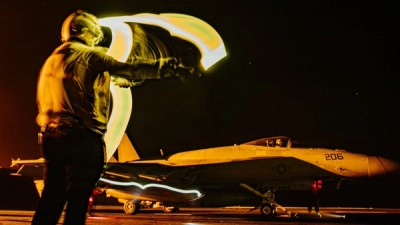

The action was in direct retaliation to Iran's unprecedented missile and drone strike on Israeli territory last month. Regev's statement marked the first time an Israeli official publicly acknowledged responsibility for the attack in April.

"We responded with a message which was received by Iran and the world which observed that Israel is no sucker," Regev stated in an interview with the right wing Channel 14.

Following Iran's first-ever direct assault on Israel, which involved over 350 cruise missiles, ballistic missiles, and drones, mostly intercepted by Israel and a US-led coalition of allies, Israel's counter strike aimed to recalibrate the balance without escalating to full-blown conflict.

The destruction of a key component of the S-300 air defense system at the Isfahan base, revealed through satellite imagery analysis, illustrates the precise nature of Israel's military response.

Iran, likely seeking to avoid a broader regional war, downplayed the damage to its airbase and stated it would not retaliate further despite having the capacity to do so. Tehran has also lessened its verbal aggression towards Israel recently.

Iran's air offensive was triggered by an Israeli air strike on Iran's Damascus consulate compound last month, in which at least one senior Quds Force commander was assassinated and several senior IRGC figures killed in the blast.

As the Gaza war rages on, sparked by Iran-backed Hamas's invasion of Israel on October 7, negotiations are underway regarding a potential ceasefire. Talks began on Saturday, aiming to secure the return of some hostages of the remaining 133 hostages held by Hamas.

The CIA director was in Cairo for the talks but Israeli officials continued to reiterate that Israel's war aims remained in place - the release of the hostages and the elimination of Hamas, with no permanent ceasefire option available.

Washington, along with other Western powers and Israel, which label Hamas as a terrorist organization, has encouraged the group to agree to a deal. Progress on this front has faltered due to Hamas' persistent demand for a commitment to cease the offensive. Israel, on the other hand, maintains that it would resume military operations aimed at disarming and dismantling Hamas after any temporary truce.

On Friday, Hamas expressed a willingness to approach talks in Cairo with a "positive spirit," having reviewed the latest proposal, details of which remain largely undisclosed.

Since Hamas's initial cross-border invasion on October 7, which killed 1,200 people and resulted in 252 hostages as per Israeli tallies, the violence has escalated. Gaza's health ministry reports that over 34,600 Palestinians have been killed.

The dynamics are further complicated by Iran's historical support of Hamas. According to an exclusive report by The Times, secret documents discovered during the Gaza war reveal that the Iranian government provided significant financial support to the Palestinian Islamist group Hamas, totaling at least $222 million from 2014 to 2020.

Previously, Tehran has admitted to financing and training Hamas, and while it has applauded attacks on Israel, it denies direct involvement in specific attacks, though celebrations were held across Iran just hours after the October 7 invasion and Hamas leaders continue to meet with Tehran's leadership amid the war.

Most Viewed

Third US carrier joins Iran blockade, Bessent warns of economic collapse
1

Third US carrier joins Iran blockade, Bessent warns of economic collapse

2

Iran facing one of fastest economic collapses ever, Bessent says

3

Blair's sister-in-law attended Iran conference linked to IRGC spy recruitment - Telegraph

4
VOICES FROM IRAN

Toxic air chokes Iranian cities, residents report health problems

5

Petrol restrictions spark public anger, fears of rising prices in Iran

Banner
Banner
Banner
Banner
Banner
Banner
Banner

Spotlight

  • Iraq’s move on militia stronghold may do little to curb Iran’s influence
    ANALYSIS

    Iraq’s move on militia stronghold may do little to curb Iran’s influence

  • 'Our turn to play': Iran hardliners call for breaking US blockade

    'Our turn to play': Iran hardliners call for breaking US blockade

  • Head full of pellets: protester recalls ordeal on Iran holiday island
    EXCLUSIVE

    Head full of pellets: protester recalls ordeal on Iran holiday island

  • Israeli opposition to Islamic Republic transcends party lines
    ONE-ON-ONE

    Israeli opposition to Islamic Republic transcends party lines

  • 2019 crackdown failed to break cycle of Iran street protests
    ANALYSIS

    2019 crackdown failed to break cycle of Iran street protests

  • Toxic air chokes Iranian cities, residents report health problems
    VOICES FROM IRAN

    Toxic air chokes Iranian cities, residents report health problems

  • Can higher fuel prices curb Iran’s smuggling problem?
    ANALYSIS

    Can higher fuel prices curb Iran’s smuggling problem?

  • Iran’s Janfada campaign gives Basij recruitment a patriotic banner
    ANALYSIS

    Iran’s Janfada campaign gives Basij recruitment a patriotic banner