Quality Of Iran’s Weapons Under Aspersion After Failed Israel Attack - Austin

US Defense Secretary Lloyd Austin said on Friday that Iran should question the effectiveness of its weapons systems after its failed attack on Israel earlier this month.

US Defense Secretary Lloyd Austin said on Friday that Iran should question the effectiveness of its weapons systems after its failed attack on Israel earlier this month.
"They should be questioning the effectiveness of their weapons systems and their planning," Austin told reporters.
"Hopefully they don't walk away from this over-confident that they can do this at will, because I think Israel has demonstrated that it has a significant ability to defend itself," Austin added.
In its attack on Israel, Iran launched more than 300 killer drones, cruise missiles, and ballistic missiles on Israeli territory, IDF spokesperson Rear Admiral Daniel Hagari confirmed this weekend.
Contrary to the Islamic Republic’s armed forces chief, who claimed the attack “achieved all its objectives,” the IDF spokesperson reports that 99% of the threats were intercepted by the air defense system, resulting in negligible impact.
"They should learn is that, first of all, their systems don't work as advertised, that they employed a lot of munitions with the intent of creating significant damage in Israel. And none of that worked. So, that should give them pause," Austin added.

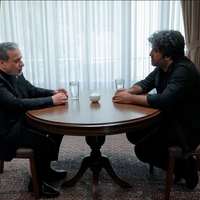
Iranian Defense Minister Mohammad Reza Ashtiani said Iran's recent missile attack on Israel was a "limited warning" intended to deter further confrontations without escalating the situation further.
Speaking at the Shanghai Defense Ministers' meeting held in Kazakhstan, he claimed that Iran does not seek war.
"I must emphasize that the Islamic Republic of Iran is not seeking war or an escalation of tensions in the region. Nevertheless, any aggression or miscalculation by enemies will be met with an appropriate and regrettable response."
The minister's remarks come in the wake of a significant military engagement on April 13, when Iran launched over 350 missiles and drones at Israel. The projectiles were mostly intercepted by Israeli air defenses and a US-led coalition. The military action was described by Iran as a retaliation to an alleged Israeli airstrike on the Iranian consulate in Damascus. The airstrike reportedly resulted in the deaths of a senior commander of the Quds Force and several officers.
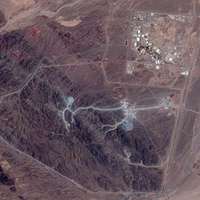
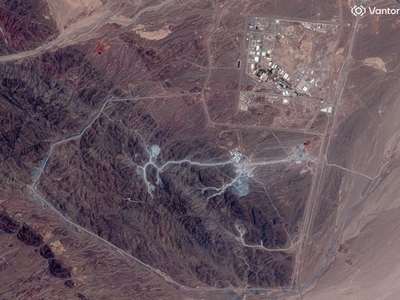
Israel has not officially accepted responsibility for the attack on the consulate. However, US media outlets such as ABC News and CNN, citing US officials, have attributed the targeting a radar site in Iran, on Israel. The province of Esfahan where the strike occurred is notable for its strategic military significance, including the Natanz underground nuclear facility, which has been the subject of suspected sabotage operations attributed to Israel in the past.
Since 1984, the United States has classified Iran as a state sponsor of terrorism. The designation has been largely due to Iran's external activities, which include backing militant groups.

Yemen's Houthis said they targeted the MSC Darwin ship in the Gulf of Aden on Thursday, as the Iran-aligned group resumed attacks on commercial ships in the Red Sea region.
The Houthis also fired a number of ballistic and winged missiles at several targets in Israel's port city of Eilat, the group's military spokesman Yahya Sarea said in a televised speech on Thursday.
The Liberian-flagged MSC Darwin VI ship was in the area of the attack, travelling between the ports of Aden and Djibouti, according to Refinitiv data.
Swiss-based MSC, which operates the world's largest container line by fleet capacity, did not immediately respond to a request for comment.
Reuters was not immediately able to confirm if that vessel was the MSC Darwin mentioned by the Houthis.
The Houthis since November have attacked more than four dozen ships, taking possession of one and sinking another. The barrage of assaults had eased in recent weeks amid U.S.-led airstrikes and a sharp drop in commercial vessel voyages through the Red Sea and Gulf of Aden.
Earlier on Thursday, a ship's captain reported hearing a loud bang and seeing a splash and smoke coming from the sea on Thursday around 15 nautical miles southwest of the Yemeni port of Aden, Britain's maritime agency said.
The UK Maritime Trade Operations (UKMTO) added that the crew and vessel were safe and military authorities were supporting it.

The Taliban has arrested five Iranian border guards in Afghan territory and handed them over to the its intelligence department.
Taliban and Iranian officials have not yet commented about the guards, who claim they had entered the Afghan territory "by mistake." They were arrested in Farah province in southwestern Afghanistan. Thursday night, Iranian state media reported that they were freed.
The Iranian government and Taliban have been involved in several border disputes over the past months. Clashes at the border over water rights in May claimed the lives of at least two Iranians and one Taliban soldier.

The situation has recently been tense in Iran’s eastern borders as the insurgent Sunni Baluch group known as Jaish al-Adl (Army of Justice) intensified its operations against Iranian security forces. The group advocates for enhanced rights and improved living conditions for the Baluch ethnic minority.
Earlier in the month, six law enforcement officers were killed by Jaish al-Adl militants during an ambush on police vehicles along the Sib and Suran county route in Sistan-Baluchistan province. The week before, the group also launched simultaneous attacks against military posts in Chabahar and Rask, killing 16 police forces; the clashes also claimed the lives of 18 Jaish al-Adl militants.
Jaish al-Adl has also been a source of tension between Iran and its nuclear neighbor, Pakistan, for years. In January, the IRGC attacked positions in Pakistan in what it called an attempt to target terrorists. Pakistan retaliated by attacking locations in southeastern Iran.

Massive Evangelical-funded billboards have been installed in Tel Aviv and Jerusalem, predicting the collapse of the Iranian government by October 28, 2028.
Towering the Ayalon Highway in Tel Aviv, the billboard demonstrates the phrase “The end of the Ayatollah’s regime in Iran” in Hebrew, English and Persian. Underneath the inscriptions is an hourglass which symbolizes the downfall of the Iranian government in the near future.
The billboard has been erected by “Jerusalem Prayer Team,” a US organization whose aims are to “guard, defend, and protect the Jewish people” and raise funds to “meet humanitarian needs of the Jewish people in Israel,” according to its website.
“Hundreds of millions of Evangelicals have Israel’s back. Israel, you’re not alone,” read the statement written at the bottom of the billboard.
Likewise, “Jerusalem Prayer Team” published a similar announcement in Israel Hayom daily on Monday, warning that “all who have lifted their hands against Israel are in the dust pan of history.”
Erecting a billboard promising the downfall of the Islamic Republic resembles similar state-sponsored moves in Iran over the past years. In 2015, Ali Khamenei said Israel must be destroyed in 25 years and the government set up a countdown clock in Tehran and a few other cities.
Tensions between Iran and Israel have risen sharply over the past weeks. On April 1, Israel launched a precision missile strike on Iran's consulate building in Damascus, including Mohammad Reza Zahedi, the top commander of the IRGC Quds Force. In retaliation, Iran launched on April 13 its first ever direct offensive against Israeli territory with more than 350 drones and cruise and ballistic missiles.
Early Friday, Israel reportedly targeted Esfahan's 8th Shekari Air Base in reprisal for Iran’s operation. Though satellite images and reports indicate that a major defense system in the airbase was damaged, Iranian officials and state media have unanimously played down the operation.

Washington and London on Thursday issued further sanctions on Iran, targeting Iranian drones, including their use by Russia in the war in Ukraine.
The US Treasury Department in a statement said the action, taken in coordination with the United Kingdom and Canada, targets over one dozen entities, individuals and vessels it accused of playing a key role in facilitating and financing the clandestine sale of Iranian unmanned aerial vehicles to Iran's Ministry of Defense and Armed Forces Logistics (MODAFL).
MODAFL in turn supports Iran's elite Revolutionary Guards (IRGC) and Russia's war in Ukraine, the Treasury said.
“Iran’s Ministry of Defense continues to destabilize the region and world with its support to Russia’s war in Ukraine, unprecedented attack on Israel, and proliferation of UAVs and other dangerous military hardware to terrorist proxies,” Treasury's Under Secretary for Terrorism and Financial Intelligence, Brian Nelson, said.
Washington also targeted two companies and a vessel involved in the shipment of Iranian commodities, the Treasury said.
“The United States, in close coordination with our British and Canadian partners, will continue to use all means available to combat those who would finance Iran’s destabilizing activities," Nelson said.
British Foreign Secretary David Cameron said in a statement, "The Iranian regime's dangerous attack on Israel risked thousands of civilian casualties and wider escalation in the region.”
"Today the UK and our partners have sent a clear message – we will hold those responsible for Iran's destabilizing behavior to account.
Britain also said it would introduce new bans on the export of drone and missile components to Iran, seeking to limit its military capabilities.
Iran's mission to the United Nations in New York did not immediately respond to a request for comment.

The Treasury said it targeted Sahara Thunder, accusing it of being a main front company that oversees MODAFL's commercial activities in support of the IRGC and Russia's war in Ukraine.
It said the company plays a key role in Iran's design, development, manufacture and sale of thousands of drones, many of them ultimately transferred to Russia for use against Ukraine.
As of 2022, Russian officials were negotiating a deal for Sahara Thunder to deliver and produce thousands of drones per year at a facility in Russia under U.S. sanctions, the Treasury said.
Sahara Thunder's leadership and shipping network, which the Treasury said the company relied on for the sale and shipment of Iranian commodities on behalf of MODAFL to jurisdictions including China, Russia and Venezuela, were also targeted.
An Iran-based company involved in the procurement and development of unmanned aerial vehicles, its leadership and an Iranian cargo airline were also among those hit with sanctions.
The US earlier this month had warned it would impose further sanctions on Iran following its unprecedented attack on Israel.
Washington has since taken measures, including targeting Iran's drone program, steel industry and cyber actors.
Iran this month launched more than 300 drones and missiles against Israel, its first direct attack on the country, in retaliation for a suspected Israeli air strike on its embassy compound in Damascus on April 11 that killed elite military officers.
(Reporting by Reuters)