US Targets Houthi Missile Launchers, Vows To Protect Shipping

The United States struck Yemeni Houthis’ missile launchers, at midnight on Wednesday, in another attempt to prevent the group from attacking vessels in the Red Sea.
The United States struck Yemeni Houthis’ missile launchers, at midnight on Wednesday, in another attempt to prevent the group from attacking vessels in the Red Sea.
The US Central Command (CENTCOM) announced in a post on X that 14 missiles belonging to Iran-backed Houthis were targeted at 11:59 p.m. (Sanaa time) on January 17, adding that the missiles were all “loaded to be fired in Houthi controlled areas in Yemen.”
“These missiles on launch rails presented an imminent threat to merchant vessels and U.S. Navy ships in the region and could have been fired at any time,” the post added.
Meanwhile, CENTCOM commander Michael Erik Kurilla vowed that Washington will continue its efforts to protect the lives of Americans and innocent mariners against Yemeni Houthis’ threats in the Red Sea.
“The actions by the Iranian-backed Houthi terrorists continue to endanger international mariners and disrupt the commercial shipping lanes,” he stressed.
CENTCOM’s offensive action came hours after the Biden administration listed Houthis as specially designated global terrorists (SDGT) in response to the group’s rising threats in the region. The US, however, has not decided yet to include Houthis in the list of foreign terrorist organizations (FTO).
The Biden administration delisted Iran-backed Houthis’ designation as both a foreign terrorist organization and as a specially designated global terrorist, when it assumned office in early 2021.
Although Tehran has avoided any direct involvement in the Israel-Hamas conflict, the regime has used its proxy groups in the region such as Houthis and Hezbollah to attack Israeli and American targets.
On Wednesday, the Office of the US Special Envoy for Iran condemned Tehran’s backing of Houthi rebels, with a commitment from Washington to ensure freedom of navigation.




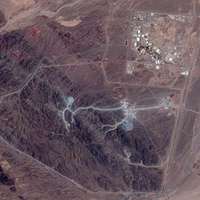




Pakistan launched airstrikes against several locations in southeastern Iran early Thursday, one day after Iran’s IRGC hit targets inside the Pakistani territory.
A local official in Iran’s Sistan and Baluchestan province, bordering Pakistan, confirmed Thursday morning local time that multiple explosions had occurred near the city of Saravan at around 4:00 am.
The deputy governor general of the restive province told the state TV that airstrikes carried out by Pakistan targeted a border village, killing three women and four children, all non-Iranian citizens. It is not clear if Pakistan used warplanes, missiles or drones. Missiles have been mentioned in local reporting, but all three weapons platforms could have been used.
Later in the day, Pakistan's Foreign Ministry announced in a statement that the country had undertaken "a series of highly coordinated and specifically targeted precision military strikes against terrorist hideouts in Sistan and Baluchistan province of Iran."
"A number of terrorists were killed during the Intelligence-based operation – codenamed 'Marg Bar Sarmachar' (Death to Insurgents)," the statement said.
"Over the last several years, in our engagements with Iran, Pakistan has consistently shared its serious concerns about the safe havens and sanctuaries enjoyed by Pakistani origin terrorists calling themselves 'Sarmachars' on the ungoverned spaces inside Iran. Pakistan also shared multiple dossiers with concrete evidence of the presence and activities of these terrorists," it noted.
However, it added, "because of lack of action on our serious concerns, these so-called Sarmachars continued to spill the blood of innocent Pakistanis with impunity. This morning’s action was taken in light of credible intelligence of impending large scale terrorist activities by these so called Sarmachars."
Iran’s Interior Minister Ahmad Vahidi said that Tehran has not yet taken an official position regarding Pakistan’s strikes. Foreign Ministry Spokesman Nasser Kanaani condemned Pakistan’s attack, without elaborating.
Malek Fazeli, Saravan’s representative in the Iranian parliament, rejected Islamabad’s allegations about the presence of Pakistani terrorists in the town.
Iran’s Foreign Ministry summoned the Pakistani embassy’s charge d’affaires demanding an explanantion for the airstrikes. Pakistan's foreign ministry said the aim of the attack was to defend national security, but Islamabad is not pursuing tensions with Tehran.
China and Saudi Arabia have held negotiations with the Iranian government in an attempt to prevent further escalations. According to reports, Beijing and Riyadh are trying to dissuade Iran from retaliating to Pakistan’s airstrikes.
Images have emerged on various local media purporting to show fire, smoke and destroyed structures in the area, including Shamesar near Saravan.
In early hours of Wednesday local time, Iran’s IRGC launched missiles and drones against targets in Pakistan, in an operation that Iran said was against two bases of the Sunni militant group Jaish al-Adl.
Pakistan called the attacks “illegal” and “completely unacceptable” and warned of “serious consequences.”
The two neighbors’ relations soured rapidly as Pakistan recalled its ambassador and ordered the Iranian ambassador to Islamabad to stay in Iran until further notice.
Iran and Pakistan have rocky but functioning ties. Clashes in border areas occur from time to time, mainly involving groups such as Jaish al-Adl, which has claimed responsibility for attacks on, and the killing of, several Iranian border patrols.
On Tuesday, hours before the airstrikes, Iran and Pakistan had a joint military exercise in the Persian Gulf, according to Iran’s official news agency IRNA, and Iran’s foreign minister met Pakistan’s caretaker prime minister on the sidelines of the World Economic Forum in Davos.
Before the attacks on Pakistan, IRGC had hit several targets in Iraq and Syria, triggering the Arab League to adopt a resolution condemning Iran's violation of Iraq's sovereignty.
Many in the region –and beyond– fear that Iran’s escalation in various fronts across the region may lead to a full-scale war. That fear is now much greater as the regime’s dangerous game has reached nuclear armed Pakistan.
Following Iran’s airstrikes in Iraq, Syria and Pakistan, the Arab League is set to hold an emergency meeting while Islamabad and Baghdad have recalled ambassadors.
The Iraqi state news agency announced that the meeting will focus on Iran's Revolutionary Guards Monday missile strike on Erbil in Iraqi Kurdistan. The date of the session is not announced yet. The country has also lodged a complaint at the United Nations Security Council and recalled its ambassador from Tehran.
Also on Wednesday, a Pakistani foreign ministry spokeswoman said the country has recalled its ambassador over the Islamic Republic’s violation of its airspace, calling it a 'blatant breach' of its sovereignty. Pakistan will not allow Iran's ambassador, who was visiting his home country, to return, the ministry said in a statement. Latest reports Wednesday evening local time spoke of Pakistan closing its border with Iran.
In less than one day, the IRGC launched missile and drone strikes on three neighboring countries, claiming ‘revenge’ for civilians and troops killed in the past few weeks. Having hit several locations in Syria and Iraqi Kurdistan Monday, IRGC missiles and drones targeted Pakistan Tuesday, in an operation that Iran said was against two bases of the Sunni militant group Jaish al-Adl. Provincial officials in Pakistan said two children were killed and several others injured by missile strikes near the Iran border, while another toddler was killed in the IRGC’s strikes in Erbil.
Iran's Foreign Minister Amir-Abdollahian said Tehran hit militants in "missile and drone" strikes, claiming that no Pakistani national was targeted. Only "terrorists" were hit, the Iranian diplomat said at Davos, Switzerland, where he was participating in the World Economic Forum, alleging that those targeted were linked to Israel.
According to the Pakistan foreign ministry spokeswoman, Mumtaz Zahra Baloch, the violation was "unprovoked and unacceptable," adding that the country reserved "the right to respond to this illegal act."
Iran and Pakistan have rocky but functioning ties. Clashes in border areas occur from time to time, mainly involving groups such as Jaish al-Adl, which has claimed responsibility for attacks on, and the killing of, several Iranian border patrols.
On Tuesday, hours before the airstrikes, Iran and Pakistan had a joint military exercise in the Persian Gulf, according to Iran’s official news agency IRNA, and Iran’s foreign minister met Pakistan’s caretaker prime minister on the sidelines of the World Economic Forum in Davos.
Officials in Pakistan's southwestern province of Baluchistan, which borders Iran, said that four missiles had hit the Panjgur district close to the Iranian border. "Four missiles were fired in the village of Koh-i-Sabaz which is around 50 km inside Pakistan soil," a senior official of the Panjgur administration told Reuters. "A mosque and three houses were damaged in the attack," another official said.
Iran’s muscle-flexing – using ballistic missiles on targets, some of which were well over 1,200 km away -- comes amid US and UK airstrikes on Iran-backed Houthis in Yemen, who, nonetheless, continue to target vessels in the Red Sea as a show of support for Palestinians in Gaza.
While the attacks on Syria and Pakistan do not seem directly related to Israel, with Tehran claiming the strikes were targeting anti-Iran terror groups, they signal bolder direct action from Iran, which funds and supplies forces opposing Israel like Hezbollah in Lebanon, Hamas in Gaza and the Houthis in Yemen.
Claiming that the Houthis "are not receiving any orders or instructions from Tehran," Amir-Abdollahian said in Davos that attacks against Israel and its interests by the "Axis of Resistance" will stop if the Gaza war ends. ‘Axis of Resistance’ is a term the Islamic Republic uses for its network of proxy militia across the region.
The Biden administration is set to re-designate the Houthis as a terrorist organization in light of the terror the group is waging on global trade and targets, three years after it lifted the designation upon assuming office.
IRGC Colonel Hossein-Ali Javdanfar has been killed after armed men opened fire on the car near the Pakistan border where tensions are rising since Iran launched an attack on Baluch outposts on Tuesday night.
The IRGC Ground Force’s Quds Base issued a statement identifying Javdanfar, saying he had been on a mission related to cultural activities and projects in Saravan County. Jaish al-Adl Sunni militant group has claimed responsibility for his killing, adding that two of his "bodyguards" were also killed by their forces.
The incident occurred a day after the IRGC conducted a missile and drone strike in Pakistan against the Sunni militant group.
In response, Pakistan denounced the attack as "illegal" and "completely unacceptable," claiming casualties, including the death of two children, and warning of "serious consequences."
Jaish al-Adl confirmed the strikes, stating that two of its members' homes were hit, killing two children and injuring two women and a teenage girl.
Founded in 2012, the group operates primarily in Pakistan, and Iran has previously faced border clashes with them. Despite occasional difficulties, Iran and Pakistan maintain functional relations, but the missile-and-drone attack on Pakistan is unprecedented.
In less than one day, Iran’s IRGC has launched missile strikes on three neighboring countries, claiming ‘revenge’ for civilians and troops killed in the past few weeks.
Having hit several locations in Syria and Iraqi Kurdistan Monday, IRGC missiles and drones targeted Pakistan Tuesday, in an operation that Iran said was against the Sunni militant group Jaish al-Adl.
Pakistan called the attack “illegal” and “completely unacceptable”, claiming it had killed two children and warning of “serious consequences”.
“Such unilateral acts are not in conformity with good neighborly relations and can seriously undermine bilateral trust and confidence,” Pakistan’s foreign ministry said in a statement shortly after the attacks. “The responsibility for the consequences of this action will lie squarely with Iran.”
Iran and Pakistan have difficult but functioning relations. Clashes in border areas occur from time to time, mainly involving groups such as Jaish al-Adl, which has claimed responsibility for attacks on, and killing of, several Iranian border patrol.
On Tuesday, hours before the airstrikes, Iran and Pakistan had a joint military exercise in the Persian Gulf, according to Iran’s official news agency IRNA, and Iran’s foreign minister met Pakistan’s caretaker prime minister on the sidelines of the World Economic Forum in Davos.
Some experts say it’s likely that Iranian officials had informed their Pakistani counterparts about the attacks, even though the reaction from Islamabad may suggest otherwise. "An ‘unprovoked’, surprise attack on the territory of a nuclear power seems to be one step too far for a regime that has proven time and again to bark more than it bites," an observer noted.
Iran’s muscle-flexing –using ballistic missiles on targets, some of which were well over 1,200 km away– comes amid US and UK airstrikes on Iran-backed Houthis in Yemen, who, nonetheless, continue to target vessels in the Red Sea as a show of support for Palestinians in Gaza.
On the face of it, the IRGC attacks have no connection to the Israeli onslaught in Gaza, and are merely retaliatory operations against those who the regime in Tehran says have attacked Iranians and Iranian interests. Set against the backdrop of ‘contained’ conflicts from Yemen to Lebanon, however, it is hard not to see these attacks as part of a regional power struggle between Iran and Israel –and therefore connected to what is happening in Gaza at the moment.
The Iranian regime funds, trains and equips various armed groups across the Middle East, whose shared objective is to push back "the Americans from the region" –and "liberate Palestine from the Zionists."
In the US, many blame the Biden administration for this reinvigoration of the embattled, Iran-led “Axis of Resistance”. The critics say Biden, in his eagerness to find a nuclear agreement with Iran, “appeased” the Ayatollah and lost all deterrence in relation to the regime and its regional allies.
“From day one, the Biden Administration met Iranian aggression with accommodation and squandered the credibility of American deterrence,” US Senate Republican Leader Mitch McConnell posted on X Tuesday. “It’s time for POTUS to explain how exactly he intends to compel Iran and its proxies to change their behavior.”
The US military targeted more Houthi sites in Yemen Tuesday, in the third such assault on the Iranian-backed group in recent days. And the Biden administration is expected to announce that it will redesignate the Houthis as "global terrorists" Wednesday, almost three years after it delisted the group to facilitate humanitarian aid to Yemen - or to appease Iran, depending on whose view one believes.
Too little too late, many Biden critics say.
“In February 2021… the President delisted Yemen’s Houthi rebels as a foreign terrorist organization,” Congressman Dan Meuser posted on X Tuesday. “Now, because of Biden’s appeasement, the Houthis are stronger than ever and attacking American commercial and military ships at Iran’s direction. As former Defense Secretary Robert Gates said of Joe Biden, “he has been wrong on nearly every major foreign policy and national security issue over the past four decades.”
In spite of Iranian denials, the Australian government admits it is “concerned” by Iran’s ongoing espionage activities.
A spokeswoman for Australia’s Home Affairs Department told Iran International: “Last year, the Australian Government made it clear that it is concerned by reports of harassment and monitoring of people in Australia by foreign governments, including Iran.”
Earlier this month, The Australian Financial Review published an interview with the Islamic Republic’s Ambassador to Australia, Ahmad Sadeghi, during which he rejected claims by Australia's Home Affairs Minister Clare O’Neil that the Iranian government had been spying on dissidents in Australia, insisting they were safe from harm or kidnapping.
However, last year, O’Neil revealed that Australia had disrupted the activities of suspected Iranian intelligence who had conducted surveillance of the home of an Iranian-Australian dissident, as well as their family, part of a wider global crackdown in the wake of the 2022 uprising.
"I just want to step back and say this again: we have here someone living in our country who is being followed, watched, photographing their home invaded by people at the direction of a foreign power. This is happening in Australia, and this is something ASIO was onto like a shot," O'Neil said last year.
And the threat does not seem to have disappeared. “Espionage and foreign interference represent a serious threat to Australia’s security and the integrity of our national institutions,” the Department of Home Affairs told Iran International this week.
While stressing it is not only Iran which represents a threat, other nations such as China are equally troubling, the spokeswoman added: “It is unacceptable for any foreign government to target members of our community in ways that prevent individuals exercising their fundamental rights and freedoms in Australia. We will continue to take strong action to deter foreign interference, protect the Australian community and uphold our laws and values.”
Tina Kordrostami, an Australian-Iranian woman, spoke out about her own ordeal after experiencing harassment on Australian soil by a suspected regime agent in December 2022 amidst the protests.
Not only was she followed, but a strange man got into her car while stationary, issuing threats.
Kordrostami's father also started receiving threats against her life, and she found herself under surveillance, with unidentified men taking photographs of her during rallies and public events.
After she made the revelations to Iran International, several other Australian-Iranians since broke their silence, highlighting how the Iranian regime monitors their activities in Australia. This has raised concerns among the community, who are now demanding protection from the Australian government.
While Australia has been among the nations to sanction Iran in the wake of both the brutal crackdown of protesters since 2022, and Iran’s arming Russia in its invasion of Ukraine, it has not stepped up to designate Iran’s Revolutionary Guard Corps which has had foreign plots foiled in countries from the UK to Cyprus and Azerbaijan.
The Australian Shadow Assistant Foreign Minister expressed disappointment in November that Australia has not listed Iran's Islamic Revolutionary Guard Corps (IRGC) as a terrorist organization.
"It's incredibly disappointing that governments like Australia have not yet listed Iran's IRGC as a terrorist organization up to this point," she told Iran International, not least for its backing of regional proxies such as Hamas in Gaza and Hezbollah in Lebanon and its destabilizing effects now felt across the Middle East and beyond.