UK Police Show How They Arrested Iran-Linked Terror Suspect

The UK police have released footage of the moment they arrested a suspect gathering information on Iran International's headquarters in London earlier this year.

The UK police have released footage of the moment they arrested a suspect gathering information on Iran International's headquarters in London earlier this year.
During the seventh hearing session for Magomed-Husejn Dovtaev (Mohammad-Hussein Dovtaev) on Tuesday, the court released new images and videos of his arrest by the Metropolitan Police.
Originally from Chechnya but residing in Austria, Dovtaev was detained at Chiswick Business Park by officers from London’s Metropolitan Police Counter-Terrorism Command in February.
In the footage released on Tuesday, police approached him as he was sitting in a cafe nearby the building. He was told that he was being arrested on terrorism charges and he calmly replied, “I was just filming the area... I thought it was wonderful.”
According to prosecutors, he tried to take photos and videos of the security arrangements around the office building that housed Iran International and send the intel to a third party. He is charged with a single count of attempting to collect information "likely to be useful to a person committing or preparing an act of terrorism." He has pleaded not guilty. The trial is expected to conclude next week.
Prosecutor Nicholas de la Poer told London's Old Bailey on Monday that Iran International became a target for reprisals following its reporting on the death in custody of Mahsa Amini in Iran last year and subsequent protests in the country. Iran's minister of intelligence later declared Iran International a terrorist organization, de la Poer said, which meant its employees "became targets for violent reprisals".
In November 2022, Volant Media, the parent company of Iran International, said that two of its journalists had been notified by the police of direct threats. Following the significant escalation in Iranian state-backed threats and advice from the London Metropolitan Police, Iran International TV announced in February that it reluctantly and temporarily closed its London studios and moved broadcasting to Washington DC. The network relaunched operations from a new London building in September.
A German-Iranian has been sentenced to two years and nine months in prison for his role in an Iran-backed attack on a synagogue in Bochum.
The Higher Regional Court (OLG) in Düsseldorf handed down its verdict to the 36-year-old on Tuesday, the defendant only referred to as Babak J.
The charges included conspiracy to commit aggravated arson and attempted arson. The court determined that the arson plot was orchestrated by "Iranian state agencies" while German security officials linked the plot directly to the Islamic Revolutionary Guard Corps. Also on Tuesday, the German foreign ministry said that it had summoned an Iranian envoy over the case.
"We have therefore summoned the Iranian charge d'affaires," the ministry said on X. "We will not tolerate any foreign-controlled violence in Germany."
Court documents reveal that Babak J. made unsuccessful attempts to recruit an acquaintance as an accomplice, who subsequently reported the matter to law enforcement authorities.
The incident in which a molotov cocktail was fired at a school beside the synagogue, resulted in only minor damage to the synagogue. Since the incident, the accused has been held in custody.
Babak J. has also been linked to an earlier synagogue attack in the city of Essen. Reports indicated that he had also been planning a third attack on a synagogue in Dortmund, where he was eventually apprehended.
It is one of several Iran-backed attacks over the last year on Jewish or Israeli targets either carried out or foiled, in countries including Greece, Azerbaijan and Cyprus.

The world is worried and determined to stop Iran from developing a nuclear weapon but has no way to reverse or even monitor its nuclear advances.
At the UN Security Council, the UK, France and Germany released a statement in which they stated they “remain determined that Iran must never develop a nuclear weapon and must reverse its nuclear escalation.”
It came on the back of a semi-annual United Nations Security Council meeting on the implementation Resolution 2231, the foundation of Iran’s 2015 nuclear deal (JCPOA) with P5+1 (the five permanent members of the Council -- China, France, Russia, United Kingdom, United States, plus Germany).
The three European parties of the deal -- so-called E3 -- reiterated concerns on Tehran’s developing and testing ballistic missiles, transferring hundreds of drones to Russia, and enriching uranium to an unprecedented 60% level that has no non-military purpose. The Monday session aimed to address Iran’s ongoing violations of the resolution but came to little progress.

Under the JCPOA, Tehran agreed to limit enrichment of uranium to levels necessary for the peaceful use of nuclear power in exchange for the lifting of economic sanctions.
Referring to a November report by UN’s nuclear watchdog that “starkly outlines the deplorable state of Iran’s commitments under the JCPOA,” they highlighted that the total stockpiles of Tehran's 60% enriched uranium now stand at 22 times the JCPOA limit.
“There is no credible civilian justification for the state of Iran’s nuclear program. The current trajectory only brings Iran closer to weapons-related capabilities; this is of utmost concern for international peace and security,” the E3 warned.
The statement highlighted Iran's lack of cooperation with the International Atomic Energy Agency (IAEA), hindering the IAEA's essential work in understanding the nature of Iran's nuclear program and undermining global non-proliferation efforts.
“It is especially concerning to see Iran flatly deny to the IAEA its legal obligation to implement Modified Code 3.1,” the E3 noted, referring to a subsidiary arrangement to IAEA safeguards agreement that requires countries to submit design information for new nuclear facilities to the agency as soon as the decision is made to construct, or authorize construction, of any nuclear facility.
Dismissing the charges by Britain, France and Germany, both Iran’s UN Ambassador Amir Iravani and Russia’s Ambassador Vassily Nebenzia blamed the United States’ withdrawal from the JCPOA and Western sanctions for the current standoff. About a year after the US pulled out of the agreement in 2018, Iran began breaking the terms, enriching near weapons-grade levels and restricting monitoring access to the IAEA. Formal talks to try to find a roadmap to revive the JCPOA collapsed in August 2022 with both sides blaming each other for extraneous demands.
At Monday’s council meeting, UN political chief Rosemary DiCarlo stressed that Secretary-General Antonio Guterres still considers the JCPOA “the best available option to ensure that the Iranian nuclear program remains exclusively peaceful.” She said it was essential for Iran to now reverse steps taken since the deal fell apart “that are not consistent with its nuclear related commitments under the Plan and which it has pledged are reversible.”

Counselor John Kelley, from the US mission in the UN, told the council, “Iran should take actions to build international confidence and de-escalate tensions and not continue nuclear provocations that pose grave proliferation risks.” He added that the US is “committed to resolving the international community’s concerns regarding Iran’s nuclear program through diplomacy” but “Unfortunately, Iran’s actions suggest this goal is not its priority.”
Iran’s Iravani said Tehran “has persistently worked toward the revival of the JCPOA” and “stands prepared to resume the full implementation of its commitment on the JCPOA once it is revived.”
UK Ambassador James Kariuki pointed out that Iran is “gaining irreversible knowledge” as it “manufactures and operates thousands of prohibited advanced centrifuges.” He added that “Iran is launching missiles that are capable of delivering nuclear weapons and is testing technologies directly applicable to medium and long-range ballistic missiles, in the form of satellite launch vehicles.” He concluded that Iran’s missile program remains of fundamental concern for the global nuclear non-proliferation, underlining that Iran supplied ballistic missiles to armed groups in Iraq, Yemen and Syria, which are targeting Red Sea shipping and the US-led Coalition personnel in the region.
In June 2022, Iran removed all IAEA JCPOA-related surveillance and monitoring equipment and since March it agreed to put them back on operation, but it has been stonewalling the process ever since. Additionally, Tehran withdrew the designation of several inspectors assigned to conduct verification activities in Iran under the Non-Proliferation Treaty Safeguards Agreement.

Following appeal, the Stockholm Court of Appeals announced it would uphold the life sentence of former jailor Hamid Nouri, for his role in Iran's 1988 massacres.
In addition to the life sentence, Nouri was also ordered to pay compensation to the families of the victims and political prisoners and faces expulsion from Sweden upon completing his prison term.
It is the first time that an official of the Iranian regime has been prosecuted for his role in the 1988 massacre.Nouri was a former deputy prosecutor at Gohardasht Prison in Karaj near Tehran at the time of the purge of political prisoners which saw around 30,000 people brutally murdered by the regime, around 90% of whom were members of the opposition People's Mojahedin Organization of Iran (MEK), party.
On July 14, 2022, Nouri was initially sentenced to life imprisonment for "war crimes" and "murder" by the Stockholm Regional Court, equivalent to 25 years in Swedish legal terms for which his legal team submitted an appeal.
Arrested on November 6, 2019, at Arlanda Airport in Stockholm, Nouri had dismissed all allegations related to the 1988 executions, labeling the events and charges against him as a "fictional, imaginary, and fabricated story."
The "Death Commissions" in 1988 followed the issuance of a fatwa by Ayatollah Ruhollah Khomeini, ordering the execution of thousands of political and ideological prisoners in the prisons of the Islamic Republic of Iran. The executions were carried out secretly, and burial orders were issued for mass graves.
Some individuals involved in the crime currently hold key positions within the Islamic Republic, including Ebrahim Raisi, the President of Iran, who previously served as the head of the judiciary and was a member of the Death Commissions in Tehran and Karaj.

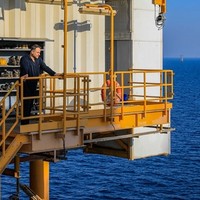
The CEO of the National Iranian Oil Company announced a 60% growth in the country's oil production over the past two years in spite of global sanctions.
While Mohsen Khojasteh-Mehr attributed the achievement to “meticulous planning” within the government of President Ebrahim Raisi, a substantial portion of the shipments originated from stockpiled oil on tankers and ground facilities. With these reserves diminishing, Iran faces the imperative to boost production to sustain the current export pace.
The deputy oil minister stated that according to the statistics of the Central Bank of Iran (CBI), the oil and gas sectors have played the biggest role in the country's economic growth.
According to reports from the IRNA state news agency, Khojasteh-Mehr also added that “in the past two years, the oil industry has witnessed the signing of 54 contracts valued at $80 million.” He specified that the National Iranian Oil Company “holds 29 contracts, totaling $29 million, and anticipates an additional $40 million to be added to the company's share by the year's end.”
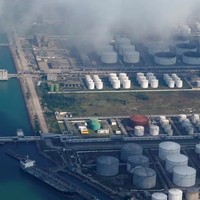
Experts say Iran possessed a stockpile of 115 million barrels in mid-2022. However, most of this oil has been sold, leaving only 27 million barrels—a quantity barely sufficient to sustain one month of exports.
Despite full US sanctions on Iranian oil exports imposed in May 2019, China remains the primary buyer. Initially, Iran's shipments dropped significantly to around 300,000 barrels per day. However, following the Biden administration's indirect talks with Tehran to revive the JCPOA nuclear deal, Chinese purchases increased. Some observers suggest that the United States has exercised restraint in cracking down, possibly to avoid jeopardizing the prospects of a nuclear deal.

Nine former politicians and civil activists in Iran have demanded the abolition of compulsory hijab, calling it “double suppression” of women.
“The Islamic regime has resorted to hijab to double its discrimination against women in an era when human equality, regardless of gender, race, ethnicity, creed and religion, plays a pivotal role in progressive human discourse,” a statement published Monday by Zeitoun news website said.
“The cruel and violent measures to enforce the mandatory hijab have been disastrous not only for women, but also for their fathers, husbands, and brothers. In other words, Iranian men have also found it difficult to bear so much oppression of women,” said the statement six of the signatories of which are also prominent political and intellectual figures.

Most of the signatories, including prominent female Islamic scholar Sedigheh Vasmaghi, are known as “religious intellectuals” in Iranian politics, meaning they advocate a moderate view of Islam.
Vasmaghi, 63, recently removed her veil after decades and even challenged Supreme Leader Ali Khamenei’s hijab edict, arguing that there is no foundation in the Quran or the Sharia for such an edict.
Zahra Rahnavard, one of the leaders of Iran's Green Movement, is also among the signatories of the statement. Rahnavard and her husband Mir-Hossein Mousavi have been under house arrest since 2011. The seventy- eight-year-old academic and artist chose to wear the hijab before the Islamic Revolution of 1979 and has still held on to it. Mousavi was prime minister in the early years of the Islamic Republic and both were committed supporters of the regime.
Prominent human rights lawyer and Sakharov Prize winner Nasrin Sotoudeh, 60, however, has for years fought against the compulsory hijab and defended other women who were prosecuted for protesting the mandatory hijab.
The statement also criticizes the regime for denying civil and human rights such as the right to work, study, benefit from social rights and services such as healthcare for not abiding by the hijab rules.
“These extreme beliefs and methods have imposed heavy costs on the country, particularly on Iranian women and girls, and caused the shedding of the blood of the likes of Mahsa and Armita,” the statement said.
The death of Mahsa (Jina) Amini, 22, in September 2020 in the custody of morality police resulting from injuries she sustained during her arrest for what the authorities called “inadequate hijab” sparked widespread protests across Iran that went on for months and were heavily suppressed by the government.
Tens of thousands were arrested during the protests, at least 550 protesters including 68 children were killed, and thousands including hundreds that lost their eyes to birdshot bullets fired directly in their faces by security forces, sustained very serious injuries.
Armita Geravand, 16, who sustained a head injury after allegedly being assaulted by hijab enforcers in a metro car in Tehran also fell to the same fate after a month-long coma on October 28.
Fearing another round of protests, authorities forced Armita’s family to bury her as discreetly as possible. Nevertheless, dozens including Sotoudeh and Vasmaghi, two of the signatories of the present statement, attended the burial at Tehran’s Behesht-e Zahra.
Sotoudeh who had previously called Armita’s death a “state killing’ and attended the funeral without a headscarf in defiance of the regime was detained, and Vasmaghi was assaulted by four agents but was reportedly rescued by other people at the scene.
In a commentary entitled “Lesson Taught By the Trumpeter Sadegh” published by the reformist Etemad newspaper last week, reformist commentator Abbas Abdi warned the regime that insisting on imposing hijab by all means including violence would only cause a massive negative reaction from the public.