Iranian Official Calls For Ban On Doctors' Emigration

The Head of the Medical Council of Iran stated on Thursday that healthcare professionals should not “be allowed to leave the country easily”.

The Head of the Medical Council of Iran stated on Thursday that healthcare professionals should not “be allowed to leave the country easily”.
“The figures for the immigration of doctors are not publicized because they will be misused. Even the departure of one member of the medical community is a loss for us; because we need their expertise,” Dr Raeeszadeh said.
There are no reliable official figures concerning emigration.
Hossein Salami, the commander-in-chief of the Islamic Revolution Guard Corps (IRGC), on Tuesday dismissed the alarming reports about the mass emigration of doctors and nurses as “psychological warfare” and "negative propaganda and lies."
Earlier on December 7, Ali Fadavi, Acting IRGC Commander said the wave of migration by doctors and nurses is "planned by the enemy" and emphasized, "We are aware of each and every doctor and nurse who left. We know what hospital they go to and how much they get paid."
An Iranian parliament member, Masoud Pezeshkian, warned of an imminent shortage of healthcare professionals as a result of growing emigration. He emphasized that the primary reason for the exodus is financial.
A report released on Tuesday by Iran Open Data (IOD) revealed that the number of doctors who leave Iran to work in more prosperous countries outweighs the number of new doctors by 30% on an annual basis.
Officials attribute the exodus to poor economic condition, but there is also a political component of lack of freedoms and persecution.
In July, it was reported that Iran's Association of Medical Academic Societies had warned against the recent forced retirement and dismissal of over 100 doctors from residency admissions boards.
Reformist Ham-Mihan newspaper reported in July that most of the doctors who were forced to retire or were removed from boards had signed statements supporting protests.
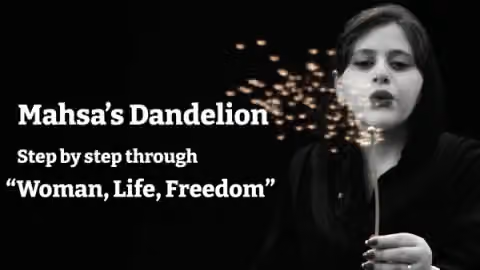
During the “Woman, Life, Freedom” protests last year, doctors and nurses condemned the use of ambulances for the transport of detainees by security forces, as well as their use of shotgun “birdshots” that blinded or injured hundreds of protesters.
Moreover, they stated that they could not comply with authorities' demands to deny services to women who defy hijab restrictions.
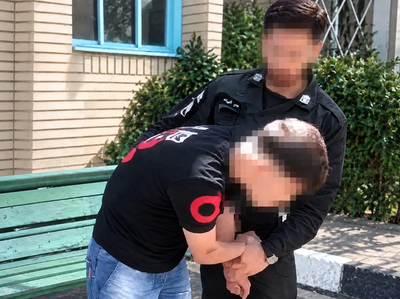
An armed group believed to be the militant Sunni Jaish al-Adl launched a deadly attack on a police station in Rask, a small city in Iran’s Sistan-Baluchistan Province.
Iranian state media and Baluch groups reported that at least 12 police officers and several of the attackers were killed as gunfire continued for hours at the main police headquarters. Seven police officers were injured, with some in critical condition, media in Tehran reported.
The poverty-stricken province bordering Afghanistan and Pakistan has a large Sunni population from the Baluch ethnic group, that has been under pressure by Iran’s Shiite clerical rulers. It has long been the site of frequent clashes between security forces and Sunni militants, as well as drug smugglers.
The militant group Jaish al-Adl, which says it seeks greater rights and better living conditions for ethnic minority Baluchis, claimed responsibility for the attack. The group has launched several attacks in recent years on Iranian security forces in the province.
A police spokesman confirmed the attack and said several assailants and officers have been killed but insisted that the situation in Rask is under control. Jaish al-Adl in a statement said that its forces attacked the police headquarters at 2:00 am Friday.

Baluch human rights monitoring groups reported large explosions and sounds of intense gunfights around the police headquarters. One group said that government surveillance drones were flying over Rask and added that fighting was continuing after five hours. Quoting local sources, the monitoring group said that there is a heavy presence of security forces in Rask and surrounding hills. Internet access is also affected.
The report said that three hours after the attack started, reinforcements that were coming to assist the police station were also targeted by militants.
In July, Jaish al-Adl attacked a police station in Zahedan, the provincial capital. It said that the particular police station was involved in the massacre of around 90 civilians on September 30, 2022, known as “Black Friday.” Worshippers who began anti-government protests after Friday prayers were met with gunfire by security forces. This was when protests were spreading elsewhere in the country following the death of Mahsa Amini in the hands of the hijab police.
Since Black Friday, the people of Zahedan have been protesting every Friday amid tight security and hundreds of arrests by security forces.
The outspoken Sunni cleric in Zahedan, Mowlavi Abolhamid, has repeatedly criticized the Shiite-led government in Iran, asking for tolerance for religious minorities, equal rights for women and an end to repression. During anti-government protests in 2022 and early 2023, Iranian Sunnis suffered more casualties than the Shiite majority, showing harsh methods by security forces in Sunni majority regions. A substantial number of Kurds living in Western Iran are also Sunnis, that are estimated to be 10-15 percent of Iran’s 85-million population.

Britain slapped new sanctions on seven Iranian and Palestinian officials, and one entity over their links to Hamas and other militant groups on Thursday.
The new designations mostly include senior commanders of Iran’s Revolutionary Guard extraterritorial Quds (Qods) force (IRGC-QF).
According to a statement released on the British government’s official website, the sanctions target Esmail Qaani, the head of IRGC-QF, Mohammed Saeed Izadi, the head of IRGC-QF Palestine branch, three other IRGC commanders, and two Hamas and Islamic Jihad envoys to Iran.
IRGC-QF Palestine branch is the only entity mentioned in the list of new bans announced by the British government.
The sanctions will enforce UK travel bans and asset freezes for the targeted individuals and entity over their “hostile” activities, especially those aimed at threatening or destabilizing Israel.
The British government called IRGC Qods force a “notorious” entity which “leads Iran’s operations outside the country and provides support to regional partners and proxy groups.”

Though the Islamic Republic has avoided any direct military involvement in the Israel-Hamas conflict, the regime has used its allies such as Houthis and proxy groups in Iraq and Syria to attack Israeli and American targets in the region.
The new sanctions will convey the message to the Islamic Republic that it will be held accountable for its “appalling behavior,” British Foreign Secretary David Cameron stressed. A new Iranian sanction regime that gives the UK "extensive new powers" to disrupt Iran’s "hostile activities in the UK and around the world" also took effect Thursday.
"Sanctions will target Iran’s decision makers and those doing its bidding, with the regime also including new restrictions on Iran’s drone programme and shipping," the British Foreign Office said in a statement.
"The behaviour of the Iranian regime poses an unacceptable threat to the UK and our partners," Cameron said, underlining "unprecedented threats" from Tehran to peace in the Middle East and to plots to kill individuals in Britain.
"It continues to threaten people on UK soil and uses its influence to destabilise the Middle East through its support to armed groups, including Hamas and Palestinian Islamic Jihad (PIJ)," added Cameron.
Moreover, a number of British sanctions against Tehran which were announced in July came into force on Thursday.
The bans were imposed in response to the “unprecedented threats” from the Islamic Republic, including “plots to kill individuals on UK soil.”
In October, MI5, the UK’s security service, warned that amid the war between Iran-backed Hamas and Israel, Tehran may be exploring new ways to threaten the security of Britain.
Despite a host of old and new sanctions against IRGC commanders, Britain has refused to designate IRGC as a terrorist organization.
In November, 70 lawmakers urged PM Rishi Sunak to list the IRGC as a terrorist organization. While individuals and entities related to the IRGC have been issued with sanctions from Britain, Canada, the US and European Union member states, lawmakers said the bans do not go far enough.
According to the Foreign Office, the UK has more than 350 sanctions designations in place on Iranians and entities.

Jailed Iranian Nobel Peace Prize laureate Narges Mohammadi has written to Sweden’s prime minister, highlighting President Ebrahim Raisi’s role in mass executions in 1980s.
Mohammadi explained that Ebrahim Raisi had served on a "Death Panel" overseeing the execution of at least two thousand Iranian political prisoners during the 1980s. She stated, "A key member of the 1980s Death Panel, Ebrahim Raisi, now holds the presidency.” She also referred to Hamid Nouri, a former prison official who was arrested in Sweden and convicted for his role in the prison killing. Mohammadi wrote that “Justice cannot be silenced."
Hamid Nouri, 61, was arrested in Sweden in 2019, convicted of crimes against humanity and mass murder, and sentenced to life imprisonment in July 2022. Despite facing international war crime charges, Nouri denies wrongdoing. His appeal proceedings began in January, with a final verdict expected on December 19.
Mohammadi emphasized that "achieving democracy in Iran requires dismantling the oppressive Islamic Republic regime."
Tensions between Iran and Sweden rose with the Iranian government's announcement of the arrest of EU diplomat Johan Floderus, 33, held in Tehran's Evin prison and accused of spying for Israel, which can be punishable by death.
This mirrors a pattern seen during Hamid Nouri's 2022 investigation when Iran announced the imminent execution of Swedish-Iranian researcher Ahmadreza Jalali, also held hostage in Iran on vague security charges.
Majid Nouri, Hamid Nouri's son, said recently that he hopes "Sweden corrects their mistake" with a favorable appeal outcome for his father. He said, "My father's trial was a spectacle; justice was disregarded due to a lack of media attention."
Majid Nouri's comments come amid the backdrop of the Iranian regime's consistent pattern of unjust court proceedings and biased judgments.

Twenty-seven prisoners in Iran have been executed since last Friday, including a dozen killed on Wednesday alone.
It comes as the islamic Republic has already carried out hundreds of executions this year in a near-record killing spree.
Reports from Oslo-based Iran Human Rights Organization reveal that seven prisoners died in Karaj Central Prison on Wednesday. Among them were three prisoners sentenced to death for "intentional murder," three for drug-related offenses, and one for "moharebeh" (waging war against God).
Also on Wednesday, five prisoners were executed in jails in in Ahvaz, Sanandaj, Qom, Zahedan, Babol and Kermanshah, with charges ranging from "murder" to "drug-related offenses."
Iran's Human Rights Organization had previously reported on November 30 that the total number of executions carried out by the Islamic Republic in 2023 had already reached a staggering 707 individuals, an unprecedented figure in the past eight years.
UN Secretary-General Antonio Guterres raised the subject of Iran's alarming execution rate in his October report to the General Assembly on human rights violations. He expressed deep concern, revealing that at least 419 executions had occurred in the first seven months of the year alone, representing a shocking 30% increase compared to the same period in 2022. Over half of the individuals sentenced to death were found guilty of charges related to drug crimes.
Amnesty International reports that Iran consistently ranks second globally in terms of annual executions, surpassed only by China.

The UK police have released footage of a detained suspect gathering information on Iran International's headquarters as his trial unfolds in London.
Magomed-Husejn Dovtaev (Mohammad-Hussein Dovtaev), 31, originally from Chechnya but residing in Austria, was detained at Chiswick Business Park by officers from London’s Metropolitan Police Counter-Terrorism Command in February.
According to prosecutors, he tried to take photos and videos of the security arrangements around the office building that housed Iran International and send the intel to a third party. He is charged with a single count of attempting to collect information "likely to be useful to a person committing or preparing an act of terrorism." He has pleaded not guilty. The trial is expected to conclude next week.
During the fourth day of his trial on Thursday, the Metropolitan Police released footage of Dovtaev as he arrived at London's airport, where he took a taxi directly to the Chiswick Park near the former Iran International headquarters. Donning a black jacket and baseball cap while his face was covered with a mask, he approached the entrance of Chiswick Park and surveyed the security details of the building's entrance and its surroundings.
According to prosecutors and the police, Dovtaev also engaged in a conversation with one of the building's guards and introduced himself as a tourist visiting a friend. The guard asked him to stay away from the building, but he continued to wander in the vicinity. The prosecutor believes that he used his mobile phone camera to record images of the building and its surroundings. Later, two other guards became suspicious and called the police who detained him at the scene.
Prosecutor Nicholas de la Poer told London's Old Bailey on Monday that Iran International became a target for reprisals following its reporting on the death in custody of Mahsa Amini in Iran last year and subsequent protests in the country. Iran's minister of intelligence later declared Iran International a terrorist organization, de la Poer said, which meant its employees "became targets for violent reprisals".

"The prosecution does not suggest that (Dovtaev's) purpose on Feb. 11 was to carry out such an attack or that it was intended that he would participate in an attack on a further date," de la Poer said. He added that Dovtaev went to Iran International's headquarters, "no doubt acting on the instructions of others, "Dovtaev's visit "demonstrates that planning by others was already under way", de la Poer said, adding that videos pre-dating Feb. 11 of Iran International's headquarters and security protection had been saved to his phone.
In November 2022, Volant Media, the parent company of Iran International, said that two of its journalists had been notified of direct threats. It said in a statement the Metropolitan Police had formally notified both journalists that these threats represented an imminent, credible and significant risk to their lives and those of their families. Following the significant escalation in Iranian state-backed threats and advice from the London Metropolitan Police, Iran International TV announced in February that it reluctantly and temporarily closed its London studios and moved broadcasting to Washington DC. After months of hiatus in broadcasting from the UK, the network relaunched operations from a new London building in September.
Faced with nationwide antigovernment protests since mid-September, the Islamic Republic has blamed foreign-based Persian broadcasters such as the BBC Persian and Iran International of “fomenting unrest”, while all media in the country are under tight government control and present protesters as “rioters” and “terrorists”.According to Iran’s Intelligence Minister Esmail Khatib, the Islamic Republic regards Iran International as “a terrorist organization.” He has stated that its staff and anyone affiliated with the channel will be pursued by the Ministry of Intelligence all over the globe, reiterating threats to “punish all those” who had a role in popular protests against the regime, wherever they might be.
Political commentator Ali-Hossein Ghazizadeh told Iran International Thursday that Dovtaev’s operation is just a part of a wider effort by the Islamic Republic to target Iran International and its journalists. In addition to Dovtaev’s case, there are many other reports released by the British police about plans orchestrated by the agents of the Islamic Republic, he added. According to Ghazizadeh, recruiting field agents from other countries to gather intel on possible targets or hit operations is the modus operandi of Iran’s Revolutionary Guard’s intelligence apparatus, especially under its former chief Hossein Taeb.