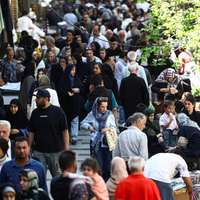
32,000 Associate Professors Expelled From Iranian University Branches

A massive 32,000 associate professors have been removed from their positions at various branches of the Islamic Azad University in Iran.

A massive 32,000 associate professors have been removed from their positions at various branches of the Islamic Azad University in Iran.
The news comes as part of a major reshuffling of academic roles in the country's higher education system.
The Etemad newspaper, in an exclusive report, disclosed that the mass expulsion was initiated at the start of the current Iranian academic year and was executed following a decision made by Mehdi Tehranchi, the President of Islamic Azad University.
A substantial number of the associate professors were removed without prior notification, raising concerns among the academic community.
The restructuring comes on the heels of protests by a number of university professors in Iran and widespread national demonstrations sparked by the tragic death of Mahsa Amini during her detention by morality police in September 2022. Scores of academics have been removed since the uprising began. Student councils in the country have labeled it as part of a broader initiative to "purify universities across the nation."
The Islamic Azad University, based in Tehran, is a prominent private university system. It ranks among the most extensive networks of universities, colleges, and community colleges globally.
Comprising two independent universities and 31 state university branches, the Islamic Azad University boasts a vast presence with 367 campuses located throughout Iran. Additionally, it maintains four international branches and supports a diverse array of research centers, hospitals, laboratories, workshops, sports facilities, and recreational areas.

The government-linked Borna news agency reported Wednesday that Armita Geravand’s health has “somewhat” deteriorated.
"Armita Geravand's vital signs, which were relatively stable, have changed over the past few days and have somewhat worsened," reported the news agency linked with the Islamic Republic's Ministry of Sports, without providing further details. It stated that the medical team is still working to improve her condition.
The teenager allegedly fell into a coma after being assaulted by hijab enforcers on her way to school at Tehran subway ten days ago. Authorities have significantly restricted the family's access to Armita at Fajr military hospital in Tehran.
Armita’s serious head injury, which authorities claim she sustained when she fainted on a subway car, serves as a stark reminder to many Iranians of the death of Mahsa Amini in September last year. Mahsa's death ignited months of protests and unrest across the country, and the government is still refusing to accept responsibility for it.
Armita’s mother was briefly detained by security authorities last week ago after protesting their refusal to allow her to see her daughter. Armita’s father was only permitted to see her after agreeing to a televised interview in which he endorsed the official account of the incident, which excludes the role of hijab enforcers.
Independent media outlets have been denied access to the hospital, and they are not allowed to speak with the family. Maryam Lotfi, a reporter who tried to interview Armita’s mother on the day of her hospital admission, was briefly detained. She has refrained from making any comments about her arrest or the incident since then.
The news of another young girl's life-threatening injury, along with televised interviews with her parents and classmates, which many believe were "forced," has outraged many Iranians who are being kept in the dark about her circumstances.
"The Islamic Republic has no legitimacy in the eyes of the people who are certain that the regime is lying about Armita Geravand, as it has always done. The regime has been using forced interviews with Armita's family and friends in an attempt to convince the public that the incident was only an accident," a representative of the United Youth of Iran (UYI) told Iran International.
Iranian social media users have extensively alleged in the past ten days that authorities are deliberately withholding all information about Armita and making every effort to silence her family, with the hope that her case will eventually fall into oblivion amidst the news of the war in Gaza and Israel.
Footage of Armita's presence at the subway station and an audio file of the call made by an employee of the Tehran Metro to the emergency services, which state media have released, have not been able to convince the public that hijab enforcers were not involved in the incident.
Serious suspicions that the footage and audio file were doctored by the authorities to conceal the truth were raised in a long tweet on October 9 by an anonymous user who posts as Avand Fardi.
Fardi, who claims to have meticulously examined and analyzed the video footage and audio file, concluded that either three black-veiled women, who were hijab enforcers on the platform, or a fourth person in the car must have been responsible for assaulting Armita. However, he believes the audio and visual evidence was doctored to conceal this fact.
Furthermore, he has highlighted a discrepancy in the audio file concerning the explanations provided by the metro staff regarding the circumstances leading to the young girl's injury, presumably inside the car where the authorities claim there was no CCTV.

Amid the systematic persecution of Iran's Baha'i community by the Islamic Republic, four citizens have been collectively handed a 12-year prison sentence.
Shadi Shahidzadeh, Mansour Amini, Ataollah Zafar, and Valiollah Ghadamian received individual prison terms of five, three, and two years, respectively. The charges levied against them were related to "membership in illegal groups and associations with the intent of undermining national security," as reported by the US-based human rights advocacy group HRANA on Wednesday.
The Baha'i community is the largest non-Muslim religious minority in Iran loathed by the Shiite clerics and systematically persecuted since the Islamic Republic was established in 1979.
Earlier this year, they had received five-year prison sentences in a court, based on allegations linked to their faith.
Last week, the UK Foreign Office issued a statement stressing the immediate need to cease the harassment and persecution of the Baha'i community by the Islamic Republic. The UK government deemed the ongoing mistreatment of Baha'is as “unacceptable” and called upon the Iranian government to release all Baha'i prisoners, especially those who are elderly, require medical attention, or are in vulnerable situations.
The UK also underscored the importance of the judiciary refraining from imposing excessive bails on Baha'i detainees.
Since September 26, at least eight Baha'i citizens have been apprehended in Shiraz and Yazd. In August, the Baha'i International Community released a statement highlighting the continued suppression of Baha'is, including the arrests of approximately 60 Baha'is and the confiscation of properties belonging to 59 other Baha'is.
The United States House of Representatives also passed a resolution condemning the harassment of Baha'is by the Iranian government. The resolution called for the release of Baha'i prisoners and other individuals detained due to their religious beliefs.

Narges Mohammadi's lawyer reports that Tehran's Evin Prison authorities denied her a meeting on Tuesday because she refused to wear the hijab.
Mostafa Nili, in a tweet, explained that he was informed at the prisoners' visiting hall, after a considerable wait to see his client, that prison authorities had decided not to allow Mohammadi to meet him, ultimately forcing him to leave.
Mohammadi, a prominent human rights activist and physicist who was awarded this year's Nobel Peace Prize, is well-known for her vocal criticism of the Islamic Republic, particularly its compulsory hijab laws and various human rights violations, including the death penalty.
In a phone call quoted on an Instagram account authorized by Mohammadi, she stated that a prison guard had assaulted, threatened, and verbally abused her for not wearing the hijab. This incident took place in the prison clinic in September, in the presence of some prison authorities, resulting in bruises as she was dragged to the prison courtyard. She added that she protested against the maltreatment of another prisoner by shouting that prison guards had no right to threaten inmates and even climbed on a car while chanting "Down with the Islamic Republic."

The Norwegian Nobel Committee, which recognized Mohammadi for her "fight against the oppression of women in Iran and her fight to promote human rights and freedom for all," has called for her release.
In a letter addressed to the European Parliament, Mohammadi reiterated her view that the Islamic Republic is a religious dictatorship and anti-women, urging for "maximum pressure" on the regime to ensure its compliance with human rights and to support Iranian women in their struggle.
Over the past few months, Mohammadi, 51, has penned several letters from Evin Prison, where she has been serving a twelve-year sentence since November 2021 for charges including "propaganda against the Islamic Republic." She has consistently denied these charges, which were brought against her after she issued a statement against the death penalty.
As the co-founder and chairperson of the Defenders of Human Rights Center, Mohammadi has been detained and imprisoned multiple times over the past two decades.
Officials of the Islamic Republic, including Foreign Ministry spokesman Nasser Kanani, have condemned Mohammadi's Nobel Peace Prize as a "politically motivated move" and accused Western governments, including Norway, of pursuing "anti-Iranian and interventionist policies."
Ultra-hardline media outlets, such as the IRGC-affiliated Javan newspaper, have labeled her a "separatist, pro-sanctions Iranian."
Mohammadi has, on various occasions, opposed Western economic sanctions on Iran, arguing that these, combined with the government's economic inefficiency, have led to the impoverishment of the Iranian people and weakened their power. However, she has defended sanctions and travel restrictions imposed on Islamic Republic officials for human rights violations.

Over a year after the onset of nationwide protests in Iran, the Tehran Special Unit of the Revolutionary Guards conducted a drill aimed at suppressing dissent.
Official news agencies aligned with the government shared images and videos of the exercise, the final phase of which took place on Tuesday under the supervision of Hassan Hassanzadeh, commander of the IRGC Forces in Tehran.
"Defensive, security, and anti-terrorist operations in various urban environments were conducted with the aim of achieving 100% readiness," said a spokesman of the drills.
Hassan Hassanzadeh has faced sanctions from Western nations and some of their allies due to his active role in quelling the Women, Life, Freedom protests.
The drill took place amidst heightened tensions stemming from the case of Armita Geravand, a 16-year-old student who was admitted to the hospital after she lost consciousness in a subway car on October 1.
According to human rights organizations, she had a physical altercation with the Iranian morality police for her refusal to comply with compulsory hijab regulations. Three days later, she fell into a coma due to a "brain hemorrhage." Armita is still in a coma, and her family is being denied access by security forces.

The number of executions in Iran have surged by 24% in the last year with at least 659 carried out since last October.
The revelations come from a report compiled by the US-based Human Rights Activists News Agency (HRANA), identifying the provinces of Alborz, Sistan and Baluchestan, and Kerman as the primary locations where most of these executions occurred.
According to HRANA's data, the period from October 10, 2022, to October 8, 2023, said seven of the executions took place in public settings. The report highlights a disturbing trend of escalating executions in the country, as evidenced by a comparison with the statistics of the past three years.
Zahedan Prison in Sunni Province of Sistan and Baluchestan emerges as one of the facilities with the highest number of executions, recording 60 executions in total. Of those executed in the past year, nearly 57 percent faced charges related to "drug-related crimes," while 35 percent were executed for "murder."
The report also underscores that approximately three percent of the executed individuals in Iran during the past year faced charges associated with politics, security, and religious beliefs. It further draws attention to the execution of at least seven individuals who were arrested during the Women, Life, Freedom protests.
The widespread issuance and execution of death sentences in Iran are occurring at a time when many of the accused lack access to fair trials, the ability to choose their legal representation, and the right to a proper defense.