US F-35s Arrive In Mideast As Deterrent To Iran, Russia

A sizeable force of a dozen US F-35s have arrived in the Middle East as part of a series of deployments to deter Iran and Russia from provocative actions.
A sizeable force of a dozen US F-35s have arrived in the Middle East as part of a series of deployments to deter Iran and Russia from provocative actions.
As the US Navy intervened to thwart an Iranian attack on two vessels in early July, Russian warplanes in Syria have also stepped-up harassment of US aircraft.
“The F-35’s increased capacity and capability will allow the U.S. to fly in contested airspace across the theater if required,” Air Forces Central (AFCENT) spokesperson Col. Mike Andrews said in a statement.
In two incidents July 23 and 26 in Syria Russian warplanes released flares that damaged two US drones similar to an incident in March when a Russian fighter crashed into a US MQ-9 over the Black Sea, forcing US operators to down the drone in the sea.
The Pentagon announced July 17 that it was sending additional F-35 and F-16 fighter jets, along with a warship to the Middle East, in a bid to monitor key waterways in the region following Iran's seizure and harassment of commercial shipping vessels in recent months.
Last week the Pentagon also announced the deployment of the 26th Marine Expeditionary Unit to the Persian Gulf, including three Navy vessels with USS Bataan leading the group with almost 4,000 sailors and Marines.
The stealthy multirole F-35 fighters deployed come from the 421st Expeditionary Fighter Squadron of Hill Air Force Base, Utah. There are now four fighter squadrons in CENTCOM: two F-16 squadrons, one A-10 squadron, and one F-35 squadron.





The International Olympic Committee says it is observing a dramatic increase of persecution of Iranian athletes and may act before the 2024 Olympic games in Paris.
In response to an Iran International press query about the arrest of Saman Pashaei, an Iranian-Kurd and the world’s third-ranked junior wrestling champion, an IOC spokesperson said, “We continue to monitor the situation very closely.”
The IOC spokesperson referred Iran International to its “position relating to the situation of sport and the athletes in Iran.” The IOC position on its website is dated March 29 and states: “The IOC EB [Executive Board] reserves the right to take any appropriate action relating to the participation of the Iranian NOC [National Olympic Committee] and athletes in the upcoming Olympic Games Paris 2024, depending on the developments in this situation.”
The IOC has faced intense criticism over the years from the United for Navid campaign and Rob Koehler, Director General of Global Athlete, for failing to punish Iran’s regime for its executions and imprisonment of athletes who have demonstrated against Khamenei’s regime.
United for Navid is an organization composed of highly decorated Iranian athletes who seek justice for the champion Iranian Greco-Roman wrestler Navid Afkari who was hanged by the clerical regime in September 2020.
Sardar Pashaei, the executive manager of United for Navid and the brother of Saman, told Iran International “I firmly state that the International Olympic Committee’s inaction in the face of the Iranian regime’s behavior will lead to a worsening situation, not an improvement. With each passing day, Iran’s regime will grow bolder in punishing athletes, resulting in a grave moral and practical failure on the part of the IOC.”
Just weeks ago, Iran’s regime imposed the death penalty on school boxing champion Mohammad Javad Vafaei-Sani for allegedly setting government property, including a penitentiary, on fire.
A letter signed by 108 human rights experts and NGOs was sent to Volker Türk,
the United Nations High Commissioner for Human Rights, on July 19, urging the UN official to intervene to save the boxer’s life. According to the letter, “He was arrested in March 2020 (Persian calendar month of Esfand 1398) for taking part in the November 2019 anti-government protests. He was tortured for several months and eventually handed down an execution sentence for ‘efsad-fil-arz’ (‘corruption on Earth’) by Branch Four of the Mashhad Revolutionary Court.”
The letter added, “In recent months, the Iranian authorities have executed at least seven other protesters on similar bogus charges with total impunity. These political executions are a callous attempt by the authorities to frighten and silence an increasingly restive population no longer willing to accept their corrupt and oppressive rule.”
According to the March IOC statement, “The IOC has expressed serious concerns over the past few months vis-à-vis the situation of the Iranian athletes and the Olympic community as a whole in the current context of the upheavals and demonstrations in the country and has urged the NOC to take appropriate action with the highest authorities to protect the athletes and members of the Olympic community from a humanitarian perspective.”
The IOC conducted a meeting with the Iranian regime-controlled National Olympic Committee NOC. According to the IOC, it requested and received a written report from the NOC “on all the issues addressed during the meeting, including the status of women in sport.”
The IOC said, “Having studied the report, the IOC will continue to monitor the situation and to request immediate intervention from the NOC whenever there is any specific issue affecting the athletes and members of the Olympic community in the country.”
Pashaei, who was the former head coach of Iran’s national Greco-Roman wrestling team, said “Instead of meeting with Iranian officials, the International Olympic Committee should meet with us, the athletes, and listen to our truth. Over the past few months, athletes have endured imprisonment, torture, and even had their families taken hostage, while Iranian officials have only worked to conceal these atrocities instead of supporting athletes.”
In February, the IOC warned the Iranian regime-controlled NOC to respect the Olympic charter due to the Iranian regime’s promotion of discrimination against Israeli athletes. In April 2022, the Iranian karate champion Sajjad Ganjzadeh criticized the Islamic Republic’s boycott policy targeting Israeli athletes. He wrote on Instagram “We cannot tolerate this anymore. Not competing is more difficult than competing.”
According to the February IOC press statement, ”The Iranian NOC made clear commitments to pursue and expand its efforts to safeguard the athletes’ rights, from both a humanitarian and a sporting perspective, and to continue to act in accordance with the Olympic Charter and fully respect the principle of non-discrimination.”
Iran International noted at the time that sports is under the direct control of the government, and in many instances, the Revolutionary Guard (IRGC) and the Iranian Olympic committee would be hardly able to deliver its promises. The US government sanctioned the IRGC as a Foreign Terrorist Organization.
Iran’s government has been aggressively borrowing from quasi-public banks to fill its budgetary gap and keep its unprofitable companies afloat, local media report.
According to a report in Aftab News website, affiliated with reformists, the government borrowed around $12 billion from four major quasi-private banks in three months ending June 21. To ensure availability of funds, it issued directives to these banks to reduce lending to the private sector, causing the loss of 500,000 jobs amid an already serious economic crisis.
The government borrowed more than 4,000 trillion rials, or more than $8 billion just from Bank Mellat, both for its own operating expenses and for money-losing public and semi-public companies run by political appointees and well-connected insiders.
Fully government owned banks issue no figures, and it is not clear how much they have lent to the government, but Aftab News warned that government borrowing is much higher at these banks that are run by appointed officials. The semi-government banks, such as Mellat, are traded on Tehran stock exchange and issue financial reports.
The issue is that these banks faced with balance sheet problems when they lend excessively to the government, are forced to borrow from the Central Bank of Iran (CBI), which in turn has to print more money, fueling inflation. Official numbers indicate that the annual inflation is hovering around 50 percent, but some observers recently claimed that in fact inflation has reached 70 percent.
A market analyst said in April that “The growth rate of the monetary base has reached 38 percent and liquidity has reached 34 percent. This unprecedented gap means that the government is printing more money and making up for the budget deficit by heavily borrowing from banks and forcing them to borrow from the central bank.”
As a result of increasing money supply, the rial has fallen 12-fold in the past 5 years and has halved in value in the past one year. It is now trading around 500,000 to one US dollar.
The former governor of Iran's central bank Abdolnasser Hemmati, who is among the outspoken critics of the current administration, also said in March that “in order to control inflation and rial’s exchange rate, the government should take serious measures to reverse growing liquidity.”
It is not entirely clear why the government is so much short of money when its oil exports have substantially increased since 2021, reaching a reported volume of 1.5 million barrels per day.
The only reasonable explanation is that it offers deep discounts to those who are willing to risk US third-party sanctions, which are mainly Chinese refineries. According to some estimates, Iran is able to offload its crude oil for just $40 a barrel, or half that of current global prices. Moreover, it is not being paid in hard currency, and part of the sales are based on barter for needed imports.
Economists expect the inflation rate to accelerate if no major economic improvement takes place. Currently, Iran’s only hope is for the United States to lift its sanctions or agree for third countries to release around $20 billion of Tehran’s frozen funds. But some say even in that case, the reprieve will be a temporary one, as the current government has proven to haveextremely weak management abilities.
Without prior announcement, the price of bread in Iran’s northeastern Razavi Khorasan province has increased by 40 percent.
The governors of the province took the decision to increase the prices suddenly leaving locals struggling to make ends meet for their basic provisions. For example, a subsidized traditional bread called Barbari weighing nearly 400 grams, which was previously sold at 8,500 rials or 1.7 USD cents, is now priced at 12,000 rials or 2.4 USD cents per piece.
Ahmad Reza Keshtgar, President of the Bakers' Union in the provincial capital of Mashhad, expressed concerns about the hike, stating that production costs are now too high for the industry to profit.
"While the 40% increase in prices has reduced production costs, bread production is still not profitable,” he said.
He added that even providing bakers with free flour would not render bread production profitable under current circumstances. As sales decline due to higher prices, the industry faces reduced revenue, potentially leading to job losses in bakeries.
The bread industry has been grappling with challenges since last year when the government withdrew subsidies for imported wheat, flour, and other essential items. The higher cost of flour is affecting a wide range of baked goods, including children's snacks, fast food like hamburgers and sandwiches, and traditional noodles.
Keshtgar revealed that the decision to raise bread prices is set to be gradually applied nationwide. There is further concern that this potentially spark another round of anti-regime protests across the country.
A former Iranian diplomat says Washington’s contacts with Tehran show that the Americans have separated their ways from the Israelis regarding Iran's nuclear issue.
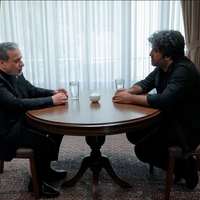
Abdolreza Farajirad told Entekhab news website in Tehran that the United States and Iran are exchanging messages through Oman and Qatar and this shows they are discussing deals.
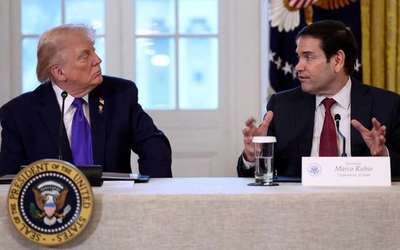
Farajirad referred to US Secretary of State Antony Blinken's July 23 statements about Iran where he said, "it was a terrible mistake for the Trump administration to pull out of the nuclear deal reached with Iran in 2015," and commented that "I did not see any threats in that statement, although Blinken had also made it clear that "US officials are currently not talking about an agreement with their counterparts in Tehran."
The former Iranian diplomat argued that "What he said means that the US side is prepared for negotiations with Iran on the condition that Tehran does not threaten US interests and security in the Middle east."
He continued: "Blinken's remarks were positive. If Qatar and Oman also carry positive messages, this will mean that perhaps we are getting closer to a solution."
Entekhab wrote that other observers believe there might be a threat hidden in Blinken's statement. In effect, if US concerns about Iranian intentions to build nuclear weapons are not addressed, Washington might toughen its position.
Faraji Rad however argued that it was a positive point that Blinken was not focused on the nuclear issue in his remarks, although the United States naturally pursues its national interests.
Meanwhile, in reviewing signals Tehran and Washington have been sending to each other, proreform website Farau wrote: "Governments in Iran, regardless of their political affiliation, find out about the perils of sanctions after holding the presidential office for a few years. That is when rationality becomes prevalent."
The website was referring to hardliners currently controlling all branches of Iran’s government, who were staunchly opposed to the 2015 JCPOA nuclear accord, but now, facing harsh economic realities, realize that they have to find a way to have US sanctions lifted.
According to Fararu, the announcement by the State Department about transferring part of Iran's frozen assets in Iraq to Oman and renewed talks about US prisoners in Iran are positive developments, although some observers assess the removal of pro-Iran Robert Malley from the post of US special envoy for Iran could be a negative development for Tehran.
Fararu quoted former diplomat Fereydoun Majlesi who disagreed saying that regardless of recent developments, "there is no positive change under way!" Majlesi continued: "No positive change is likely for at least seven to 10 years. What is going on currently, will only increase the pressures on both sides.
Majlesi added that no positive change of attitude has been observed in Tehran or Washington during the past months to improve relations between the two sides although there have been opportunities for rapprochement."
Another observer, Omid Dabiri-Mehr also told Fararu that the Joint Comprehensive Plan of Action (JCPOA) is no longer on the agendas of the United States and Iran. There is no prospect for a rapprochement although a tendency is visible in Tehran to reduce the tensions with the United States.
He explained that economic problems including budget deficit and inflation and the destructive role of sanctions have finally made Iran aware of the cost of being at loggerheads with the United States.
Bolivia's Defense Minister has expressed an interest in Iranian drones for what he called boosting border security and combating drug smuggling.
Edmundo Novillo Aguilar said that Iranian high-tech drones are capable of monitoring mountainous regions and providing real-time imagery which would greatly aid the Latin American country’s armed forces.
The announcement came amidst rising security concerns in Latin America, triggered by an agreement reached between Iran and Bolivia last week, which has drawn scrutiny from neighboring countries, notably Argentina.
However, Novillio dismissed the Argentinian concerns saying that they are exaggerated and that they might be politically motivated. "The concerns raised by a certain Argentine lawmaker, whom I understand has Israeli origins, are unfounded and appear to be a political show, possibly related to the upcoming elections in Argentina,” he said.
Responding to opposition lawmakers' requests for information on an alleged defense and security memorandum of understanding with Iran during his visit to Tehran, Novillo claimed that no formal memorandum was signed. The minister also refrained from specifying whether the drones would be purchased or provided as a donation.
According to the Institute for the Study of War (ISW) in Washington, Iran has been keen on expanding the number of countries using its drone technology. Venezuela had earlier acknowledged collaborating with Iran in developing drones.
Iran's defense partnerships in the region raise concerns due to its opaque international behavior. Fears include exporting radical ideologies and unconventional arms, potentially interfering in South American affairs, and troubling the US.