Another Iranian Actress Defying Hijab Faces Prison, Psychologist Visits

Famous Iranian actress Afsaneh Baygan (Bayegan), who defied hijab, was sentenced to prison and mandatory psychologist visits for "anti-family personality."

Famous Iranian actress Afsaneh Baygan (Bayegan), who defied hijab, was sentenced to prison and mandatory psychologist visits for "anti-family personality."
On Wednesday, it was revealed that Tehran Criminal Court had handed down rulings against Baygan, ordering her to visit psychological centers weekly for "treatment of mental illness related to anti-family personality" and submit a "health certificate" at the end of the treatment period.
In addition to the psychological evaluation, Baygan received a "two-year suspended imprisonment" sentence for wearing a hat in public places, as stated by Mehdi Kouhian, a lawyer.
Further penalties included "reading a book and summarizing its manuscript within two months," a "two-year ban on exiting the country," and "prohibition of direct or mediated use of cyberspace" by disabling SIM cards and telephone lines associated with the actress.
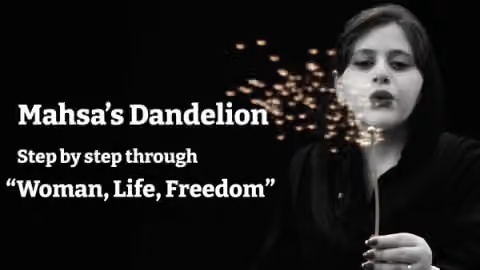
These court decisions have sparked widespread reactions from social media users and the film industry. It comes amid a growing trend of female filmmakers and actresses appearing in public without wearing hijab, a movement that gained momentum during the "Women, Life, Freedom" protests last year.
The sentencing of these actresses reflects a broader issue of individual rights and freedom of expression in Iran, with artists and activists facing strict repercussions for their stance on mandatory hijab and other societal norms.
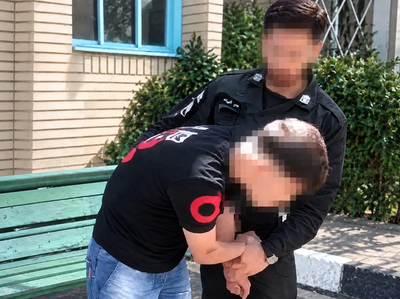
A court in Iran has sentenced an actress to four months in a remote prison and banned her from acting and social media activity for two years due to her rejection of hijab.
As reported by the reformist Ham-Mihan newspaper on Tuesday, Leila Bolukat has also been prohibited from leaving the country for two years and ordered to summarize a book within one month, although the name of the book has not been disclosed. Previously, a dissident was sentenced to handwrite three books by Supreme Leader Ali Khamenei.
The forty-two-year-old Bolukat was indicted in June on charges of “damaging public morality and chastity through removing [her] hijab and publishing photos of it on her personal accounts on social media accounts.”
In the photos mentioned by the court, Bolukat was seen wearing a hat instead of the required headscarf, with her hair falling on her shoulders.

Two other actresses, Afsaneh Bayegan and Azadeh Samadi who also appeared in public wearing hats instead of headscarves were indicted by the judiciary in the past few weeks.
Deputy Islamic Culture and Guidance Minister Mohammad Hashemi confirmed on Tuesday that the government prevented a film company from hiring another actress, whose name was not disclosed, also for rejecting hijab.
“This actress [who removed her veil] is not permitted to work for the time being due to her obvious infringement of the law,” Hashemi said, apparently referring to Shaghayegh Dehghan who was indicted last month for sharing a photo of herself without the compulsory veil taken on a Tehran street.

Hashemi also mentioned that around 1,000 artists have "broken the laws," and 300 other actors and artists have refused to conform to the system even after authorities spoke with them and informed them of the legal consequences of their defiance. As a result, the ministry has imposed various limitations on their activities, including work bans.
Disregarding forced hijab has become common in large Iranian cities after last year’s popular protests ignited by the death of a young woman in hijab police custody. The authorities are now worried that ordinary girls and women may be emboldened by celebrities’ defiance of the compulsory hijab and follow suit.
Recent videos and photos taken in public places in Tehran and other cities and posted on social media show a significant increase in the number of women without head coverings and wearing ordinary clothing rather than the long tunic and trousers that the authorities have been trying to enforce for all women. This shift in behavior was a rare sight just a year ago in the Islamic Republic.
Courts in Iran have been issuing strange and unprecedented punishments for defiance of hijab in the past couple of months, such as sentencing a woman to ritual washing of corpses for burial at a Tehran funeral home for one month, in addition to a cash fine of 31 million rials ($60) for not wearing the hijab in her car while driving.

The news about actress Azadeh Samadi being sentenced to counseling sessions at “an official counseling center to cure her anti-social personality disorder” has also gone viral on social media since July 14. The court has additionally decided that Samadi cannot use her phone for six months and all her social media accounts are “confiscated”.
The Directors Guild of Iran and the Iran Producers Guild, in a joint statement on July 15, condemned Samadi's sentencing and called it "an insult to the intelligence of all cinema people." These influential unions also pledged support to Iranian actresses and filmmakers who face similar court decisions aiming to humiliate them. They demanded an apology to Samadi for the verdict, which they deemed "weird."

Prominent Iranian activist and political prisoner Sepideh Qolian's court session was cancelled as she defied to wear the mandatory hijab.
Qolian, a prominent civil and labor activist was scheduled to appear in a public court session on Wednesday, but the proceedings were postponed due to her refusal to wear a veil and abide by mandatory hijab rules.
The court session, which was expected to be held openly, faced delays as Qolian staunchly stood her ground on her beliefs.
Qolian became famous when as a journalist she covered long labor strikes at the Haft=Tappeh sugar factory in 2017-2018. She was arrested and jailed for her advocacy in favor of workers' demands.
According to a report by the semi-official Iranian Students' News Agency (ISNA), the court session, despite being attended by the judge, the prosecutor, and the plaintiff's attorneys, could not proceed.
In a letter penned from Evin Prison a day before the court date, Qolian revealed her decision to participate in the public trial and represent herself, despite previously declaring the trial a sham.
In 2019, during her detention at Qarchak Prison, she witnessed her own confessions being broadcasted on state television. She identified the TV presenter as Ameneh Sadat Zabihpour, who is a regime mouthpiece , as the same female interrogator referred to as Ms. Askari during her interrogations. Her revelation led to Zabihpour suing Qolian.
Her passion for activism did not wane even after completing her four-year prison term, as she was released in March. However, immediately following her release, Qolian was arrested again for publicly chanting against Supreme Leader Ali Khamenei, while not wearing hijab. She received another two-year prison sentence.

In a recent development concerning the treatment of political prisoners in Iran, Shakila Monfared has been denied medical leave for gallbladder surgery.
Her brother, Ashkan Monfared, took to Twitter to express his frustration, stating that over three weeks have passed since they paid a bail of fifty billion rials (approximately 100,000 USD) for her medical treatment, yet they have received no updates and have faced deception and harassment from authorities.
According to Ashkan Monfared's statement, the Iranian regime has adopted a new tactic involving high bail amounts, where families are required to pay about ten percent of the bail for property valuation. He accused the authorities of using this money for their own benefit.
Shakila Monfared's troubles began on August 31, 2020, when security forces arrested her without a warrant while leaving her home. She was subsequently taken to a detention center controlled by the Islamic Revolutionary Guard Corps (IRGC) in Tehran. In January 2022, Monfared received a six-year prison sentence and four months of probation work based on charges of "propaganda activities against the regime" and "insulting the sanctities of Islam."
This incident takes place in the context of news about the release of Hossein Fereydoun, the brother of former president Hassan Rouhani, on grounds of "medical concerns." He was convicted of corruption charges.
Judiciary spokesman Masoud Setayeshi defended the decision on Tuesday, asserting that individuals with medical problems cannot be detained. However, this comes in the wake of numerous reports indicating that Iranian authorities have deliberately denied medical care to political prisoners, leading to fatalities and suffering.

An Iranian lawmaker who revealed bribery involving a former minister and at least 75 members of parliament has been sentenced to one year behind bars.
Ahmad Alirezabeigi, representing Tabriz in the parliament, told Shargh daily Tuesday that his second court session was held Monday on charges of "spreading lies,” a legal term in the Islamic Republic similar to libel.
He added that he has evidence on the bribery case and had argued that his trial should be held publicly with the presence of a jury because the current court – which handles cases related to state officials -- does not have the jurisdiction to handle this case.
However, he stated that apparently his explanation was not accepted, and the court issued the verdict. If the one-year prison sentence is upheld by the court of appeals, he must immediately go to prison.
Alirezabeigi revealed in late April that over 70 SUVs were offered to lawmakers at a lower price by the industry ministry ahead of their debate on a motion last December to impeach former industry minister Reza Fatemi-Amin. Forty lawmakers had demanded his impeachment for “inadequate performance” including failure to control rising prices for domestically produced vehicles, their low quality, preventing competitive imports, and corruption in the industry.

In mid-June, he revealed more information about the bribery case, saying contracts had been finalized for the transfer of "300 vehicles," of which 147 were accounted for but the whereabouts of 153 vehicles were still unknown, calling on the public prosecutor to investigate and determine what has happened.
“Most of the 147 delivered vehicles have been handed over to unknown individuals who are apparently connected to members of the parliament," he added.
More than 200 members of parliament sent text messages to the public or told the media that they were never involved in the scheme and did not benefit from it. The media published a list of others who have not denied receiving the SUVs. These include both supporters of Speaker Mohammad Bagher Ghalibaf and hardliner Paydari Front lawmakers.
The whistleblower MP, who was also banned from speaking during parliamentary sessions in June, was indicted for “making a claim without evidence” in May, a ruling that he rejected saying the parliament and its presiding board have violated the law.
The regime’s conduct is growing more and more opaque since hardliners won a big majority in managed elections in 2020 and President Ebrahim Raisi was elected in 2021 in a similarly engineered vote.
Prosecutions such as that of Alirezabeigi are taking place while former officials connected to powerful insiders who have been jailed for their involvement in colossal embezzlement or even criminal cases are being freed without serving their time.
On Tuesday, judiciary spokesman Masoud Setayeshi announced that Hossein Fereydoun -- the brother of former president Hassan Rouhani – and Hadi Razavi – the son-in-law of former labor minister Mohammad Shariatmadari – were released from prison.

Razavi, sentenced to 20 years for paying bribes to managers of Iran’s Sarmayeh Bank, had started his sentence in 2019. Fereydoun was sentenced to five years in 2019 but rarely served his sentence as he was on long furloughs due to “medical concerns.”
Referring to Fereydoun, Setayeshi said, "We cannot keep someone if he has a medical problem." He made the comment despite the fact that a lot of Iranians have died or are suffering in prison due to the authorities’ deliberate denial of medical care.
Late in June, the judiciary announced its former deputy Akbar Tabari was released from prison after serving just 45 months of a 31-year prison term after posting a bail of 3 trillion rials ($6 million). Before being arrested in July 2019, Akbar Tabari held senior financial and executive positions within the Iranian judiciary for nearly 20 years.
Earlier in June, state media also announced the release of Mehdi Hashemi, the son of former president Ali Akbar Hashemi Rafsanjani, and Mohammad-Ali Najafi, a former Tehran mayor and minister of education who had confessed to the murder of his wife Mitra Ostad in 2019.

Political prisoner Sepideh Qolian has announced she will defend herself in her upcoming public trial.
In a letter written from Evin Prison on Tuesday, she revealed that despite her previous declaration of refusing to partake in what she labeled a sham trial, she will take the stand and represent herself in the public trial on Wednesday.
“Fueled by fearlessness in publicly speaking the truth, I am resolved to attend the hearing within the unjust court and present my defense,” read the letter from the young activist who is now studying law inside the brutal Evin Prison.
Earlier this year, Qolian released a message from inside the notorious prison, stating her unwillingness to participate in any court proceedings as long as the "Islamic execution regime" persists, and as long as those who “courageously stand against oppression and tyranny remain hostages of the Islamic regime.”
Qolian, along with Esmail Bakhshi, a labor activist, was subjected to torture to extract so-called confessions after being arrested in 2018 during labor protests in southwestern Khuzestan province.
On Wednesday (July 19), the court will publicly hear charges against Qolian of threatening national security, charges freely handed out by the regime to non-regimists.
In 2019, while Qolian was detained at Qarchak Prison, she witnessed the broadcast of her own confessions on television and recognized the presenter, regime mouthpiece Ameneh Sadat Zabihpour, as the same female interrogator referred to as Ms. Askari by her other interrogators.
Subsequently, in a series of tweets, Qolian recounted her ordeal and revealed that the texts she and others were forced to read in front of the camera had been prepared by Zabihpour.