IAEA Head Arrives In Iran With Hopes Of Breakthrough In Cooperation

The head of the International Atomic Energy Agency arrived in Iran on Friday for high-level meetings, which the Islamic Republic hopes would break the deadlock in nuclear talks.

The head of the International Atomic Energy Agency arrived in Iran on Friday for high-level meetings, which the Islamic Republic hopes would break the deadlock in nuclear talks.
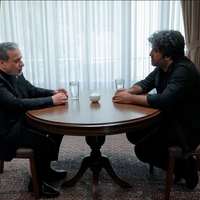
Upon arrival at the airport,Rafael Grossi was welcomed by the Atomic Energy Organization of Iran’s spokesman Behrouz Kamalvandi, a deputy of the body’s head Mohammad Eslami.
According to a diplomatic source, Grossi is scheduled to meet with Iranian President Ebrahim Raisi early Saturday morning, hoping to "relaunch the dialogue.” "Grossi wants to have the opportunity to restart the relationship at the highest level," the European source added.
A US State Department official said Wednesday that Washington is waiting for the head of the UN nuclear watchdog to meet with Iranian officials before deciding on its next steps in response to Tehran’s nuclear escalations, Al Arabiya reported.
The visit comes amid discussions with Tehran on the origin of uranium particles enriched to up to 83.7% purity, very close to weapons grade, at its Fordow enrichment plant, a report by the watchdog confirmed earlier in the week. Iran has rejected the claims of enrichment up to that level, with Eslami saying on Wednesday that the Islamic Republic's production is at 60 percent.
Iran began violating the 2015 nuclear deal’s (JCPOA) enrichment limit set at 3.67 percent in 2019 when the Trump administration imposed full oil export sanctions, but until the Biden administration came to office higher enrichment had stayed at around 5 percent. The UN watchdog has been demanding other explanations from Tehran about its secret nuclear work before 2003 and so far there has been no resolution.


Two years into Joe Biden's presidency, the White House is struggling to keep up with a long list of global crises, including growing frustration over the Iran.
Speaking on the sidelines of the Senate weekly bipartisan luncheon on Tuesday, Senator Bob Menendez told Iran International: “I don't know what it will take for the administration to understand that Iran is not changing its ways, on the contrary it's doubling down."
Menendez has been in the US Congress since 1993 and is known for his measured tone and composed articulations but in a rare expression of frustration, he said: "There should be a clear set of actions that sends a message to the regime in Iran that their behavior will have consequences."
He is one of many in the Congress whose patience is wearing thin. The Biden administration, which in March 2021 said that Trump's maximum pressure campaign is a failure, continued with those set of sanctions and has been gradually adding more to that.
As Iran inches closer to military grade enriched uranium, it is notable that the US Congress is getting further frustrated with regards to the Biden administration's policy on Iran. Republicans have kept almost all their ranks together on criticizing Biden for it, but they don't seem to have a strategy to deal with Iran.

Some Democrats still have not given up on a nuclear deal with the Islamic republic, but they are split on what to do next. War with Iran will dim the chances of reelection in a war weary America and the President's approval ratings are not strong. But there are also many Democrats who demand a tougher policy toward Iran.
Patrick Clawson, Senior fellow and Director of research at Washington Institute said that as Iran continues to find ways of evading sanctions, the international community must be vigilant. "There are always steps that can be taken to increase sanctions enforcement. Iran creatively comes up with new ways to evade sanctions and the challenge for the United States Government is to stay up to date in cracking down on the latest evasion mechanisms”, he said.
As military activity steps up, that too, casts a different light on the global stage. From Israel’s shadow war with Iran to the US drills with Israel and other allies, there are fears escalation is not far away.

Since the Abraham Accords signed in 2020 brought diplomatic relations between Israel and some of its Gulf neighbors, namely the United Arab Emirates and Bahrain, the arena is becoming more complex. Fears of Iran's capabilities are rippling not only across the region, but globally.
“The drills with the Israelis have become much more explicitly anti-Iran,” Clawson told Iran International. “That could accelerate. So too could the long-standing efforts to persuade GCC states to cooperate on early warning for air defense, on which there has been some notable progress, at long last.”
As military experts increasingly believe Iran’s rapidly advancing nuclear progress leaves Israel - Iran’s arch enemy - with little choice but to take military action, there is a real worry that Middle East stability is shaking.
In an exclusive interview, Senator Jim Risch, who has been in regular talks with Israel's hardline Prime Minister Benjamin Netanyahu since his return to office, said: “Everything Iran has been doing that is bad behavior, always endangers the environment in the Middle East." He said "each and every one" of his meetings with Netanyahu have had Iran at their core.
However, with domestic issues at home pointing to a potential third intifada on the horizon and civil unrest tearing the country apart, Clawson believes Netanyahu and the Biden administration do not feel Iran is the number one issue they face.
Neither is eager for a full-scale confrontation with Iran and it is no secret that Netanyahu is a fan of covert strikes, not only against the nuclear program but also the drones and precision-missile project, an issue the Biden team steadfastly refuses to be drawn into publicly. “Many in the White House think Israeli covert strikes are ineffective or counterproductive because Iran retaliates by reducing IAEA access,” Clawson added.
As options begin to run dry as to how best to deal with Iran's rogue behavior in spite of sanctions, Senator Josh Hawley has suggested radical new steps be taken. "I think it is good to delegitimize the current government of Iran which ought to be treated as a pariah government. I think a part of what the US government must continue to do is to empower allies and partners in the region to disempower Iran, rather than empower it, which is what this current administration I think has tried to do."

France has called news of Iran’s high level uranium enrichment “very concerning”, as the head of the UN nuclear watchdog is set to hold talks in Tehran Saturday.
Anne-Claire Legendre, Spokesperson of the French ministry of foreign affairs said news of Iran enriching uranium to near 84 percent is “extremely serious".
“This report states that the direction Iran is taking is very concerning,” she said on Thursday, about the International Atomic Energy Agency’s (IAEA) monitoring result.
IAEA chief, Rafael Grossi, will meet Iran’s President Ebrahim Raisi in Tehran on Saturday at the invitation of the government.
The IAEA hopes to “relaunch the dialogue” on the country’s atomic work in the wake of news that Iran is dangerously close to producing weapon’s grade uranium. The visit could fill a vital diplomatic vacuum in the wake of the breakdown of talks to revive the JCPOA with the US.
The global body confirmed Tuesday that it has detected uranium particles with a purity of 83.7%, while to produce a nuclear bomb uranium with a purity of 90% is needed. However, last week, Tehran claimed it had not made any attempt to enrich uranium beyond 60 percent.
It is possible that the "spike" was accidental, though this one was relatively large, diplomats said.
The IAEA has blamed Iran for failing to inform the body of substantial changes made to the two clusters of advanced centrifuges enriching uranium to up to 60% purity.
The Islamic Republic has been enriching uranium well over the limits laid down in the landmark 2015 deal with the P5+1 group of countries, which started to fall apart when Washington withdrew from it in 2018.

The United States imposed new sanctions Thursday on Iran-linked shipping and petrochemical companies, including two shipping firms based in China.
The sanctions also target 20 shipping vessels linked to firms in China, Vietnam and the United Arab Emirates, the Treasury Department's website showed.
The Biden administration has accelerated the imposition of sanctions on Iran since last September when antigovernment protests were met by a brutal government response. Iran’s weapons supply to Russia have also led to sanctions by the US, the European Union and the United Kingdom.
Iran has been shipping oil and oil products despite US sanctions, imposed since 2018, to China and other buyers, using clandestine methods. Third parties involved in sanctions violations are subject to US punitive measures.
The website did provide details on the new sanctions. A Treasury spokesperson referred questions to the State Department, which did not immediately respond to a request for comment.
The sanctions were issued under a 2018 U.S. executive order that restored sanctions targeting Iran's oil, banking and transportation sectors.
The Treasury Department issued a general license authorizing limited transactions with the sanctioned vessels under what it called a "wind-down" period through June 29, a document on its website showed.
Report by Reuters

Washington will never allow Iran to acquire a nuclear weapon, the State Department has reiterated, while still insisting that diplomacy with Tehran is preferable.
State Department spokesperson Ned Price told reporters during his press briefing Wednesday that US policy is clear. “President Biden has a solemn, steadfast commitment to the fact that Iran will never acquire a nuclear weapon. We will never allow that to happen. We continue to believe that the way to address this challenge in a way that is durable, in a way that is permanent, is through diplomacy.”
However, increasingly more members of congress from both sides of the isle are demanding a change of policy regarding negotiations with the Islamic Republic to revive the 2015 nuclear accord, known as the JCPOA. US lawmakers are pushing a few initiatives for bills to censure the Iranian government for its brutal suppression of protests and other malign activities.
Some observers opposed to the JCPOA and the Iranian regime argue that the Biden administration policy of keeping the diplomatic option on the table appears increasingly untenable as Tehran crosses red lines set by the West, including weapons shipments to Russia.
Price tried to drive home the message that for the US all options are on the table. In answering a reporter he said that although diplomacy was “the most effective way”, the administration has “been very clear that we will, through all means necessary, ensure that Iran never acquires a nuclear weapon.”
The latest example of a worrying development in Iran is a report by the UN nuclear watchdog, the IAEA saying that they found uranium particles enriched close to 84 percent, while Iran had previously not surpassed 60-percent enrichment.
Price said, “we are in close contact with our allies and partners in Europe and the region, the broader region, as we await additional details from the IAEA.”
The IAEA Board will meet next week and the agency will submit the official report to member states. Iran and Russia claimed on Wednesday that the issue was a misunderstanding and “has been resolved,” while at the same time they said IAEA chief Rafael Grossi will visit Tehran on Friday. The claims have not been confirmed by the IAEA.
If the UN watchdog submits a critical report, saying there is no satisfactory answer to its finding of highly enriched uranium, the US and its allies will be forced to take action, including triggering the return of international sanctions at the United Nations. Iran has already been censured twice by the Board of Governors in 2022, and another critical resolution will not be taken seriously.
The spectre of a military attack against Iran’s nuclear program has become larger in recent weeks, as Israel has signaled continued preparations to take action if necessary.
A US Defense Department official warned this week that the Islamic Republic could produce enough highly enriched uranium for one bomb in less than two weeks.
The Biden administration has drawn closer to Israel in recent weeks, conducting large-scale joint military exercises in January.
The US ambassador to Israel Tom Nides said in February that “As President [Joe] Biden has said, we will not stand by and watch Iran get a nuclear weapon, number one. Number two, he said, all options are on the table. Number three, Israel can and should do whatever they need to deal with, and we’ve got their back.”

The head of the International Atomic Energy Agency (IAEA) Rafael Grossi will visit Iran Friday for high-level meetings, the semi-official Fars news agency reported Wednesday.
The visit comes amid discussions with Tehran on the origin of uranium particles enriched to up to 83.7% purity, very close to weapons grade, at its Fordow enrichment plant, a report by the watchdog seen by Reuters confirmed on Tuesday.
Iran has rejected the claims of enrichment up to that level.
Iran began violating the 2015 nuclear deal’s (JCPOA) enrichment limit set at 3.67 percent in 2019 when the Trump administration imposed full oil export sanctions, but until the Biden administration came to office higher enrichment had stayed at around 5 percent.
The head of Iran’s Atomic Energy Organization, Mohammad Eslami, said on Wednesday that the Islamic Republic's production is at 60 percent according to state media.
Iranian officials have been insisting that a few particles are sometimes enriched beyond set limits, but the quantity is negligible. Eslami repeated the same argument on Wednesday. It is not clear if the IAEA agrees with this explanation.
The UN watchdog has been demanding other explanations from Tehran about its secret nuclear work before 2003 and so far there has been no resolution.
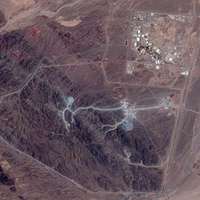
Talks to revive the JCPOA reached an impasse last September while Iran continues to stockpile 60-percent enriched uranium. It is estimated that it can reach weapons grade enrichment in a matter of weeks and can produce four nuclear warheads.