Iran Foreign Minister Says IAEA Officials To Visit Tehran

International Atomic Energy Agency (IAEA) officials will visit Tehran in the coming days, Iran's Foreign Minister Hossein Amir-Abdollahian said on Wednesday.

International Atomic Energy Agency (IAEA) officials will visit Tehran in the coming days, Iran's Foreign Minister Hossein Amir-Abdollahian said on Wednesday.
"In the framework of concluding negotiations, IAEA officials will travel to Tehran in the coming days," the minister said during a press briefing with his Iraqi counterpart in Baghdad.
"We hope that IAEA Director Grossi will reach an agreement with Iran's Atomic Energy Organization from a non-political and technical standpoint," Amir-Abdollahian added.
Iran's semi-official Tasnim news agency had earlier reported the head of Iran's Atomic Energy Organization Mohammad Eslami as saying that IAEA inspectors had been in Tehran since Tuesday and had started negotiations, visits and checks to resolve "ambiguities created by an inspector".
Last week, the UN nuclear watchdog said it was discussing the results of recent verification activities with Iran after Bloomberg News reported that the agency had detected uranium enriched to 84% purity, which is close to weapons grade.
A spokesperson for Iran's Atomic Energy Organization denied the report on Monday and said Tehran's uranium enrichment did not exceed 60% purity.
"Through interactions and coordination, we are preventing the rise of new ambiguities and disruptions to our cooperation with the agency," Eslami was quoted as saying on Wednesday.
Since the US withdrawal from a 2015 nuclear deal in 2018, Iran has gradually started going beyond the pact's nuclear curbs and enriching uranium to up to 60% purity in April 2021.
"The Islamic Republic of Iran has never sought to acquire an atomic bomb," Amir-Abdollahian added.
Report by Reuters
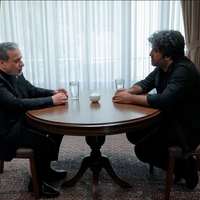
The Sultan of Oman, Haitham bin Tariq, will visit Tehran in the coming days to hold talks regarding the stalled nuclear negotiation between Iran and the West.
The Sultan of Oman, Haitham bin Tariq, will visit Tehran to hold talks regarding the stalled nuclear negotiation between Iran and the West.
MP Ali Alizadeh told Tasnim News Agency on Tuesday that "Omani authorities have recently expressed willingness to play the role of mediator between Iran and the United States in order to bring the nuclear negotiations to a conclusion”.
He made the comments after the National Security and Foreign Policy Committee of the Parliament held a meeting on Tuesday with Foreign Minister Hossein Amir-Abdollahian.
In the last two decades, Oman has acted as an intermediary between Tehran and Washington and has been successful in matters such as exchange of prisoners and the resolution of some disputes in nuclear negotiations.
Iran’s Foreign Ministry has recently claimed again that the US has tied the exchange of prisoners between the two countries to the nuclear negotiations.
Iran's negotiations with world powers to revive the 2015 nuclear deal have stalled since September.
Due to the suppression of nationwide protests in Iran and providing Russia with Iranian weapons in the war on Ukraine, the White House National Security Advisor, Jake Sullivan, said in January the US “priority right now is not the JCPOA". “This is not the moment or the context to place priority on that," Sullivan said.

Inspectors from the UN nuclear watchdog are in Tehran to resolve "ambiguities", Iranian media quoted the country's nuclear chief as saying on Wednesday.
"Officials of the International Atomic Energy Agency are in Tehran and have been starting negotiations, visits and checks ... Ambiguities created by an inspector are being resolved," the head of Iran's Atomic Energy Organization Mohammad Eslami was quoted by Tasnim news website affiliated with the Revolutionary Guard.
Last week, the UN nuclear watchdog said it was discussing the results of recent verification activities with Iran after Bloomberg News reported that the agency had detected uranium enriched to 84% purity, which is close to weapons grade.
So far, the IAEA has not reported if it has dispatched any officials to Tehran to resolve the issue with enrichment.
A spokesperson for Iran's Atomic Energy Organization denied the report on Monday and said Tehran's uranium enrichment did not exceed 60% purity.
"Through interactions and coordination, we are preventing the rise of new ambiguities and disruptions to our cooperation with the agency," Eslami was quoted as saying on Wednesday.
If the UN watchdog officially confirms the existence of 84-percent enriched uranium in Iran, the European signatories of the 2015 nuclear deal, the JCPOA, the United Kingdom, France and Germany can initiate the agreement’s ‘trigger mechanism’ at the UN Security Council to reinstate international sanctions suspended in 2015.
Since the US withdrawal from a 2015 nuclear deal in 2018, Iran has gradually started going beyond the pact's nuclear curbs and enriching uranium to up to 60% purity in April 2021.

As news emerged that Iran enriched uranium to 84 percent, Israeli PM Benjamin Netanyahu reportedly held top-level secret meetings on preparations to confront Iran.
Israel’s Channel 12reported on Tuesday that Netanyahu met five times in recent weeks with Defense Minister Yoav Gallant, Chief of Staff Herzi Halevi, Mossad head David Barnea, Military Intelligence chief Aharon Haliva and other military figures to examine Israel’s readiness for a possible attack on Iranian nuclear targets.
Netanyahu also reiterated his previous calls on Tuesday that the international community must act to stop Iran’s escalation.
“The only thing that has ever stopped rogue nations from developing nuclear weapons is a credible military threat or a credible military action,” he told a national security conference. “A necessary condition and often a sufficient condition is credible military action. The longer you wait, the harder that becomes. We’ve waited very long.”
Successive governments have warned that Israel will not tolerate a nuclear armed Iran and in recent weeks closer military cooperation and diplomatic coordination have been noticeable with the United States.
US officials have been increasingly signaling that President Joe Biden will not tolerate a nuclear Iran, after JCPOA talks hit a dead-end in September. "If they start getting too close, too close for comfort, then of course we will not be prepared to sit idly by," US Special Representative for Iran Robert Malley told National Public Radio in November.
If Tehran has indeed produced a limited quantity of uranium at 84-percent purity, it can signal a possible intentional escalation to put pressure on the West for concessions in nuclear talks. Tehran has been using this tactic since 2019, and specially since 2021 when the Biden administration signaled its readiness to hold talks.
The Times of Israel wrote about Netanyahu’s meetings with military and intelligence officials that “The report, which was not attributed to any source, included few other details about the discussions, and may itself be designed to telegraph the seriousness of Israeli threats to resort to military action in order to shut down Iran’s suspected drive toward a nuclear weapon.”
However, the Channel 12 report said Netanyahu’s meetings resulted in a decision that Israel will act alone if others do not step in. This decision was shared with US Secretary of State Antony Blinken.
If Israel’s intention is to increase pressure on the Islamic Republic, beleaguered by political and economic crisis, the timing might have been right. This week a serious financial chaos has gripped the country as its battered currency is falling to unprecedented levels against major currencies and panic has gripped the markets about uncontrollable inflation in the weeks to come. This in turn can ignite more popular protests and unrest.
Iran, having missed a chance last August to come to an agreement with the Biden administration over reviving the 2015 JCPOA deal, now finds itself under siege and has to decide to escalate its nuclear confrontation further or make the necessary concessions.
But since the breakdown in the nuclear talks, Washington has been playing hard to get, saying that it is not focused on resuming nuclear negotiations and demanding that Iran should stop military cooperation with Russia and repression at home.
To what extent the new demands are serious pre-conditions, or a negotiating tactic, is not clear, but after the Iranian regime killed hundreds during protests and supplies drones to Russia, it would be politically costly for Biden to simply revive the 2015 nuclear deal and lift sanctions.

An Israeli nuclear physicist has warned that Iran’s enrichment of uranium to 84 percent could be sufficient for the production of atomic bombs.
The scientist said that bomb dropped by the US on Hiroshima in 1945 had uranium with 80% purity.
Naama Charit Yaari told The Jerusalem Post that if the Americans had had time to enrich the uranium to 93% or 94%, the damage would have doubled.
However, she said she doesn’t know for sure if Iran has really enriched to 84% purity or left its supplies at “only” 60% as it has claimed.
UN's International Atomic Energy Agency (IAEA) inspectors detected near bomb grade enriched uranium in Iran last week, Bloomberg reported on Sunday.
Quoting “two senior diplomats” the report said that the IAEA found uranium enriched to 84 percent, while previously Iran was enriching up to 60-percent purity. Enrichment above 90 percent would mean a decision to become a nuclear threshold state.
Bloomberg says that the IAEA needs to determine whether the higher-grade enrichment was intentional or the result of unintended technical processes. Earlier this month, inspectors had found an unusual set-up in interconnections of enrichment machines, called centrifuges.
The spokesman for the Atomic Energy Organization of Iran rejected Bloomberg's report as "distortion of facts" and said, "We have not enriched uranium to purity levels above 60 percent so far." He added that the IAEA has informed Tehran that "the presence of uranium particles with above 60-percent purity is common in sampling."

US Secretary of State Antony Blinken said Tuesday it was up to Iran to resolve a deadlock in nuclear talks and accused it of enabling Russian aggression in Ukraine.
Blinken, who was visiting Athens, said the United States was committed, together with Israel, to ensuring that Tehran "never acquires a nuclear weapon".
"That's not exactly news. The president (Joe Biden) has been very clear that every option is on the table to do that," Blinken told a news conference alongside his Greek counterpart, Nikos Dendias.
Biden's administration had been trying to resurrect the 2015 agreement, the Joint Comprehensive Plan of Action (JCPOA), which was abandoned by Biden's predecessor Donald Trump in 2018, but talks lasting 18 months deadlocked in September.
Soon antigovernment protests broke out in Iran that were met with deadly force by the government, killing 500 civilians, further complicating relations with the West.
Blinken accused Tehran of failing to engage and said the JCPOA was not on the table now.
"We continue to believe that, with regard to the nuclear program, the most effective, sustainable way to deal with the challenge it poses is through diplomacy. But in this moment, those efforts are on the backburner because Iran is simply not engaged in a meaningful way," Blinken said.
"A lot depends on what Iran says and does and whether or not it engages."
Blinken added: "In the meantime, of course, we've seen provision by Iran of drones to Russia to enable its aggression in Ukraine."
He called the invasion a "strategic failure in every way" for Russian President Vladimir Putin.
With reporting by Reuters