Iran Facing Gas Shortage As It Predicted ‘Harsh Winter’ For Europe

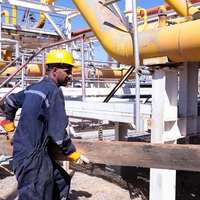
Despite Iranian officials predicting a "harsh winter" for Europe, most countries have managed their energy needs, but a serious natural gas shortage has gripped Iran.

Despite Iranian officials predicting a "harsh winter" for Europe, most countries have managed their energy needs, but a serious natural gas shortage has gripped Iran.
Reports from Iran say many state organizations and industrial towns in different provinces have been forced to reduce working hours because of the energy shortage.
Shortage of natural gas in dozens of Iranian cities amid a cold snap has closed state offices and schools until Friday.
At the same time, regime’s Oil Minister Javad Oji has threatened people that their gas will be cut off if they consume more than the pre-defined pattern.
In the past few days, the shortage of natural gas has stopped the activities of schools and offices in several provinces of Iran, including Alborz, Khorasan Razavi, Golestan, Zanjan, Ardabil, Lorestan, Markazi, and others.
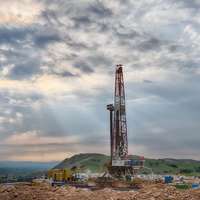
Iran has the world’s second largest gas reserves but has not been able to make the necessary investments to keep up production due to Western sanctions.
Some Iranian officials including Mohammad Marandi, who was a member of the Iranian nuclear negotiating team, have been sayingsince last summer that "a hard winter in Europe" will force European powers to come back to the negotiating table. Marandi had predicted: "The winter is coming, and the EU will have to face a paralyzing energy crisis."
Hard-line officials were making these claims while Europe needed natural gas due to the war in Ukraine, but Iran does not produce enough to export and has no way of shipping it to Europe.

Iran’s judiciary chief says tens of ships have arrived in territorial waters of the country, but the Islamic Republic cannot unload them.
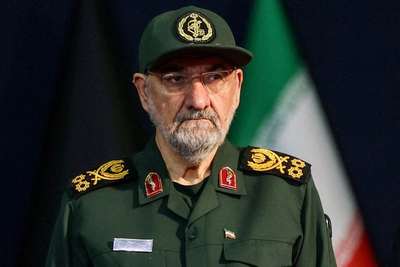
Gholam Hossein Mohseni Ejei said Monday that Iran must pay fines for the delay in discharging cargos, but he did not mention why the ships are waiting at the ports.
It seems that the delay in payments has disrupted flows of goods into the country. Most ships carrying food, animal feed and commodities receive full payment right before they dock at a port to unload their cargo. If payment is not arranged, the ships wait off the coast.
“Some of these ships are paid $25,000-65,000 per day as demurrage,” noted Ejei.
Some of these goods, which are not unloaded, added Ejei, “are damaged due to long waits by the ships, but these goods are necessary for the country,” he underlined.
He called on judicial officials to follow up the case through the Central Bank of Iran to ensure the cargos would be discharged soon.
Iran's currency has dropped by 30 percent since September and both the government and private importers face a financial crunch.
Food is exempt from the US sanctions on Iran over its nuclear program, but the impact of the sanctions on Iran's financial system have created complex payment arrangements with international companies.
Reuters reported on December 21, that dozens of merchant ships with grains and sugar are stuck outside Iranian ports after weeks of delays in payment.
Most of the carrier ships are stuck outside the major Iranian ports of Bandar Imam Khomeini and Bandar Abbas, ship tracking data on Refinitiv showed.

The Islamic Republic’s parliament is mulling over a plan to ban regime’s officials from leaving the country to stop them from moving capital out of Iran without accountability.
Hardliner member of parliament Jalal Rashidi Kouchi said Saturday that banning the exit of senior officials, which is on the agenda of this parliament, is meant for the "protection of the assets and documents of the people and the country."
The plan is titled "Prohibition of the Islamic Republic of Iran's administrators from leaving the country after completing their duties" and will be discussed at the parliament next week, IRGC affiliated Tasnim news agency said.
It is not clear if the timing of this proposal is related to nationwide antigovernment protests and the resulting political instability.
Referring to Iranian fugitive banker Mahmoud Reza Khavari, who was involved in an embezzlement scandal and fled the country to Canada, Rashidi Kouchi said such a plan would guarantee that officials cannot leave Iran with the money they obtained from embezzlement and bribery.
Khavari was the chairman of Bank Melli Iran until September 2011 and chairman of Bank Sepah’s board of directors from December 2003 until March 2005. He was involved in a big embezzlement case worth approximately $950 million. Khavari, who became a Canadian citizen in 2005, is a fugitive wanted by the judicial authorities of the Islamic Republic.

A certain time frame has been proposed for the plan. Officials would not be able to leave Iran in their last year of their service at a certain post and three years following the end of their job. Officials at a certain senior level must also register their properties in an existing system with the Judiciary and must refrain from any sale or transfer of properties during the four-year timespan.
It is still not clear to what levels of seniority the law would apply, but most mid-to-high-level officials often have properties registered to family and friends.
Kouchi also said that according to the plan, the departure of former officials will be subject to the permission of regulatory and security entities, such as the judiciary, the Ministry of Intelligence, the Intelligence Organization of the IRGC and the intelligence division of the police. He added that the priority of implementing this plan is for officials who hold dual citizenships or have close relatives abroad.
The move to adopt such measures can be seen as a sign that some Islamic Republic officials may be trying to relocate from Iran with their families and seek residence in other countries, while the regime wants to erect barriers. The pace of emigration by Iranians, officials and ordinary people alike, has accelerated since the current wave of protests. Many Iranians inside the country and abroad believe that the days of the clerical regime are numbered as the global community and international bodies have also started expressing support for the uprising and a serious financial-economic crisis is threatening stability.
Official reports this week indicated that at least $10 billion capital has left the country in the past 9 months.
Late in October, unconfirmed reports suggested that Iranian officials were sending their family members and assets abroad amid antigovernment protests that show no sign of abating. According to a report on the website of UK’s Daily Express, top officials of the Islamic Republic are reportedly attempting to secure British passports for their families. Citing an unnamed Iranian source, the report also claimed that officials have been chartering up to "five flights a day" for their families, adding that some sections of “Tehran’s main airport” have been taken over as a fast-track area for their own family and friends to escape the country.

New figures show that due to extensive internet and social network restrictions, 20 percent of people in Iran have lost their online jobs in the past four months.
According to Jobvision website, the restriction imposed on Iranians’ access to social networks following nationwide protests has resulted in a series of undesirable consequences such as cutbacks, increased uncertainty about the future, reduced salaries, and the suspension of development plans.
The website published a chart showing that 46 percent of organizations have suspended or postponed more than half of their recruitment programs due to the recent internet restrictions.
45% of companies or businesses that depend on the Internet have decided to reduce their payments or had to pay wages by delay.
The statistical findings of Jobvision show one out of every five people have lost their jobs, and 16% of those working in this area expect to be fired soon.
Restrictions on Instagram has had a deep impact on the lives of people who used to make a living on this popular social network.
The government often shuts of slows down access to the Internet and social media platforms, while President Ebrahim Raisi promised in his election campaign that he would not block Instagram because "it is the place of business for many Iranians".
Since the beginning of nationwide protests almost four months ago, the government has cracked down on protests violently, and officials have repeatedly blamed cyberspace and foreign media for provoking the protesters.

The new chairman of the Central Bank of Iran (CBI), amid a serious economic crisis, said Friday that macroeconomic indicators show signs of improvement.
Mohammad-Reza Farzin, appointed last week, did not explain which economic indicators show improvement. His predecessor was sacked because of a serious financial and currency crisis.
The Iranian rial has lost 50 percent of its value since mid-2021 and 30 percent this year, raising fears of higher inflation. Iran’s annual inflation rate is al,ost 50 percent, with food prices averaging 78 percent increase in the past 12-month period.
The financial crisis comes at a time of antigovernment protests, instilling anger among the population impoverished in the past five years after the United States imposed sanctions on Iran’s economy.
Farzin was speaking at his first meeting of a government outfit called “Headquarters for Economic Information and Propaganda” established in 2018 to fight against “psychological warfare” in markets. Iranian officials often blame poor economic performance on “enemy” conspiracies.
Farzin strongly intervened in the currency market on December 31 as the rial sank to 440,000 to the US dollar last week. The amount of foreign currency injected into the market was kept secret, but the rial regained close to 10 percent of its value but remained at almost an all-time low of 400,000 to the US dollar. Subsequent interventions only had a temporary impact.
The rial has been steadily losing value since the Islamic Republic was established in 1979, when the dollar equaled just 70 rials.

Iran’s government has decided to act against those selling VPNs and circumvention software to people, as a measure to further restrict access to the Internet.
The Judiciary department in collaboration with ministry of communications will take legal action against "unauthorized sellers of the VPNs and circumvention tools," local media reported.
ISNA news website that published the news on Wednesday did not say who made the decision, however; many believe it could have been ordered by the Supreme National Security Council, or one of the intelligence services.
Since the beginning of protests in mid-September, the government has been severely restricting Internet access in general and access to popular social media platforms, such as Instagram, WhatsApp and others.
The government is extremely nervous that people use the Internet and social media to share news and images about protests, possibly motivating a larger segment of the population to join demonstrations.
However, restricting access also hurts internet-based businesses. Reports say up to 10 million people's livelihoods may be adversely affected by government’s Internet access denials and its ban on social media platforms.
This has prevented Internet-based businesses from marketing and selling their products and services. Economists believe it will have alarming repercussions for Iran's economy while the country is suffering from high inflation and a recession.
Officials, including Supreme Leader Ali Khamenei, have repeatedly criticized free access to the internet in recent years, and have been trying to prevent the free flow of information by expanding the "national intranet".