UN Investigating Iran’s Supply Of Drones To Russia

Secretary General Antonio Guterres says the United Nations is examining “available information” about accusations that Iran supplied Russia with drones.

Secretary General Antonio Guterres says the United Nations is examining “available information” about accusations that Iran supplied Russia with drones.
Reuters quoted Guterres as saying that “any findings will be reported to the Security Council, as appropriate, in due course.”
Meanwhile, the Associated Press as saying that Tehran has plans to sell Moscow hundreds of missiles and drones in violation of the 2015 Security Council resolution that endorsed the nuclear deal between Tehran and the P5+1.
The diplomat, who was speaking on condition of anonymity, added that a key question is what Russia will be giving Iran in return for the drones and missiles.
Last week, Iran International reported that the Islamic Republic has asked Russia for help to quell the popular uprising by supplying anti-riot equipment and training.
White House press secretary Karine Jean-Pierre said Saturday during a joint press briefing with Coordinator for Strategic Communications at the National Security Council in the White House John Kirby that Moscow may be helping the Islamic Republic, drawing on its own experience in suppressing demonstrations.
“The evidence that Iran is helping Russia rage its war against Ukraine is clear and it is public. Iran and Russia are growing closer the more isolated they become,” Jean-Pierre said. “Our message to Iran is very, very clear: Stop killing your people and stop sending weapons to Russia to kill Ukrainians.”


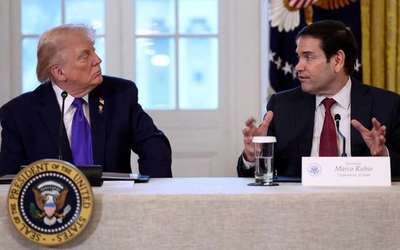


The United States has warned Iran against issuing death sentences for antigovernment protesters saying that the Iranian regime should know the world is watching.
US State Department Spokesperson Ned Price said during a briefing on Tuesday that the “draconian” sentences are meant to scare people and dissent.
“Unfortunately, this is just really the latest tactic that we’ve seen from the Iranian regime…[against] individuals who are exercising their universal rights. These sentences, we know, are meant to intimidate people, to suppress dissent. They are – they simply underscore Iran’s leadership’s fears of its own people and the fact that Iran’s government fears the truth,” stated Price.
Iran's Chief Justice Gholam-Hossein Mohseni Ejei said Monday the death sentences for several protesters have been confirmed and will be executed soon.
Elsewhere in his remarks, Price talked about Iran’s removal as a member of the UN Commission on the Status of Women saying that Washington is committed to removing Iran from the commission.
“It’s the proper thing to do. It shows that we stand with women in Iran and around the world, including from a variety of civil society groups that have led this push…because of Tehran’s very egregious actions against Iran’s women and girls,” he underlined.
The resolution will be taken up on December 14th, added Price, reiterating that the US will continue to work with its allies and partners to generate support with members of the UN Economic and Social Council for the proposed action.

The US military said on Tuesday that an Islamic Revolutionary Guard Corps Navy boat came within 150 yards of American warships in the Strait of Hormuz.
The US CENTCOM in a statement said that the situation was de-escalated with the help of audible warnings and non-lethal use of lasers.
The incident took place on December 5 during a routine transit in international waters. “The Iranian vessel attempted to blind the bridge by shining a spotlight and crossed within 150 yards of the US ships – dangerously close particularly at night,” CENTCOM said.
"The IRGCN’s actions violated international standards of professional and safe maritime behavior, increasing the risk of miscalculation and collision," the statement added.
Iran has engaged in provocative approaches to the US NAVY in the region many times throughout the years, with Americans firing warning shots on a few occasions.
“This dangerous action in international waters is indicative of Iran’s destabilizing activity across the Middle East,” the statement quoted CENTCOM spokesman Col. Joe Buccino as saying.
Expeditionary sea base platform ship USS Lewis B. Puller and guided-missile destroyer USS The Sullivans “were conducting a routine transit in international waters” when the Iranian patrol boat approached.
High-ranking Iranian commanders have been praising their navy this week as the true guarantor of security in the Persian Gulf region.

President Xi Jinping’s visit to Saudi Arabia, beginning Wednesday, marks China’s rising influence in the Middle East and the wider world.
Saudi official news agency SPA is calling Riyadh-Beijing relations a “strategic partnership” encompassing both rising trade and regional security, contrasting with United States officials portraying China as a threatening axis alongside Russia and bemoaning Saudi-Russian cooperation in agreeing oil production targets through Opec+.
Foreign Minister Wang Yi in October said Saudi Arabia was a “priority” for China. While this is due partly to supplying of 1.77 million barrels of Saudi oil a day (bpd) reaching Beijing in the first ten months of 2022 (18 percent of China’s total crude purchases), overall bilateral trade reached $87 billion in 2021 and China is keen to extend infrastructure investment in line with its 149-country Belt and Road Initiative (BRI).
Saudi Arabia’s plans to diversify away from oil and develop the $500-billion NEOM city in the north west are widely expected to offer significant opportunities for Chinese companies, who are already active in refining and petrochemicals.
Deeping ties with Saudi Arabia has not stopped Beijing continuing as Iran’s main oil buyer, taking between 500,000 and 1 million bpd this year, despite the threat of punitive action by Washington under the ‘maximum pressure’ Iran sanctions introduced in 2018. Both China and Saudi Arabia are uncomfortable by recent US assertions that its foreign policy is based on ‘human rights.’
China has a 25-year cooperation agreement with Iran, reached in 2021, but last month signed a 27-year liquid natural gas (LNG) supply deal with Qatar, which shares with Iran the world’s largest gas-field, the Qatari part known as North Dome and the Iranian part South Pars. Iran has struggled under US ‘maximum pressure’ to develop LNG facilities – the form of gas most suitable for export. French major Total, an LNG specialist, reluctantly pulled out 2018 from a contract to develop phase 11 of South Pars.
‘Leveraging rivalry’
Saudi Arabia, like China, seeks a transactional foreign policy. The Chinese are this week reportedly ready for $30 billion in arms contracts with Riyadh, reflecting Saudi Arabia’s position as the third largest defense spender in the world after the US and China. Riyadh bought 23 percent of all US weapons sold globally 2017-21, according to the Stockholm International Peace Research Institute.
Xi’s visit will also include an inaugural China-Arab Summit, which is expected to include leaders from the countries of the Gulf Cooperation Council and the wider Arab world, including Iraq.
Iran and Saudi Arabia despite a few rounds of exploratory talks still do not have diplomatic relation severed in early 2016. Tehran continues to label Riyadh as an enemy and periodically makes threats against the Sunni power, which considers Shia Iran a threat.
While some Persian Gulf observers continue to insist that nothing has diminished US sway in the region, John Calabrese of the Washington-based Middle East Institute in a briefing published Monday wrote that “Saudi Arabia and its Gulf Arab neighbors …situated both literally and figurately at the crossroads of intensifying global rivalry between US and China…seek to leverage [that rivalry] to their benefit.”

Prime Minister Justin Trudeau said Monday Canada would investigate how parts from an Ottawa-based company were reportedly found in an Iranian military drone.
Trudeau said he did not want Canada’s “extraordinary technological innovations” used in “Russia’s illegal war in Ukraine, or Iran’s contributions to that.” He argued that Ottawa had “strict export permits in place for sensitive technology” and would work with Tallyman Wireless to “figure out exactly how items that we’re not supposed to get into the hands of anyone like the Iranian government actually ended up there.”
Canada’s arms exports – which before Moscow’s 2014 Crimea annexation included Russia – are regulated by the Export and Import Permits Act, under which there is a list of ‘approved buyers’. In 2021, 66 percent of Canada’s military sales went to the Middle East, with the lion’s share of $1.75 billion bought by Saudi Arabia.
Many parts used in military drones, however, are readily available and often bought online. The presence of Canadian-made antennae in the Shahed-136 drone was asserted last month in an investigation by Statewatch, a group committed to transparency in government.
Trudeau raised the issue with reporters Monday after a report in the Globe and Mail. Statewatch had cited Ukrainian intelligence claiming the Shahed-136 had parts from over 30 European and American companies, mainly from the United States. Ukraine’s attack Monday on two military bases deep inside Russia used Soviet-era drones, the Kremlin said.
Military drones have been deployed by both sides in the Ukraine war, with Ukrainian forces using mainly US and Turkish drones, or UAVs (unmanned aerial vehicles). The increasingly use of drones in conflicts across the world reflects their low cost compared to missiles or jet-planes.

Sanctions, winter
Canada on December 2 sanctioned Baharestan Kish, an Iranian research company, over alleged involvement in supplying drones to Russia. Ottawa had in November sanctioned two Iranian companies on the same grounds, while the US and European Union listed Iranian entities in October.
With temperatures in Kyiv currently minus 5 Celsius (23 Fahrenheit) and snow looming, there are stories of the infamous Russian winter playing havoc with sophisticated weapons. The Ukrainian military has reported that Moscow has not deployed Shaheed drones since November 17 as they cannot function in freezing temperatures.
Other Ukrainian officials have, however suggested Moscow has simply run out of stocks. Iran in early November acknowledged it had supplied “a small number” of military drones to Russia before the current phase of conflict broke out with Moscow’s ‘special military operation’ in February. There have been mixed signals in recent days over prospects for peace talks between Russia and the US to end the war.

Two prominent Iranian lawyers have called for the unconditional release of all detained protesters and the cancellation of all convictions and sentences.
Nasrin Sotoudeh who is in prison and Mohammad Seifzadeh in a joint letter said revolutionary courts “do not have legal authority,” emphasizing that proceedings in such courts are not “fair and judges are not impartial.”
Hours before the publication of this letter Iran's Chief Justice Gholam-Hossein Mohseni Ejei said the death sentences for several protesters have been confirmed and will be executed soon.
The letter is one of the first reactions to the threatening statements made by the Chief Justice on Monday.
The two human rights lawyers also added that most of those arrested were “convicted in revolutionary courts…where they were deprived of the right to have an independent lawyer, and also due to lack of fair proceedings in the judiciary and the impartiality of the judges, the verdicts are completely invalid.”
Based on leaked briefing documents for senior officials from Fras News Agency, over 29,000 people have been arrested during nationwide protests against the regime following the death of Mahsa Amini.
None of the detained had the right to choose a lawyer, and a number of them have been tried and sentenced to death without access to a fair trial.
