Iran To Try 10 Underage Protesters On Death Penalty Charges

A Revolutionary Court of the Islamic Republic will try ten adolescent protesters Wednesday on charges of “war against God, corruption on earth and murder” that can carry the death sentence.

A Revolutionary Court of the Islamic Republic will try ten adolescent protesters Wednesday on charges of “war against God, corruption on earth and murder” that can carry the death sentence.
The move has led to widespread objections as several activists and organizations have expressed deep concern.
A committee monitoring the situation of recent protest detainees said, “these children are not having their own defense teams and lawyers appointed by the judiciary are supposed to represent them.”
A law in Iran forbids those charged with political crimes to hire their own lawyers.
They are charged in the death of a Basij militia member during protests on November 3 in Karaj west of Tehran.
Mohsen Borhani, a lawyer, and professor at Tehran University, had earlier warned about the trial of several detained minors in revolutionary courts.
During the popular uprising in Iran, over 18,000 citizens have been arrested and some of them were accused of “corruption on earth” and “war against God” which may carry the death penalty.
On Tuesday, Amnesty International called on governments with embassies in Iran to send observers to ongoing trials where protesters are at risk of being sentenced to death.
Amnesty said in a tweet this includes a group trial starting November 30 of 11 people, before Branch 1 of Revolutionary Court in Alborz.
“Amnesty is also extremely concerned at reports indicating children are among those at risk of being sentenced to death in mass trials in connection with protests, which would be a flagrant violation of international law,” it added in a statement.
Javaid Rahman, the United Nations Special Rapporteur on human rights in Iran, has said a UN vote had increased the likelihood of “violence and repression.”
Rahman was speaking after the UN Human Rights Council voted November 24, by 25 votes to six with five abstentions, to establish a fact-finding investigation into deadly government violence against protesters.
In an interview with Reuters news agency, the special rapporteur, said he was concerned at a “campaign” of death sentences over recent protests in Iran, which has a high incidence of capital punishment: “I’m afraid that the Iranian regime will react violently to the Human Rights Council resolution and this may trigger more violence and repression on their part.”
According to Norway-based HRANA, November 286, 451 protestors and 60 members of the security forces have been killed in protests since September 17, the day after the killing in custody of Kurdish woman Mahsa Amini. Just over 18,000 people have been arrested. Rahman told Reuters that six of those arrested had this month been sentenced to death.
"Now (authorities) have started a campaign of sentencing (protesters) to death," he added, saying he expected more to be sentenced.
Already, 21 people arrested in the context of the protests face the death penalty, including a woman indicted on "vague and broadly formulated criminal offences", and six have been sentenced this month, Rehman said.
Budget, staff, evidence
The mission set up by the UN vote will have a $3.67 million budget and 15 staff, the news agency reported, but Rahman, who has not been allowed to visit Iran since he was appointed in 2018, did not explain what course of action he intended beyond an aim to “collect, consolidate and analyse evidence.”
Iran this week announced that it will not cooperate with the UN investigation, which means Rehman will continue to be persona non grata.
Rehman said he expected the mission to gather a list of perpetrators to be shared to national and regional legal authorities to “ensure accountability and…provide evidence to the courts and tribunals.”
The special rapporteur therefore appeared to evoke universal justice, under which states or international bodies pursue serious cases – usually crimes against humanity – regardless of where the alleged crime took place.
Universal jurisdiction
In July a court in Sweden sentenced to life imprisonment Hamid Nouri, a former Iranian official, over 1988 prison massacres in Iran, three years after he was arrested after arriving in Stockholm on holiday. In January a German court jailed for life Anwar Raslan, a former Syrian intelligence office earlier granted asylum, for murder and rape of prisoners in Damascus.

But such successes are rare. Notable failures in universal jurisdiction include Britain’s 1998 arrest under a Spanish warrant of former Chilean dictator Augustine Pinochet and the 2001-3 prosecution in Belgium of former Israeli premier Ariel Sharon over the 1982 massacres in Beirut’s Sabra-Shatila Palestinian camp. The US has generally eschewed universal jurisdiction, refusing to join the International Criminal Court. President Donald Trump in 2019 pardoned three US soldiers implicated in war crimes in Iraq, and President Joe Biden recently granted immunity to Mohammad bin Salman although US intelligence regards the Saudi crown prince as responsible for the 2018 murder of journalist Jamal Khashoggi in Istanbul.

While Iran’s IRGC has launched missile attacks on Iraq’s Kurdistan region, Iraqi Prime Minister says his government will not allow its territory to be used to “harm any side.”
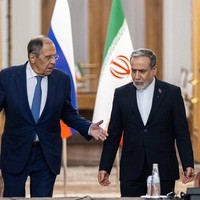
Mohammed Shia' Al Sudani made the comments Tuesday in a meeting with Iranian President Ebrahim Raisi as part of his visit to the Iranian capital.
The Iraqi official said, “It is the policy of the Iraqi government that this country should not be the starting point for actions harming the countries of the region.”
In the meeting, Ebrahim Raisi claimed the Islamic Republic supports a united and strong government in Iraq.
Raisi said relations between Tehran and Baghdad must be expanded to establish more peace and stability in the region and the world.
Since the eruption of nationwide protests in Iran, regime officials have accused Kurdish opposition groups in northern Iraq of fueling the unrest, with the IRGC repeatedly launching deadly attacks on the neighboring country’s northern territories.
The latest round of shelling of Iraqi Kurdistan region drew condemnation by Western countries as well as the Iraqi government.
Iraqi Foreign Minister Fuad Hussein decried the attacks as a violation of Iraq's sovereignty and Kurdistan Region Prime Minister Masrour Barzani also condemned the “violations” of Iraq and its Kurdish region’s sovereignty.
The US also strongly condemned Iran’s “violations of Iraqi sovereignty”, calling on the Islamic Republic to stop attacking its neighbor.

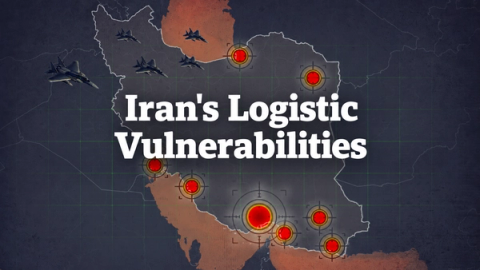
The Israeli Air Force will hold large joint drills with the United States to simulate strikes against Iran’s nuclear program.
Releasing a statement on Tuesday, the Israel Defense Forces announced that the joint aerial wargames with the US military is to practice strikes against the Islamic Republic and its proxies in the region.
The two-day drills will be launched on Tuesday over parts of Israel and theMediterranean Sea, and include long-range flights needed by Israeli pilots to undertake to reach Iran.
The maneuvers come after IDF chief Aviv Kohavi visited the USlast week urging the defense officials that the two countries must speed up joint plans for offensive actions against Iran.
“In order to improve our capabilities in the face of challenges in the region, joint activity with the US Central Command will be significantly expanded in the near future,” Kohavi said after returning to Israel.
The Islamic Republic began enriching uranium to 60% purity at its Fordow nuclear plant last week, saying the move was in response to the resolution criticizing its lack of cooperation with the IAEA.
That purity is below the 90% needed for weapons-grade material but well above the 20% Iran produced before its 2015 agreement with major powers that capped enrichment at 3.67%.

The number of young and underage protesters killed in Iran’s nationwide uprising by government security forces continues to increase.
Based on reports received by Iran International, Mohammad Hossein Kamandlou, 17, was killed on November 22 in Moshiriyeh neighborhood of Tehran and his funeral took place under strict security measures.
Activists say Arshiya Imamqolizadeh Alamdari, 16, who was detained for 10 days and charged for grabbing and tossing the turban of a cleric in Jolfa in East Azarbaijan, committed suicide just two days after being released.
Reports have also indicated that Maedeh (Mahak) Hashemi, 16, was killed by batons strikes in Shiraz Thursday, and her body was buried in the presence of security forces.
An human rights organization Hengaw based abroad reported that Reza Kazemi, 16, from Kamyaran in Kordestan province succumbed to injuries he received when security forces shot him during protests.
Masoud Dolatshahi, 38, who was shot in the chest in the Saadat Abad neighborhood of Tehran on November 20, also died on Monday.
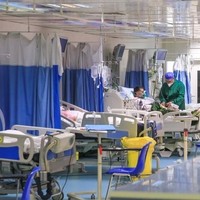
Meanwhile, Mohammad Jaafar Ghaempanah, a cornea specialist, said in a video that hundreds of protesters have lost their eyes due to being hit by pellets from shotguns used by police and plainclothesmen.
On Friday, 140 ophthalmologists in a letter to the head of the Iranian Ophthalmology Association warned that many citizens have lost their vision by pellets and paintballs.
Previously, Jalal Mahmoodzadeh, an MP, said at least 105 people have been killed in Kurdish regions in the past month based on unofficial reports.

A group of Iranian filmmakers have formed a new entity called “Iranian Independent Filmmakers Association” in support of the antigovernment protest movement.
In their statement on Monday four issues have been raised as the goals of the association.
Preventing repression and violence against peaceful protesters and innocent children, unconditional release of prisoners, drawing the attention of the world's filmmakers to events in Iran and “exposing the tactics of propaganda machine of the Islamic regime” are announced as the main goals of the group.
“Iranian protesters chant ‘Women, Freedom, Life’ and are being beaten, shot, arrested, tortured, and executed in every corner of their country by regime’s security forces. During this fateful and historical time, we, a group of independent filmmakers, who believe in the universal language of cinema as a powerful narrator of truth and peace, have come together to seek [our objective],” reads the statement.
The government tried to influence and control official associations representing filmmakers, artists or professionals.
Adeleh Cheraghi, one of the spokespersons of this association, told BBC Farsi that so far more than fifty Iranian filmmakers have become members of the group, including Shirin Neshat, Mostafa Azizi, Abdul Reza Kahani, Nima Sarvestani, Kaveh Farnam and Ali Abbasi.
According to her, the names of some members of the association will be published later “due to the existing security conditions and repression” inside and outside Iran.