US Announces New Iran-Related Sanctions

The US has imposed fresh sanctions on individuals linked to Hezbollah and Iran’s Revolutionary Guard's Quds (Qods) force, as well as several shipping and oil companies.

The US has imposed fresh sanctions on individuals linked to Hezbollah and Iran’s Revolutionary Guard's Quds (Qods) force, as well as several shipping and oil companies.
The network used storage units in the Port of Sharjah in the UAE, and blended products of Indian origin with Iranian oil to obfuscate the Iranian origin.
One of the sanctioned individuals was identified as Iranian national Edman Nafrieh, who oversaw a network of dozens of companies that managed the blending. According to the Treasury, Nafrieh received orders from Iranian officials associated with the US-designated Supreme Leader's Office to direct the smuggling operation profits to companies and bank accounts associated with Hezbollah and the IRGC-QF.
“The individuals running this illicit network use a web of shell companies and fraudulent tactics including document falsification to obfuscate the origins of Iranian oil, sell it on the international market, and evade sanctions,” said Under Secretary of the Treasury for Terrorism and Financial Intelligence Brian E. Nelson.
The new set of sanctions follows OFAC’s May 25 designations of another Iranian oil smuggling network, which was led by US-designated IRGC-QF official Behnam Shahriyari and former IRGC-QF official Rostam Ghasemi – the current roads minister -- and backed by senior Russian officials and state-run economic organs.
The Islamic Republic has urged countries not to attend a US-organized meeting at the United Nations over its human rights violations and violent crackdown on protesters.
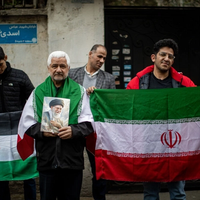
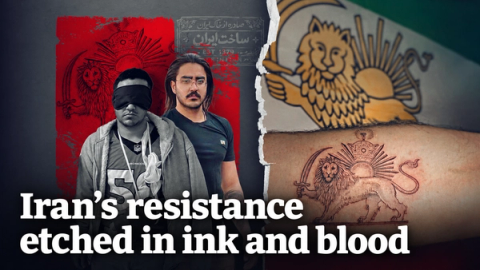
In a letter released on Monday, Tehran accused Washington of “politicizing” human rights issues, as Tehran has been cracking down on antigovernment protests, ignited by the death in custody of a 22-year-old woman.
Calling on UN member states to skip an informal meeting the US plans to hold among Security Council members, the Islamic Republic’s Ambassador and Permanent Representative to the United Nations Amir Saeed Iravani said, “The US has no true and genuine concern about the human rights situation in Iran or elsewhere.”
He called the ongoing protests an internal issue, warning that it would be “counterproductive to the promotion of human rights” if the UN Security Council discussed it. “The United States lacks the political, moral, and legal qualifications to hold such a meeting, distorting the very basic principles of human rights,” Iravani added.

The United States and Albania plan to hold an informal Security Council meeting on Iran on Wednesday, aimed at highlighting “the ongoing repression of women and girls and members of religious and ethnic minority groups,” and would “identify opportunities to promote credible, independent investigations into the Iranian government's human rights violations and abuses.”
The informal UN Security Council gathering was called by the US and Albania, which currently sits on the council. Iranian Nobel Peace Prize laureate Shirin Ebadi, actress Nazanin Boniadi, and Javaid Rehman, the UN Special Rapporteur on human rights in Iran, are due to address the gathering, which will be open to state representatives and human rights organizations.

The format of the meeting is called the “Arria formula”, after its originator, Diego Arria, a Venezuelan ambassador who in 1992 initiated the first informal meeting of the Council to discuss the crisis in former Yugoslavia. The meetings take place in a non-rigid setup where member states can hear comments by individuals and non-state actors.
Iran’s foreign ministry spokesman Monday dismissed the significance of the meeting and claimed that the aim of the meeting is to put “political pressure on the Islamic Republic,” and is the continuation of a clear policy of interference by the American government in Iran’s internal developments.”
Expulsion of Iran from UN Women Commission
Following weeks-long efforts by several countries as well as numerous calls by activists for the immediate expulsion of the Islamic Republic from the UN Commission on the Status of Women (CSW), the Canadian Parliament unanimously adopted a motion on Monday that calls for Iran’s removal.
Introduced by Conservative Party Deputy Leader Melissa Lantsman, the motion was adopted following a similar call made by New Zealand’s prime minister, and Canada’s deputy prime minister and foreign minister.
“Given the brutal death of Masha Amini at the hands of Islamic Revolutionary Guard Corps (IRGC), the subsequent crackdown in Iran on women’s rights, civil liberties, and fundamental freedom, and the long history of grave human rights abuses and violence against women perpetuated by the Iranian state, that this House declares its support for the removal of Iran from the UN Commission on the Status of Women,” read the motion.
A second motion put forward by Bloc Quebecois member of parliament Andreanne Larouche called on fellow MPs to declare support for Iranians protesting for their rights, and that the House of Commons “condemns the intimidation and bullying and violence against the protesters, who are supporting the movement to free women in Iran.”
In an open letter published in The New York Times on Sunday, Deputy Prime Minister Chrystia Freeland and Foreign Affairs Minister Melanie Joly joined other female world leaders in business, politics, and the arts from over 14 countries urging the UN to oust the Islamic Republic from the CSW.
The UN commission on the status of women is a global intergovernmental body “exclusively dedicated to the promotion of gender equality and the empowerment of women” through “promoting women’s rights, documenting the reality of women’s lives around the world, and shaping global standards on gender equality and the empowerment of women,” its website says.

The European Union is mulling over further sanctions against the Islamic Republic over its "excessive" crackdown on antigovernment protesters, Germany said Monday.
German Chancellor Olaf Scholz said in a tweet, "We condemn the excessive violence of the security forces and stand by the people in Iran. Our EU sanctions are important. We are reviewing further steps."
"I am shocked that people who are peacefully demonstrating at protests in Iran are dying," he added.
Earlier in the day, the Islamic Republic’s foreign ministry spokesman Naser Kanaani described the condemnations over Tehran’s handling of popular protests as “intervention” in the country’s “internal affairs” and slammed Germany’s plans to list the IRGC as a terrorist entity.
Kanaani added that the Revolutionary Guard (IRGC) is an official military organization of the Islamic Republic and sanctioning it would be “a totally illegal act.”
German Foreign Minister Annalena Baerbock said Sunday that her country and the European Union were examining whether to classify Iran’s Revolutionary Guard as a terrorist organization for its use of violence in the protests.
Also on Monday, Canadian Foreign Minister Mélanie Joly announced that Ottawa is imposing additional sanctions under the Special Economic Measures (Iran) Regulations. This is the fourth package of sanctions imposed by Canada against the Iranian regime in response to its ongoing gross and systematic human rights violations and continued actions to destabilize peace and security.

The US has blacklisted the Iranian organization that had issued a multi-million-dollar bounty for the killing of Indian-born British writer Salman Rushdie.
The Department of the Treasury’s Office of Foreign Assets Control (OFAC) took action Friday against the 15 Khordad Foundation, one of the organizations created in 1982 on orders of the Islamic Republic’s founder Ruhollah Khomeini with aim of promoting the revolutionary ideology, under the supervision of the Office of the Supreme Leader.
Since Khomeini’s edict pronouncing a death sentence on Rushdie in February 1989, the 15 Khordad Foundation committed millions of dollars to anyone willing to carry out the heinous act and as well as later raising the reward for targeting the author.
“The United States will not waver in its determination to stand up to threats posed by Iranian authorities against the universal rights of freedom of expression, freedom of religion or belief, and freedom of the press,” said Under Secretary of the Treasury for Terrorism and Financial Intelligence Brian E. Nelson, adding that “This act of violence, which has been praised by the Iranian regime, is appalling. We all hope for Salman Rushdie’s speedy recovery following the attack on his life.”
Rushdie, who was stabbed in August because of the death edict, has lost sight in one eye and use of a hand, his agent Andrew Wyle revealed earlier in the month.
He was stabbed repeatedly for 20 seconds by Hadi Matar -- a 24-year-old resident of New Jersey who appreciates Khomeini -- in August as he was about to deliver a lecture at the Chautauqua Institution in New York state.

The European Union on Thursday dismissed sanctions that the Islamic Republic imposed on several EU individuals and media outlets in a tit-for-tat move as "purely politically motivated."
Expressing concerns about the clerical regime's ongoing violent crackdown on antigovernment protests, EU’s lead spokesperson for foreign affairs Peter Stano told journalists Thursday that contrary to Tehran’s sanctions, “when you take the EU sanctions (on Iran), they are adopted on clear legal grounds, based on the evidence of human rights violations in Iran."
In reaction to the EU’s October 17 sanctions targeting Iranian individuals and entities over their role in the brutal suppression of peaceful protests,Tehran announced Wednesday sanctions against eight institutions and 12 individuals based in the EU.
Iran’s Foreign Ministry claimed that the Islamic Republic’s sanctions were imposed due to “deliberate actions in support of terrorism and terrorist groups, encouraging and inciting terrorism, violence, and hatred, which has caused riots, violence, terrorist acts, and human rights violations against the people of Iran.”
Iranian authorities, including the Supreme leader and the president, accuse Western countries and Israel of being behind the current wave of antigovernment protests, ignited by the death in custody of 22-year-old Mahsa Amini.
The new list of sanctions includes the Persian-language services of Germany’s Deutsche Welle and France’s RFI, extending Iran’s animosity against foreign-based channels that it says are promoting an uprising such as BBC Persian and Iran International. Two directors of the German newspaper Bild were also blacklisted.

Iran’s alleged supply of drones to Moscow remains high on the agenda at the United Nations and in Israeli President Isaac Herzog’s visit to the United States.
Miguel de Serpa Soares, head of UN legal affairs, told the UN Security Council Wednesday that Secretary-General Antonio Guterres would “continue to prepare” reports on UNSC Resolution 2231.
France, the United Kingdom and the United States last week submitted a letter at the UN arguing any supply of drones by Iran to Russia would violate the resolution, which endorsed the 2015 Iran nuclear agreement. Russia’s UN ambassador Vassily Nebenzia said Wednesday the letter broke the UN Charter by seeking to influence the general secretary.
Antonio Guterres has reported twice a year, in June and December, on the implementation of Resolution 2231, including inspections of military parts found in Saudi Arabia and Yemen. Ukraine, France, the UK and US argue that the resolution contains a provision banning Iran from exporting without prior UN approval certain military goods, including drones.

‘National security interests’
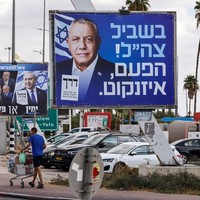
The alleged drone supply has also been highlighted this week in the US by Herzog, with Israel’s relations with Russia under the spotlight as Israel’s November 1 elections approach. Herzog pushed back Tuesday against Ukrainian demands from Ukraine for defense assistance, telling an event at the Atlantic Council “there are things we cannot supply due to national security interests.”
But while the Israeli government refuses to give military aid to Ukraine for fear of upsetting its relationship with Russia, the issue has lingered in Israeli politics since Diaspora Minister Nachman Shai tweeted October 16 in favor of sending support as there was “no longer any doubt where Israel should be in this bloody conflict.”
The Jerusalem Post Thursday hit back at Ukrainian President Volodymyr Zelenskyy over his latest broadside, pointing out in an editorial that Iran “developed drones because it can’t build advanced warplanes…[had] exported drones all around the Middle East and targeted Israel for years, and that Ukraine… [had] not backed Israel in the past…” The Post added that rockets used by Hamas and Hezbollah “sometimes…have origins in Russian technology.”
The newspaper argued it took years to deploy and integrate air defense systems and that “it’s not clear even” that Israeli defenses were “appropriate for Kyiv.” Zelenskyy had told Haaretz newspaper that an Iran-Russia “alliance…would not have happened if your politicians had made one decision at a time.” The Ukrainian leader said appeals to Israel went back to 2014, when Russia annexed Crimea.
‘Co-existence and weakening extremists’
Opposition leader Benjamin Netanyahu – who in 2019 adorned his Likud Party HQ with a huge picture of himself and Putin – told USA Today in an interview published October 21 that he hoped the Russian president would rethink “his vision of reconstituting a great Russian kingdom.”
Herzog’s meeting with President Joe Biden saw the US leader call for a ‘two-state solution’ in Israel-Palestine and welcome the maritime agreement due to be signed Thursday between Israel and Lebanon. The Times of Israel reported that US officials had raised concern over escalating violence in the West Bank, which has so far barely surfaced as an issue in the Israeli election.
A White House statement said the two leaders had “discussed the importance of promoting co-existence and weakening extremists who promote hatred and violence.” This year’s growing death toll in the West Bank has reportedly increased support there for Islamic Jihad, which has close links to Tehran.
Biden called the agreement with Lebanon “a historic breakthrough” that took “some real guts…and persistent diplomacy.” Hassan Nasrallah, leader of Tehran-allied Hezbollah, said in early October his party would respect the agreement, which could allow both countries to benefit from offshore gas deposits but which does not cover the land border.