Meat Prices Rise In Iran, Consumption Down 50 Percent
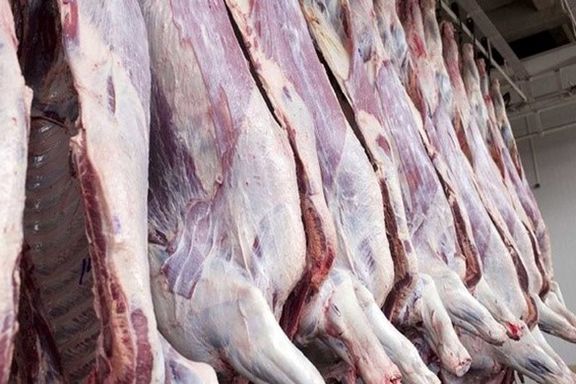
The chairman of the country's livestock supply council, Mansour Pourian, told ILNA Monday that a rise in red meat prices had accelerated despite an oversupply in the market.
The chairman of the country's livestock supply council, Mansour Pourian, told ILNA Monday that a rise in red meat prices had accelerated despite an oversupply in the market.
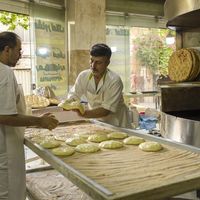
Consumption of meat has decreased by as much as 50 percent in the past year due to higher prices.
Pourian said that red meat production was higher than consumption, with a surplus of 4 million sheep. He attributed this to stagflation and predicted that drought and water shortages in coming months would raise production costs. But he called on the government to allow the export of live cattle, which was banned last year as means to regulate the market and hold down domestic prices.
Inflation in Iran has been hovering around 40 percent after the United States imposed sanctions in 2018. But food prices have been rising at alarming levels, with government figures showing above 60-percent inflation at retail level in 2021, compared with 2020.
Aftab News website in Tehran reported on Sunday that one kilo of average fresh lamb meat has reached $8, which is not so high in comparison with Western countries, but is unaffordable for many Iranians who make around $200 a month.
Chairman of the Executive Board of Iran's National Development Fund says governments must be prevented from exhausting the fund's resources to supplement their budget.
Speaking to the official news agency IRNA Sunday, Mehdi Ghazanfari, chairman of the executive board of Iran's sovereign wealth fund (NDF), criticized governments, past and present, for taking a larger share from the fund's reserves than they were allowed by law.
Ghazanfari said that governments should not rely on the NDF to supplement their budget, but they always resort to taking money from the fund when they face problems. "The fund's resources should increase to the level that it can provide the country's budget if we are not able to sell gas and oil."
The fund aims to turn some of the country's petrodollars to durable wealth, productivity, economic incentive and capital and preserve wealth from oil and gas for future generations.
The budget bill presented by President Ebrahim Raisi's government to parliament on December 12 proposed to save only 20 percent of oil revenues and transfer the other 20 percent, which should have been given to the fund, to the government.
But Supreme Leader Ali Khamenei, whose authorization was required, refused to allow the government to borrow from the fund to supplement its budget. Borrowing from the fund would mean printing Iranian rials and spending it in the country, further fueling inflation, which now stands at around 40 percent.
Based on the country's fifth and sixth five-year socio-economic development plans, the percentage of the fund's share from oil revenues has grown from 20 percent to 40 percent since 2011 when the fund was established.
Ghazanfari said the fund is now seriously seeking to recoup all the past loans paid to various government organizations, such as the National Iranian Oil Company (NIOC).
He also suggested that the fund's articles of association need to be revised so that the fund extends 30 percent of its resources to private, cooperative, and non-governmental sectors as loans, and ideally even use the 20 percent share of the government to help the private sector.
The remaining 50 percent of the fund's resources must be used for investment, he said, adding that they are also considering a revision in the conditions for offering loans in the future.
Like the currency reserve fund established in 2000, all administrations have borrowed from the fund for various purposes, including 2 billion euros in 2019 to increase the military's budget. The administration of President Mahmoud Ahmadinejad borrowed heavily from the fund which had been handed over to him with over $24 billion, including $2.7 billion to pay New Year cash handouts to all Iranians in 2013.
In 2008, the Ahmadinejad government classified information about the fund. In 2013, the newly elected President Hassan Rouhani said the fund had completely been drained by his predecessor. There is currently no concrete information on the fund's assets, but it is clear billions have been withdrawn since 2018 when the United States abandoned the 2015 nuclear agreement and imposed sanctions.
According to the charter of the National Development Fund, 40 percent of oil revenues next year should be saved by the government in the fund for investment on productive economic activities that would guarantee the welfare of future generations.
The head of Iraq’s Supreme Judicial Council says the judiciary is under intense pressure and meddling by factions amid a political deadlock in the country.
Fa'iq Zaydan, who is also the head of the Federal Supreme Court of Iraq said on Sunday that the judiciary is an independent body and does not allow such interventions.
While six months have passed since the parliamentary elections Iraqi factions have failed to form a new government. Zaydan ruled out the formation of an emergency government due to complex constitutional procedures, warning of negative repercussions of such an option.
He added that the judiciary has the power to dissolve the parliament according to the constitution, but it would lead to a worse situation than the current one, suggesting that a political consensus is the best way to solve the crisis.
The movement of Moqtada Sadr – who is opposes Iran’s influence in Iraq -- won the biggest winner in the October 2021 parliamentary elections gaining 73 out of 329 seats, but pro-Iran groups claim they can muster the backing of 88 lawmakers to make a bigger coalition.
The parliament's first tasks is electing the country's president, who will then name a prime minister tasked with forming a new government.
Tehran has been accused of directly interfering in Iraq’s internal affairs, including in elections, since Saddam Hussain’s regime was toppled in the 2003 US invasion. Iran’s interference in Iraqi politics led to large protests in 2019 that lasted for months.
A water resources official in Iran says inflow of water into Tehran area dams has decreased by 30 percent in the past six months, compared to the previous year.
Mohammad Shahriari told Tasnim news agency that from September to the end of March, 409 million cubic meters of water has entered dams in the Tehran province, while in the 2020-2021 season 573 million cubic meters entered the capital’s vital reservoirs.
Iran has been suffering from drought for at least a decade and this year officials have been warning of a further decrease in precipitation.
In 2021, large-scale water protests took place in two important provinces, Khuzestan and Esfahan, with several people killed and hundreds injured by security forces.
As drought persists, more underground water is exploited for irrigation, depleting natural reservoirs formed during thousands of years. This has led to ground subsidence, alarming government officials who have circulated confidential memos on the subject, according to a lawmaker who spoke to local media on Sunday.
Old and unregulated irrigation methods, as well as an aging urban water distribution infrastructure compound the shortage.
However, politicians and experts say that there are no consistent government plans to deal with the water crisis, which can result in mass migration of millions of people in the next ten years.
Saeed Afkari, the brother of wrestler Navid Afkari who was executed in 2020, says prison officials his brother, Vahid's arm and security forces shot at them.
Saeed Afkari said on Sunday that prison officials had broken his other brother's hand when he resisted as guards wanted to transfer him to a solitary cell.
Afkari also said that prison guards fired at him and his family from the rooftop, stopped firing after the family shouted, "Shoot the bullets into our chests."
Earlier in March, the third brother Habib Afkari said he has been released from prison but another brother, Vahid, is still in solitary confinement.
Habib had been sentenced to 27 years and 3 months in prison and 74 lashes and was being kept in a windowless solitary confinement cell since Navid’s execution in September 2020.
Navid Afkari was arrested along with his brothers Habib and Vahid during protests in Iran in 2018 and was executed despite international campaigns to save his life.
He initially received a death sentence for an “act of war against God” for his participation in protests, the authorities later charged him and his brothers with the murder of a government employee.
According to the Oslo-based Iran Human Rights in September 2021, Shahin Naseri, a prisoner who testified that Navid Afkari was tortured to confess to the killing, died in custody in Greater Tehran penitentiary “in suspicious circumstances”.
A former president of Iran's football federation has strongly criticized hardliner religious authorities for insisting on banning women from soccer stadiums.
Speaking to the reformist Eslahat Press website, Mohammad Dadkan criticized the authorities for claiming that it is against Islam to allow women to join men in watching games at stadiums.
Dadkan argued that those who oppose women's presence in stadiums, on the grounds that it is against their dignity to be present where male fans swear profanities, should feel more concerned that so many Iranian women have to be sex workers abroad, such as in Dubai and Turkey.
Dadkan went on to point out that women had to go abroad as sex workers because the government failed to provide decent jobs to them and added that officials are not ashamed about their failure but are concerned about women watching a game.
"There is so much prostitution, in the Mashhad (a Shiite religious center) where women were not allowed into the stadium, and no one protests about [disrespect to women or] religious dignity. Does watching a match cause harm to religious sanctities?" Dadkan who served as the president of the Iranian football federation from 2003 to 2007 said.
Hundreds of female fans were once again denied entry into a soccer stadium on Tuesday in Mashhad in northeastern Iran to watch a World Cup qualifier between Iran and Lebanon, despite FIFA’s pressure to lift the ban on women entering stadiums. The fans, with tickets in their hands, were stopped and were pepper-sprayed when they demanded to be allowed in.
In an unprecedented turn of events, many Iranians urged FIFA to ban their country from the World Cup for forcibly barring women from the match.
Mashhad is home to numerous hardliner clerics who are against the presence of women in male dominated places. Firebrand representative of the Supreme Leader in the city, Ayatollah Ahmad Alamolhoda has been banning concerts and cultural events for years.
It was during Dadkan's tenure as federation president in 2005 that a group of Iranian women for the first time managed to get into a stadium in Tehran to watch a World Cup qualifier match between Iran and Bahrain.
The renowned director Jafar Panahi made Offside, a film about the incident which won the Sliver Bear at the Berlin International Film Festival in 2006.
"I stood against the authorities who were saying women should not enter the stadium and [ordered] to open the gates … President [Mohammad] Khatami was also present [at the stadium] … I said I would take responsibility for all the consequences," Dadkan said about the event.
The clerical establishment was outraged by the incident and used it as an excuse to attack the reformist government.
Female fans had to wait until October 2019 to be allowed to enter a soccer stadium again when authorities had to relent under pressure from FIFA, which threatened to penalize the Iranian federation for gender discrimination.
For nearly a decade the world’s soccer authority has tried to convince Iran’s clerical rulers to lift the unwritten, four-decade-old ban, which has led to arrests, beatings, detentions, and abuses against women.
In September 2019, a female football fan, Sahar Khodayari, who came to be known as the “Blue Girl” after her favorite team, Esteghlal FC, was reportedly sentenced to jail for trying to enter a stadium disguised as a man. She died by self-immolation, causing a domestic and international outcry.