• العربية
  • فارسی
Brand
  • Iran Insight
  • Politics
  • Economy
  • Analysis
  • Special Report
  • Opinion
  • Podcast
  • Live TV
  • Iran Insight
  • Politics
  • Economy
  • Analysis
  • Special Report
  • Opinion
  • Podcast
  • Live TV
  • Theme
  • Language
    • العربية
    • فارسی
  • Iran Insight
  • Politics
  • Economy
  • Analysis
  • Special Report
  • Opinion
  • Podcast
  • Live TV
All rights reserved for Volant Media UK Limited
volant media logo

Plaintiffs In Swedish Trial Recount Memories Of 1988 Iran Prison Massacre

Maryam Sinaiee
Maryam Sinaiee

Iran International

Oct 2, 2021, 13:29 GMT+1Updated: 17:29 GMT+1
Some of the victims of prison massacre in Iran in 1988.

Evidence being given in the Stockholm trial of Hamid Nouri (Noury) implicates him as a judge and torturer in the 1988 wave of prison executions in Iran.

Twelve plaintiffs have since August 10 given testimony against Nouri (Noury), who has been charged under universal jurisdiction with “war crimes, crimes against humanity, torture, and participating in the continued crime of refusing to return the bodies of executed prisoners to their families.”

Plaintiffs and witnesses have said Nouri, known to prisoners as Hamid Abbasi, was directly involved in 1988 in torturing, executing and secretly burying thousands of prisoners, mostly members of the Mujahedin-e Khalq Organization (MEK), at Gohardasht prison in Karaj where they say Nouri, then 27, was a judge.

Nouri, who was arrested in 2019 at Stockholm airport when apparently arriving to visit relatives, denies any connection with the executions.

Nouri, now 60, interrogated the prisoners and mocked them, Fereydoun Najafi-Aria told the court Friday. Najafi-Aria, who lives in Australia, explained to the court that he was arrested in 1981, aged 18, and sentenced to 15 years in prison.

100%
Hamid Nouri (Noury), former Iran judge implicated in prison killings of opponents in 1988

Nouri interviewed MEK prisoners in prayer halls at Gohardasht and Evin prisons, Najafi-Aria alleged: "We would sit three meters away from him, without blindfolds, and watch. He would ask prisoners if they still supported [the MEK]. He would mockingly tell them they would be arrested and killed if they were released and continued political activity.”

Najafi-Aria told the court he found out about mass executions of prisoners on August 9, 1988 when a prisoners informed others by tapping on the wall in Morse code: "Khomeini has sent a commission. They want to kill everyone."

An ad hoc judicial committee formed after a fatwa from then Iranian leader Ruhollah Khomeinicame to be known among prisoners as the ‘Death Commission.’ Khomeini used the word ‘hypocrites,’ a term widely used by Iranian officials and media to refer to the MEK, which carried out a wave of bombings in Iran and allied with Saddam Hussein during the 1980-88 war.

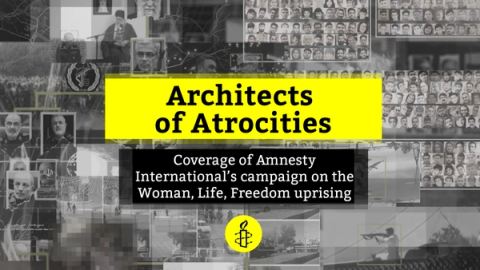
Amnesty International has analyzed evidence linking several Iranian officials to the massacre, including President Ebrahim Raisi (Raeesi), who was then deputy prosecutor in Tehran. When asked in June about the 1988 executions, Raisi told reporters he had always defended national security and cited acts of violence carried out by the MEK, which was delisted by the United States as a ‘foreign terrorist organization’ in 2012 and moved to a new base in Albania from Iraq by the US in 2016.

The MEK’s National Council of Resistance of Iran, which always highlights the executions, in 2019 named over 5,000 members as victims in a booklet ‘Crimes Against Humanity.’

Another plaintiff, Ahmad Ebrahimi, told the court Tuesday that he saw Nouri in 1988 at Gohardasht prison. Ebrahimi, who had been arrested in 1981 during a meeting with another MEK member, said he was ordered to denounce the MEK in writing.

"I was sat in the narrow corridor in front of the Commission's room to write. I wrote that I denounced 'the hypocrites'. Hamid Abbasi came and stood over my shoulder…I had pushed my blindfold up a little to write so I couldn't see Hamid Abbasi [over my shoulder] but I knew his voice well and recognized it.”

Ebrahimi told the court Nouri then addressed him. "You dirty hypocrite! By hypocrite you mean us! You must make it clear who you actually mean.”

Ebrahimi told the court that he had found out from other prisoners in the same corridor known as the ‘Death Corridor’ that those who did not repent were being executed, so the next time he wrote a denunciation letter in vague terms to save his life.

Most Viewed

US strikes deepen Tehran debate over compromise or confrontation
1
INSIGHT

US strikes deepen Tehran debate over compromise or confrontation

2
ANALYSIS

If Britain backs US plan, Iran's London bank shuts down on October 22

3
ANALYSIS

Debate grows over whether Iran is burning its strongest card in Hormuz

4
ANALYSIS

Could Hormuz offer a way out of the US-Iran war?

5

Alamolhoda seeking presidency of Iran’s Assembly of Experts - report

Banner
Banner

Spotlight

  • Satellite images show Iran’s key ports falling quiet under US blockade
    EXCLUSIVE

    Satellite images show Iran’s key ports falling quiet under US blockade

  • Iran's appliance industry is collapsing, and so is the market it was built for
    INSIGHT

    Iran's appliance industry is collapsing, and so is the market it was built for

  • In Hormuz, Iran only needs to keep ships guessing
    PODCAST

    In Hormuz, Iran only needs to keep ships guessing

  • If Britain backs US plan, Iran's London bank shuts down on October 22
    ANALYSIS

    If Britain backs US plan, Iran's London bank shuts down on October 22

  • 'If I'm not happy, they'll execute me': Iran's new grammar of dissent
    ANALYSIS

    'If I'm not happy, they'll execute me': Iran's new grammar of dissent

  • Debate grows over whether Iran is burning its strongest card in Hormuz
    ANALYSIS

    Debate grows over whether Iran is burning its strongest card in Hormuz

Banner